In April, when jjukkumi (baby octopus) is at its peak, mastering moisture control and the cooking sequence lets the sauce really cling—making the dish far more delicious.
April, the start of spring, is prime jjukkumi season. As they fatten up before spawning, they become richer and meatier, and their signature chewy texture and nutty notes are at their best. Lots of home cooks try to make stir-fried jjukkumi, but a common flop is the sauce separating and puddles forming—leaving the dish bland and limp.
There are three main reasons liquid shows up in jjukkumi stir-fries. First, the jjukkumi itself contains lots of water. When heated, that internal moisture escapes quickly. If you start on low heat and cook slowly, the liquid seeps out gradually and pools in the pan.
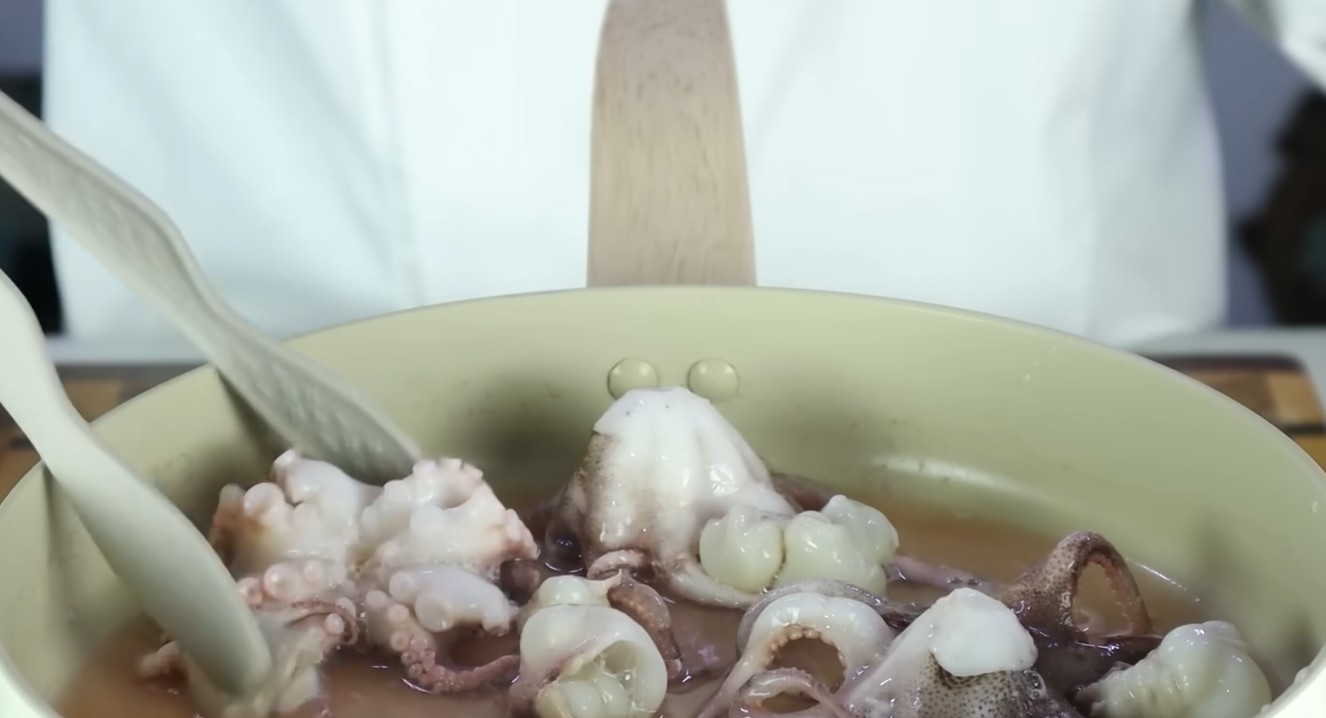
Second, leftover water from cleaning. If you don’t dry the jjukkumi thoroughly after prepping, that moisture mixes in at the start and dilutes the sauce. No matter how much seasoning you add, it won’t cling and will just sit on the surface.
Third, the timing of when you add the sauce. If you toss the seasoning in at the beginning, the liquid in the sauce mixes with juices from the jjukkumi and turns everything soupy. Instead of a stir-fry, you end up with something closer to a stew—and the flavors get muted.
So the core rule is simple: remove moisture, then add the sauce at the end. That’s the single most important trick to a successful jjukkumi stir-fry.
Start with the prep—this is where you gain the upper hand. Rub the jjukkumi with flour or coarse salt, rinse under running water several times to remove debris, and then dry it carefully with paper towels. Be meticulous: get moisture out from the surface and even inside the head.
Next, bring the heat. Heat the pan until it’s very hot, add a little oil, then add the jjukkumi and stir-fry quickly. Don’t fuss—work fast to evaporate moisture. A quick 1–2 minutes on high heat will sear the exterior and drive off water. That searing firms the surface like a thin coating, so later the sauce will cling.
Many home cooks panic when moisture appears and instinctively lower the heat or slap on a lid. Do the opposite—leave the lid off and keep the heat high so the steam can escape. That’s how you get the wok-charred flavor and the right consistency.
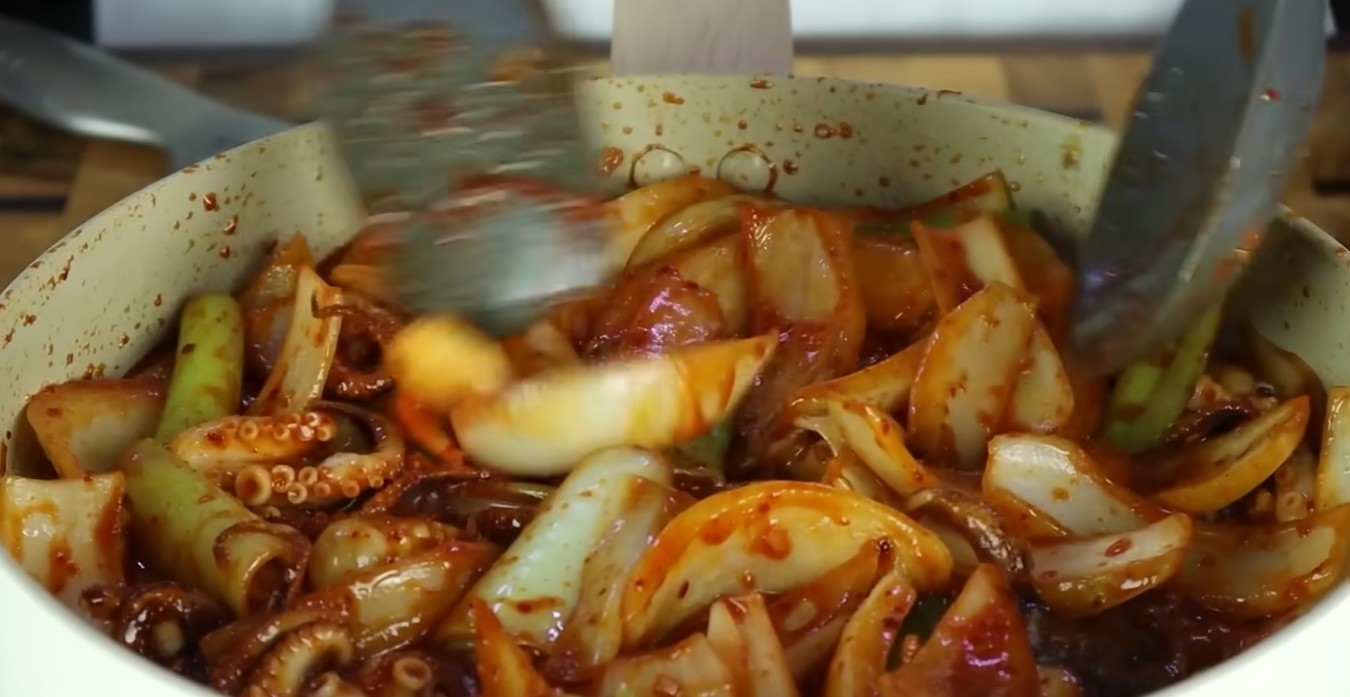
Once most of the liquid has evaporated from the jjukkumi, add the vegetables. Onions, scallions, and cabbage are high in water, so if you add them too early you’ll get more liquid. Give the vegetables a quick toss over high heat to burn off their moisture, too.
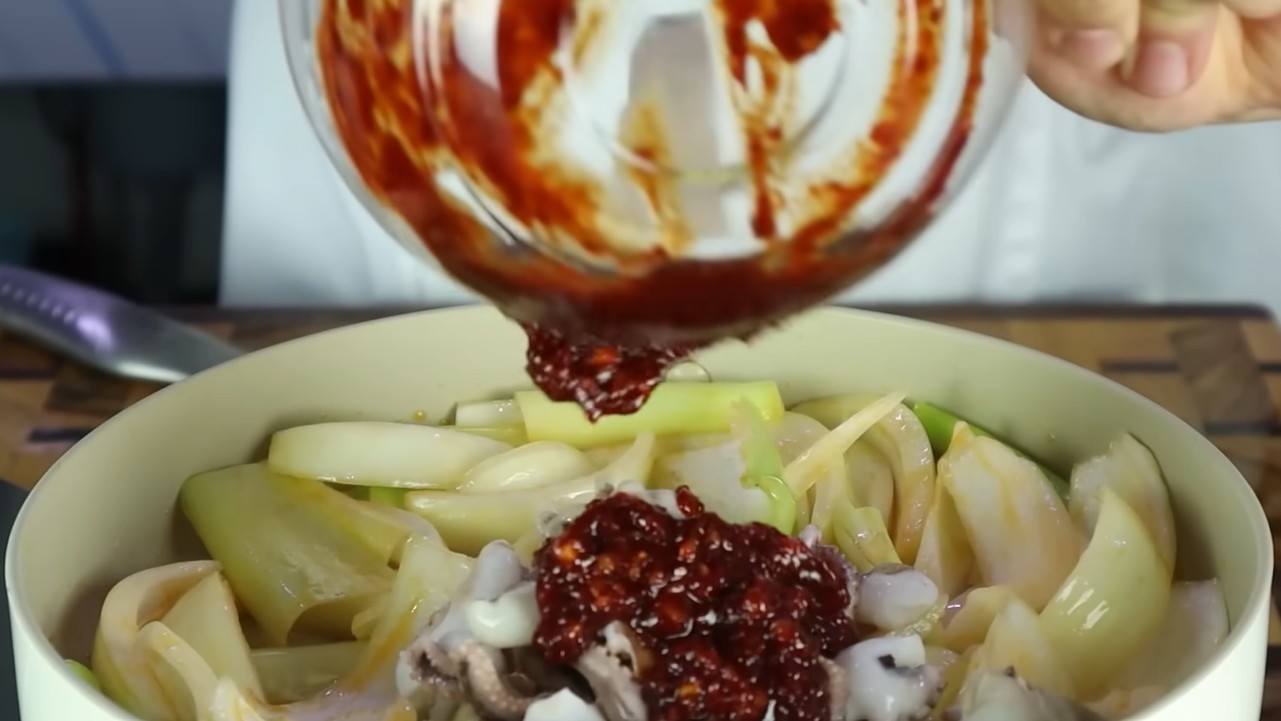
At the very end, add the sauce. Mix gochujang, gochugaru (red pepper powder), soy sauce, minced garlic, sugar, and corn syrup, then toss everything quickly over high heat. Because the jjukkumi’s surface is already seared, the sauce won’t dilute—it will cling directly to the ingredients. Keep this final toss under a minute.
The point is to coat the jjukkumi, not to boil the sauce. If you add sauce while the pan is wet, you’ll end up with a soupy dish. When you dry the pan first, the sauce forms a glossy coating and delivers a deeper, richer flavor.
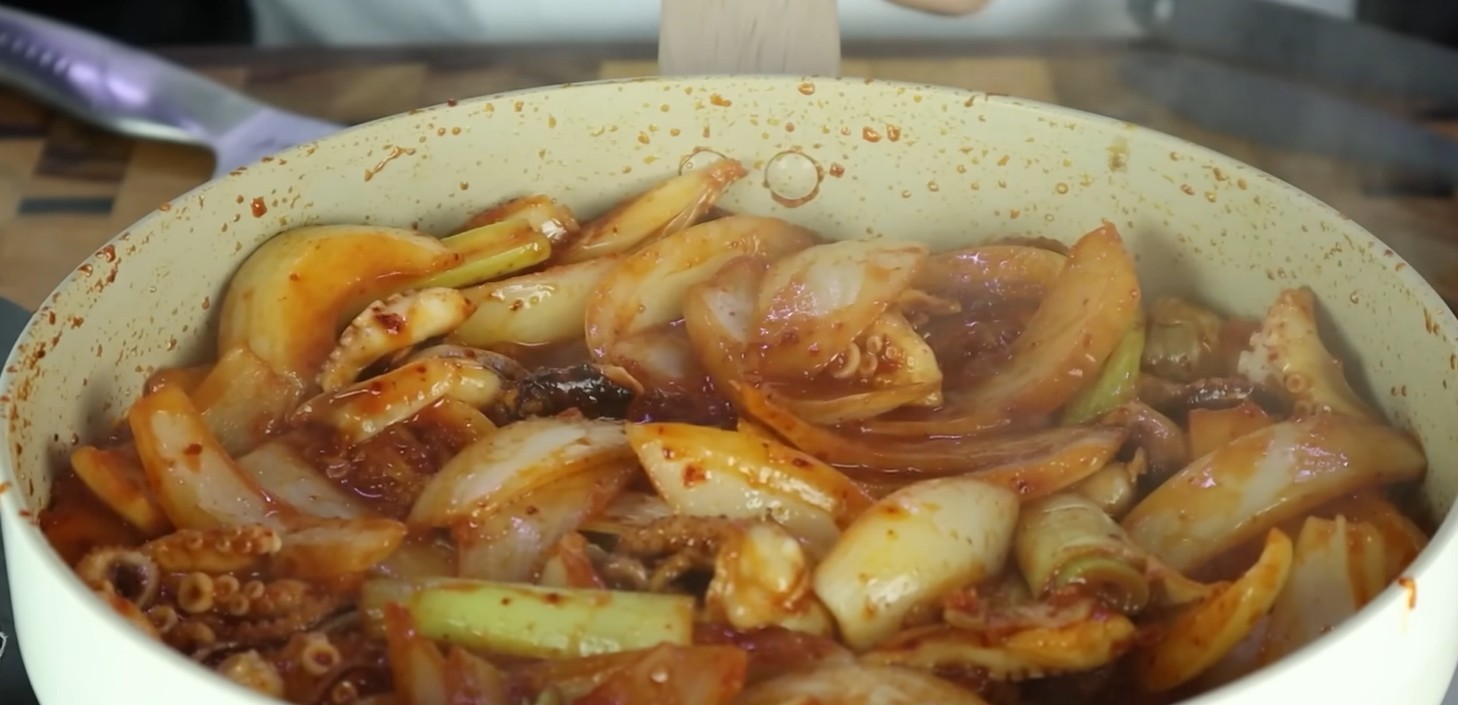
You can also use a tiny bit of starch. After drying the jjukkumi, lightly dust it with starch before frying to form a thin film. This helps the jjukkumi retain moisture and lets the sauce adhere better. Use sparingly—too much starch will make the texture gummy.
Jjukkumi stir-fry is more about technique than ingredients. The same sauce can yield wildly different results depending on moisture control and heat. To showcase seasonal jjukkumi at its best, remember these three rules: high heat, short cooking time, and add the sauce last.
April jjukkumi is wonderful on its own, but it truly shines when cooked properly. A plate of jjukkumi with the sauce perfectly clinging and no excess liquid will make your spring table feel full and indulgent.
Your daily personal fortune report! How will your day go?