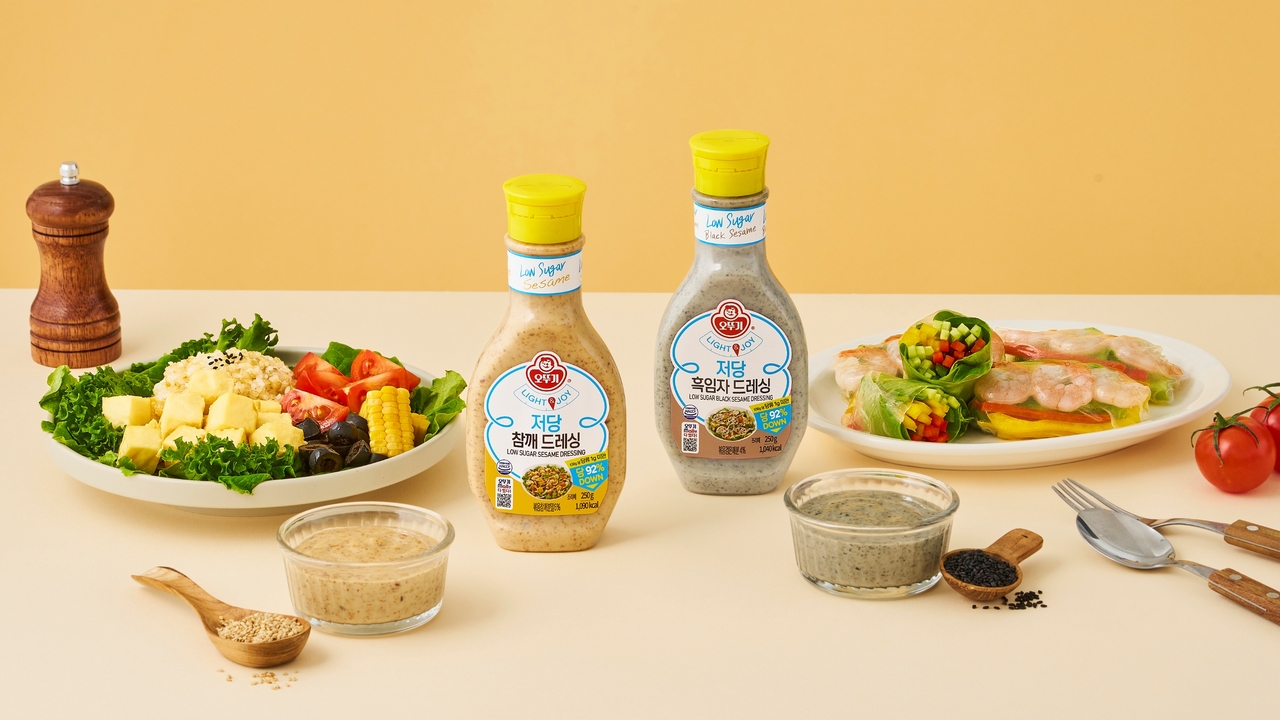
On the 11th, industry sources reported that Ottogi rolled out two LIGHT&JOY low-sugar dressings that cut sugar by more than 90%. Paris Baguette’s health-focused bakery brand Parang Label introduced a low-sugar matcha cake. Lotte Chilsung Beverage launched Gatorade Run with less than 2.5 g of sugar per 100㎖ (about 3.4 fl oz). Seoul Milk Cooperative released a Greek yogurt sweetened with the sugar alternative allulose.
Industry insiders say the surge in low-sugar launches is closely tied to this year’s intensifying sugar-levy conversation. The debate began in January when President Lee Jae-myung proposed using revenue from a sugar tax to reinvest in local and public healthcare. Since then, lawmakers and academics have been offering concrete proposals.
At a symposium on the 7th hosted by the Korea Rural Economic Institute, the National Research Council for Economics and Humanities, and the Korea Institute of Public Finance, one proposal suggested a three-tier levy based on sugar content. Professor Park Eun-chul of Yonsei University proposed exempting drinks with under 5 g of sugar per 100㎖, charging 225 KRW per liter (approximately $0.17) for drinks with 5–8 g per 100㎖, and charging 300 KRW per liter (approximately $0.23) for drinks with 8 g or more per 100㎖.
The ruling Democratic Party has filed several bills to support the president’s idea. In February, Rep. Lee Su-jin (DP), a member of the National Assembly’s Health and Welfare Committee, introduced a revision to the National Health Promotion Act that would apply a nine-step tax based on sugar content per 100 liters — ranging from 1,000 KRW (approximately $0.75) up to 28,000 KRW (approximately $21.00) per 100 liters — with tiers starting at 1 kg per 100 liters and extending beyond 20 kg per 100 liters.
Rep. Heo Seong-mu (DP) proposed amending the Act on Labeling and Advertising of Foods to evaluate overall nutritional content, not just sugar. His bill would grade products based on nutrient profiles and display those grades clearly on packaging, modeled on France’s Nutri-Score system, first implemented in 2017.
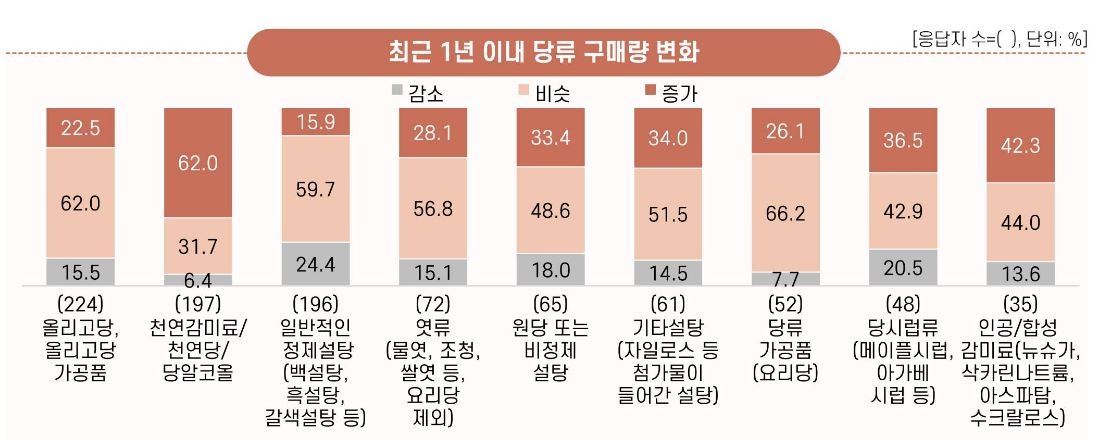
Retail trends mirror the change. Convenience-store chain GS25 said sales of so-called “Low Spec Food” items — including low-sugar and zero-sugar products — grew 27.4% year-over-year in the first quarter. The number of SKUs climbed from 220 last year to about 300 this year. “Interest in low-spec food has risen across many age groups, so we’re actively expanding these product lines,” a GS25 spokesperson said.