When your appetite dips, the trick to saving dinner isn’t an elaborate meal—it’s one brilliant side. A crunchy, savory pepper salad—think crisp bites wrapped in a flavorful dressing—is the kind of Korean home-style side that’ll have you polishing off a bowl of rice. Try upgrading the classic doenjang (fermented soybean paste) pepper salad with a spoonful of soybean powder for an instant flavor boost.
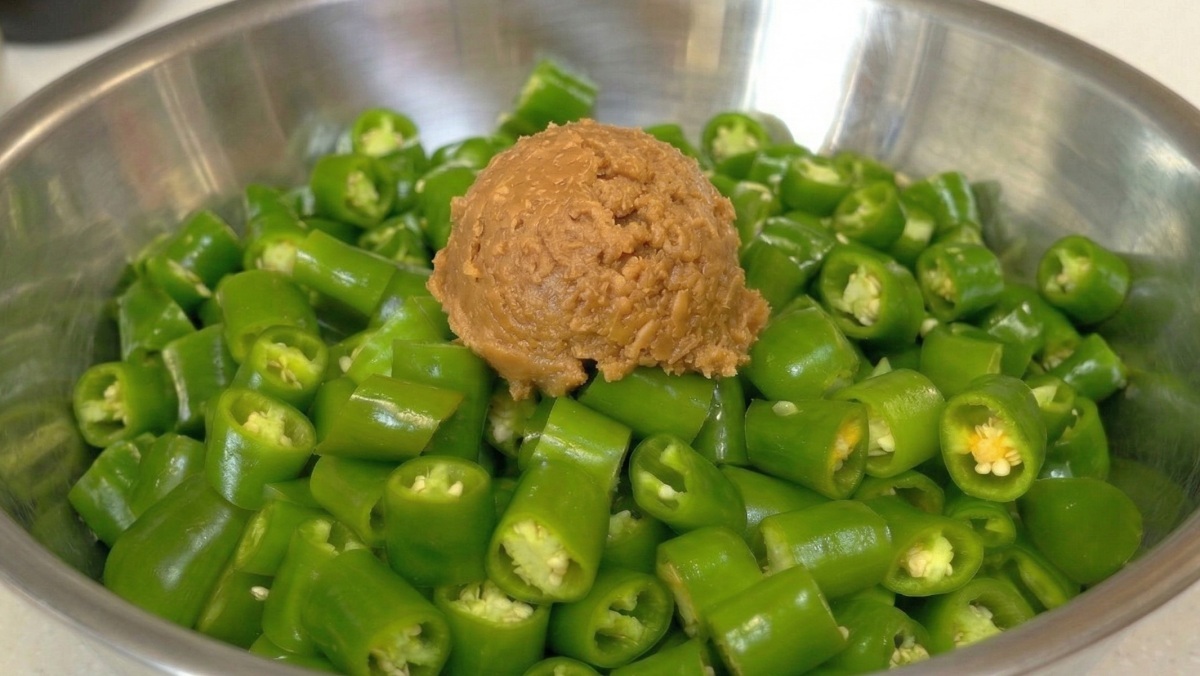
Start by trimming the stems from the oigo peppers and rinsing them well under running water. Cut them into bite-size pieces. Oigo peppers are larger and fleshier than typical chiles, which helps them stay satisfyingly crisp. They’re mild in heat, so they’re comfortable to eat raw and ideal for tossed side dishes.
For the seasoning, stick with a familiar lineup. Mix 1 tablespoon doenjang (fermented soybean paste), 1 tablespoon gochugaru (Korean red pepper flakes), 1/2 tablespoon minced garlic, 1 tablespoon maesil syrup (plum syrup), 1 tablespoon sesame oil or perilla oil, and 1/2 tablespoon whole sesame seeds to make a basic dressing.Add 1 tablespoon of soybean powder—the key to this recipe. The soybean powder softens the doenjang’s saltiness and adds a toasty, nutty depth. Toss everything together gently and you’re ready to serve.
This upgraded doenjang pepper salad delivers a richer, more rounded flavor. The nutty note from the soybean powder brings out the best in the paste and balances the whole dish. The crunchy oigo peppers paired with the savory dressing make a perfect match for rice, so you can easily finish a bowl even without any other sides.
![[Infographic] AI-generated infographic image based on the article.](https://contents-cdn.viewus.co.kr/image/2026/04/CP-2022-0028/image-ee3306c5-7686-4b3b-8a78-f41ed08fefb6.jpeg)
Oigo peppers are high in vitamin C, which can help support immune health, and their high water content keeps them crisp and refreshing. They also contain dietary fiber, which supports gut health. Because they’re not very spicy, people of all ages can enjoy them comfortably.
Picking fresh peppers matters for flavor. Choose ones with smooth, glossy skin and bright color. Fresh peppers feel firm when you press them, and a lively-looking stem is a good sign. Wrinkled skin or dull color usually signals reduced freshness.
Storage matters, too. Peppers are sensitive to moisture, so keep them unwashed and wrapped in a paper towel or newspaper in the fridge. If you use an airtight container, make sure moisture can’t build up inside, and try to use them quickly for best taste and texture.
Peppers are versatile beyond salads. Dip them in doenjang or gochujang for a simple snack, pickle them, use them as filling for pancakes, or stir-fry them. Because oigo peppers are large and thick, they’re also great for stuffed preparations like small fritters. Knowing basic prep, storage, and recipe tips lets you get the most out of this handy ingredient.
This simple tweak—adding soybean powder to the basic dressing—elevates the flavor without fuss, and uses ingredients that are easy to find. If you’re stuck on what side to make, try this tip and bring deli-quality taste to your own kitchen.
Your daily personal horoscope report! How will your day go?