Buchu jangtteok — a chive-and-gochujang pancake — is a comforting, home-cooked favorite that delivers big flavor with minimal fuss. It’s been getting attention as a springtime pick-me-up that wakes up the appetite.
Chives bring a distinctive aroma and a mild bite to many dishes, but when you fry them into a jangtteok they really steal the show. A batter laced with gochujang gives this version a deeper, umami-rich profile than your average buchimgae and usually means you don’t even need a dipping sauce. With the chives’ fresh scent, it works just as well as a side dish or a crowd-pleasing snack to enjoy with drinks.
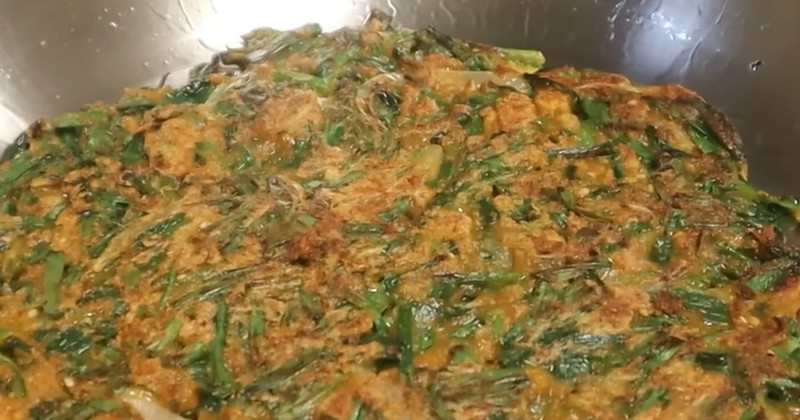
The biggest perk of buchu jangtteok is how simple the prep is. You basically need a handful of chives, pancake mix (buchim garu), gochujang, and water. Toss in onion, cheongyang chiles (small Korean hot peppers), or minced garlic to taste for extra depth. Onion adds sweetness, while cheongyang chiles bring heat to balance the flavors.
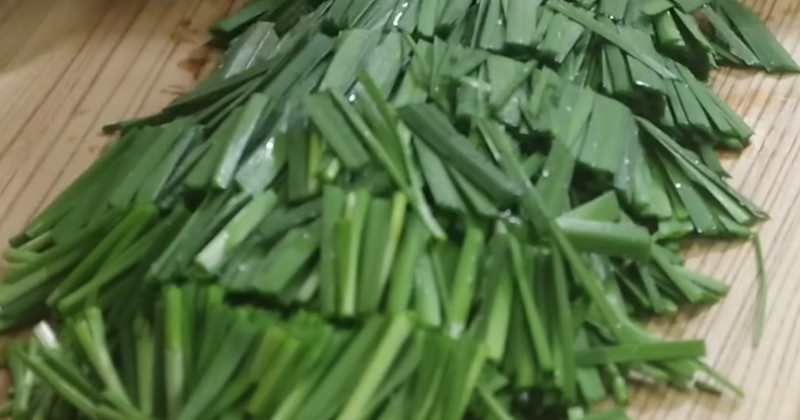
The trick is getting the batter consistency and ingredient ratios right. First, cut the chives into 3–4 cm pieces (about 1.2–1.6 in) so they’re easy to eat. If they’re too long, flipping gets awkward and the texture can feel coarse. In a bowl, add 1 cup of pancake mix and pour in water gradually until the batter is thick but still pourable. Stir in roughly 1 tablespoon of gochujang and mix until smooth; adjust to taste. Be careful not to add too much, or it can turn overly salty.
When the batter is ready, fold in the chopped chives, onion, and cheongyang chiles, mixing until everything is evenly coated. Make sure the chives make up more than half the mixture so their aroma and texture can shine through.
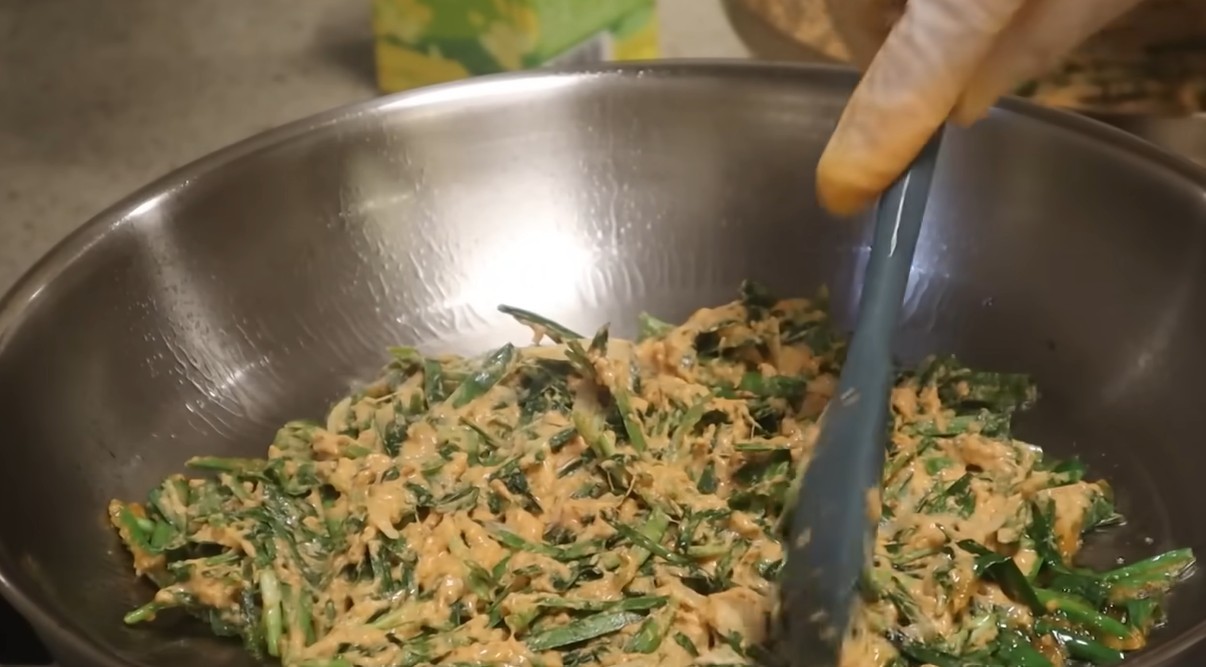
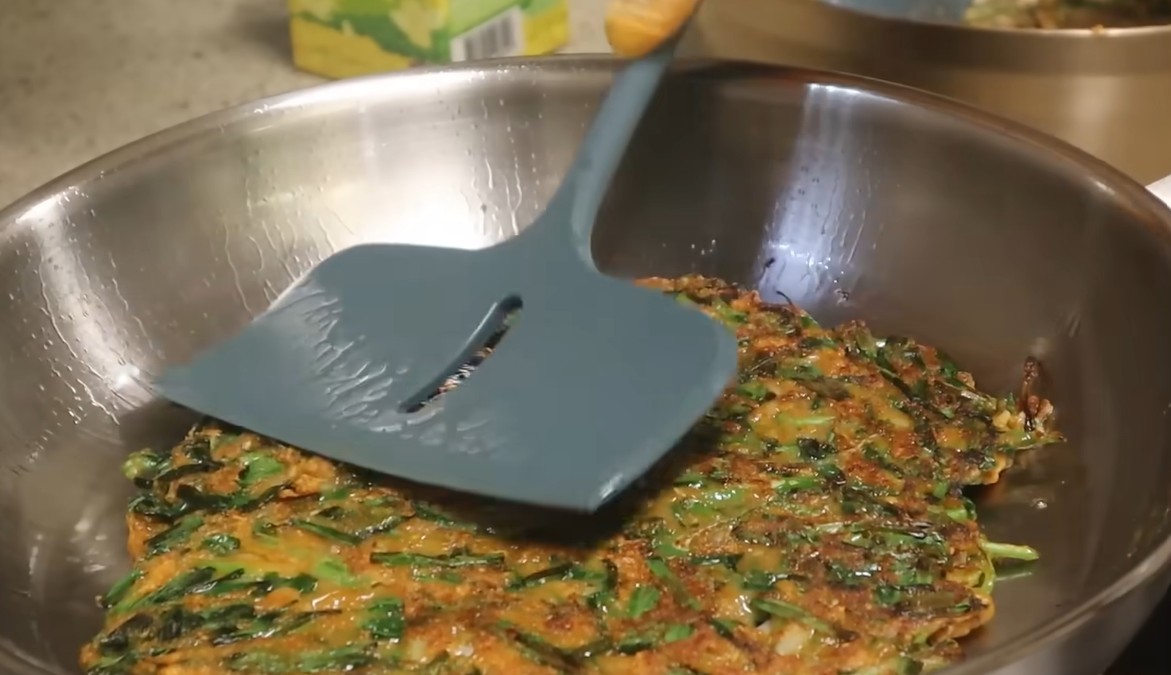
Now for the cooking: heat a pan over medium and add a generous amount of oil. Scoop a ladleful of batter onto the pan and spread it thin. If the pancake is too thick, the center won’t cook through; if it’s too thin, you’ll lose some of the chives’ texture. Aim for a moderate thickness.
When one side is golden, flip and cook the other side through. Adding a little extra oil around the edge as it fries helps create an even crispier crust. Properly cooked buchu jangtteok will be crisp outside and tender inside. Because the batter already contains gochujang, it’s flavorful enough on its own—no soy dipping sauce needed.
Buchu jangtteok is best eaten hot off the pan; as it cools, it can lose moisture and texture. If you have leftovers, popping them in an air fryer or reheating briefly in a pan will help revive some of the crispiness.
From a nutrition angle, chives are packed with vitamins and minerals that can help with fatigue and support overall wellness. In spring, when energy often dips, the unique properties of chives are thought to help replenish strength.
Adding gochujang to the batter brings the deep, fermented notes that stimulate the appetite when you’re feeling low. Its spicy-salty kick makes buchu jangtteok a practical, satisfying option that can stand in for a full meal on its own.
Another big plus is how quick and easy it is to make. From prep to plate, you can finish it in about 20 minutes, so it’s perfect for busy days. Using leftover veggies from your fridge also helps cut food waste.
Buchu jangtteok is a modern twist on the classic buchimgae and a smart pick for anyone who wants simple cooking with bold results. With its crunchy exterior and rich flavor, it’s no wonder this dish is enjoyed year-round.
Get your daily personal horoscope — what’s in store for your day?