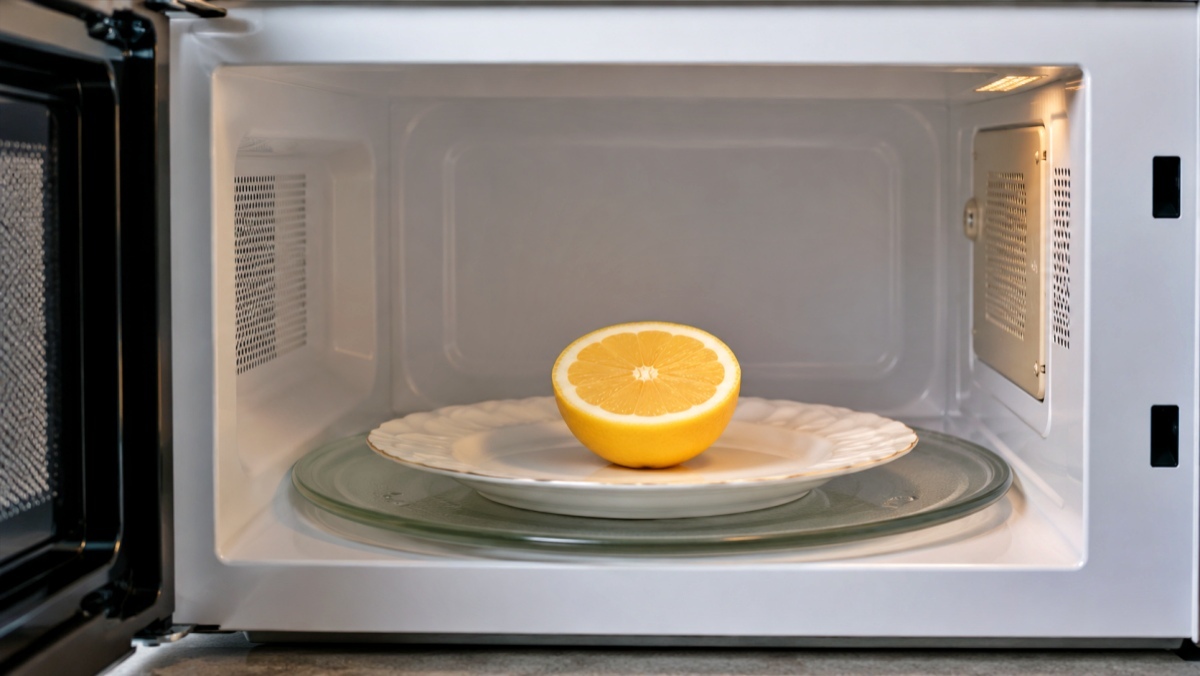
A single lemon wedge left in the fridge is more useful than you might expect. It’s especially handy for cutting food odors and greasy residue inside a microwave. Because lemons are acidic, however, you should be mindful of what surface you treat and how long you leave it in contact.
How to cut microwave odors and grease
When you reheat food, grease and broth often splatter the microwave’s interior. Those splatters may be hard to spot at first, but over time they trap odors that can return when you heat food again. A lemon can help you loosen and wipe away grime without heavy detergents.
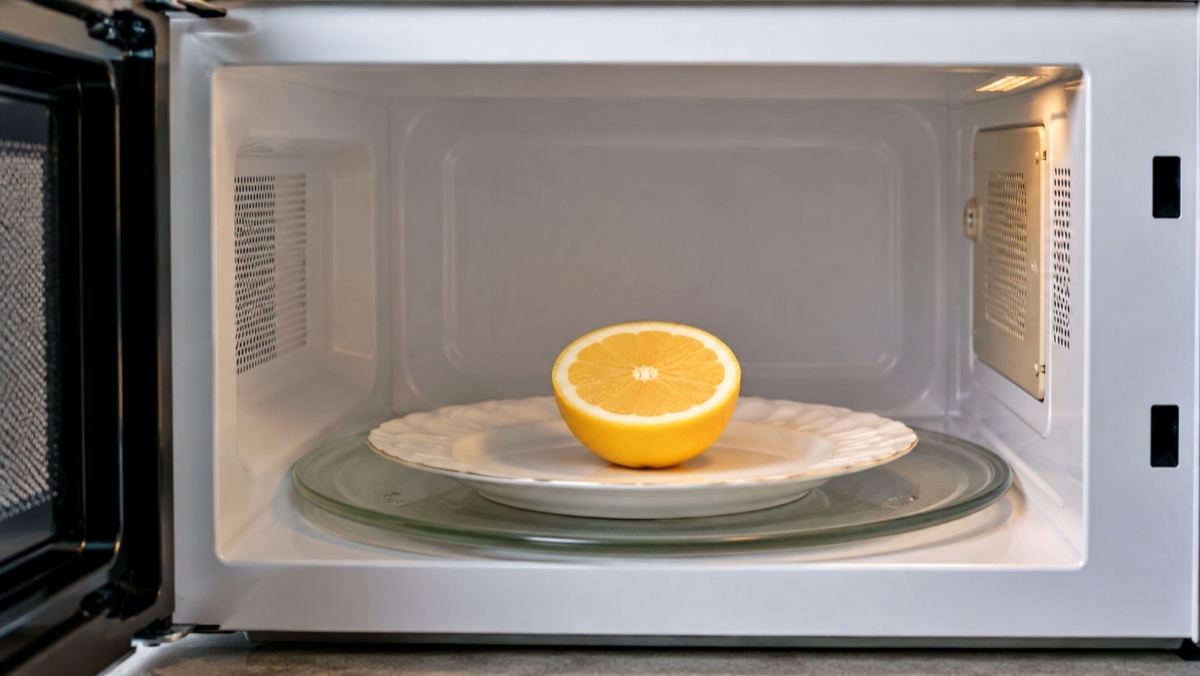
The process is simple. Put about 250–300 ml (8.5–10.1 fl oz) of water in a microwave-safe bowl and add half a lemon, thinly sliced. You can squeeze in the juice or add the squeezed peel. Heat the bowl for 3–5 minutes. Steam from the boiling water spreads through the cavity and helps soften food stains and grease on the walls.
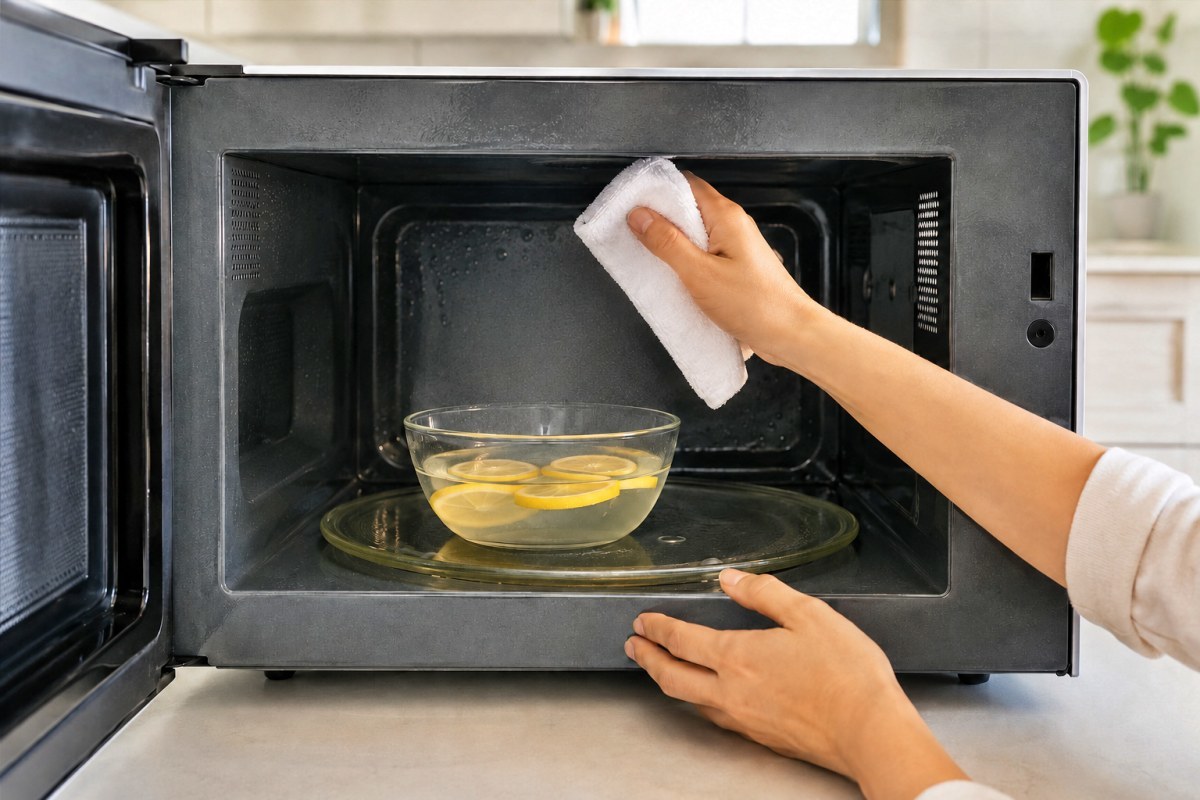
After heating, don’t open the door immediately; let it sit closed for 2–3 minutes. The remaining warm steam will soften the grime further. Then carefully remove the bowl and wipe the interior walls and floor with a kitchen towel or dry dishcloth. Remove the turntable, wash it in warm water, dry it completely, and return it.
Most importantly, avoid burns. The bowl and water will be very hot—don’t handle them with bare hands. Keep your face away when opening the microwave door; a sudden rush of steam can cause injury.
Lemons clean by more than scent. They contain citric acid, and their peels have limonene, which lends a fresh aroma. Citric acid helps loosen mineral buildup and some stains, while the fragrance helps mask food odors. But lemon is not a cure-all: it won’t remove heavy, charred, or baked-on residue. For stubborn grime, use a small amount of a neutral, microwave-safe detergent and scrub as needed.
Managing white scale in electric kettles
Lemons can also help descale electric kettles. The white residue that appears on the bottom or inner walls typically comes from minerals in the water that concentrate during boiling. If you frequently boil tap water, a thin film of scale can form along the base.
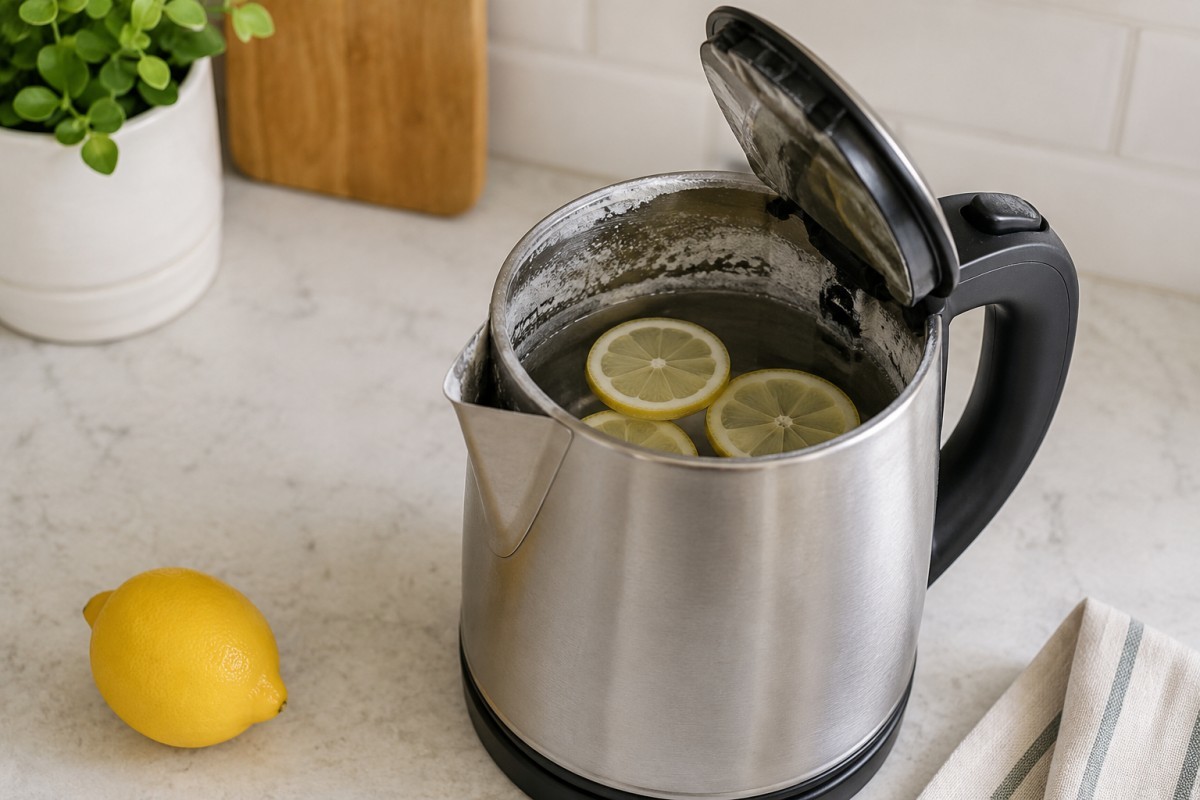
Fill the kettle with an appropriate amount of water, add lemon slices or lemon juice, and bring it to a boil once. Don’t discard the water immediately—let it sit for about 10 minutes so the acid can act on the scale. Empty the kettle, rinse several times with fresh water, then boil and discard clean water once more to remove any lingering lemon scent or acidity.
Check the manufacturer’s instructions before using lemon: some kettles advise against acidic cleaners. Also inspect the spout and filter afterward so lemon pieces haven’t become lodged.
Removing cutting-board odors with lemon and salt
Cutting boards come into direct contact with food, so they easily absorb smells and trap debris in knife grooves. A combination of lemon and coarse salt works well to scrub and deodorize the surface.
Sprinkle coarse salt evenly over the board, then rub it with a cut lemon half. The salt acts as a mild abrasive to remove small particles, while the lemon juice helps neutralize odors. Rinse thoroughly with lukewarm water, wipe dry with a cloth, and air-dry the board in a well-ventilated spot.
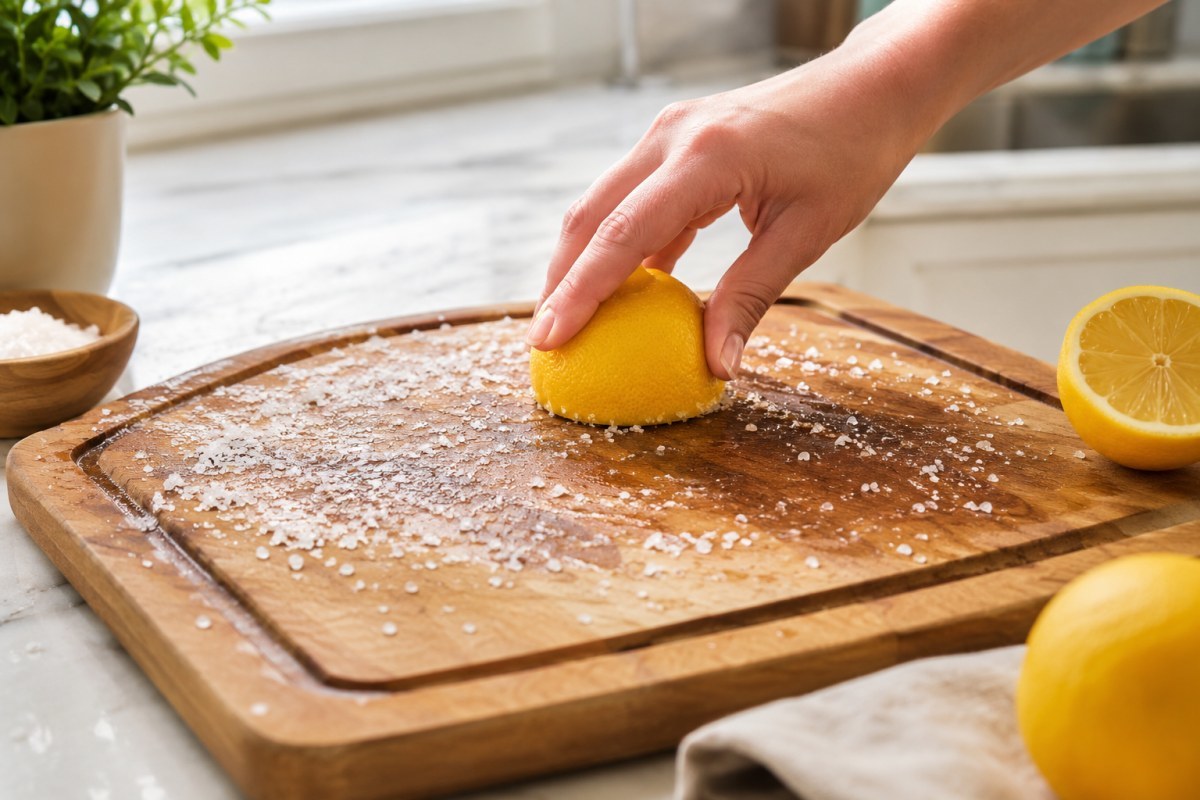
This method won’t eliminate all bacteria. For boards used with raw meat or fish, wash first with dish detergent and follow any recommended sanitizing steps. Avoid soaking wooden boards for long periods—they can crack or warp—so clean them quickly and dry thoroughly.
Polishing sinks and faucets
Sinks and faucets often show water spots. Stainless-steel surfaces can look dull when scale builds up, and drains may start to smell. Rubbing the white inner part of a lemon peel or a lemon half on these areas can help lift light water stains.
Rub around the faucet with the lemon’s white pith or a lemon half, let it sit for 3–5 minutes, then rinse and wipe dry with a clean cloth. Thorough drying helps prevent new streaks. If the drain area has heavy grease or debris, wash first with a neutral detergent, then follow with lemon.
Use caution on some materials. Natural marble, limestone, and certain engineered stones react poorly to acids—lemon juice can dull their finish or damage the surface. Aluminum and copper may discolor if lemon is left on them too long, so rinse promptly. Rubber gaskets and silicone parts can also be sensitive to acids; avoid repeated use on those components.
Managing fridge and trash-can odors
A refrigerator blends many aromas. Strong-smelling foods—like kimchi, fish, and sauces—can release odors each time you open the door. A small plate of lemon slices can help reduce those odors.
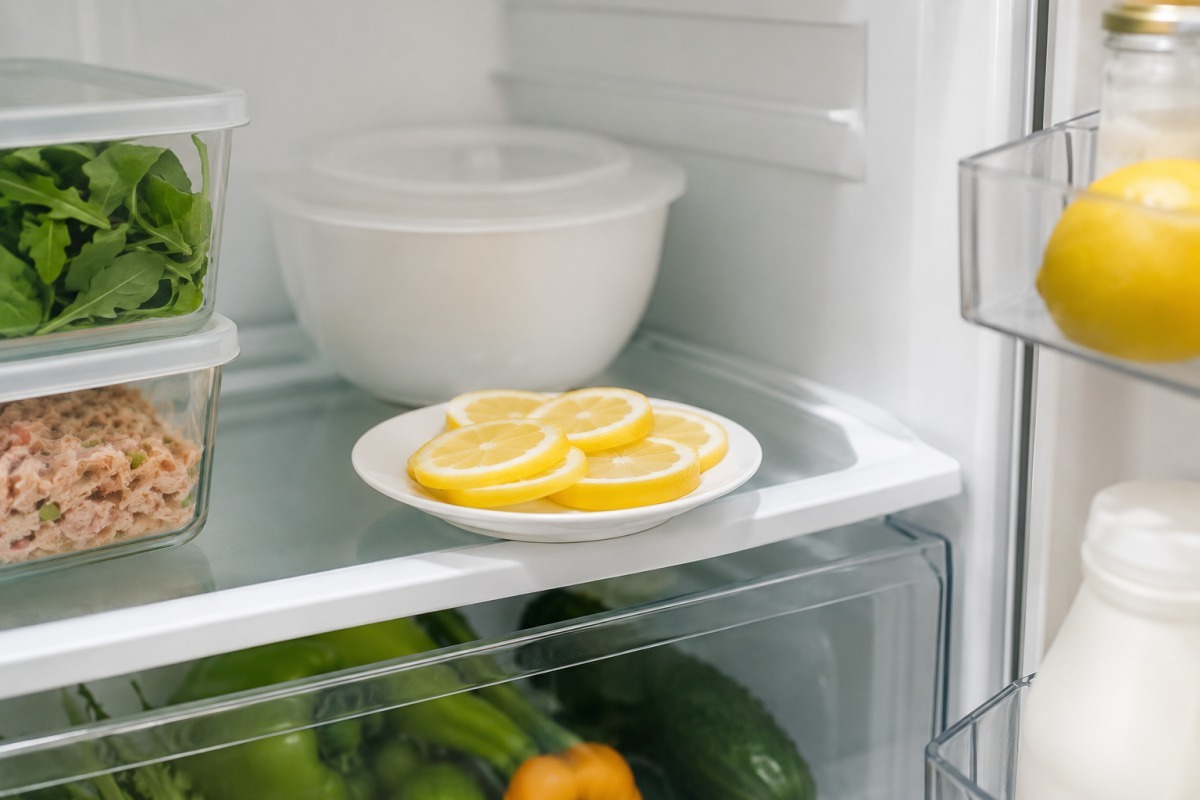
Place thin lemon slices on a small plate and set it on a shelf. You can also use a hollowed-out lemon peel. Replace the lemon every 2–3 days—slices dry out or can grow mold. To be effective, remove spoiled food and spills first; lemon can’t mask a persistent source of odor.
Use lemon peels in a trash can after you’ve emptied and washed it. Let the bin dry, then leave peels inside briefly to freshen it. Don’t leave wet peels in the bin too long—they can rot and cause odors—so remove them promptly.
Removing food odors from hands
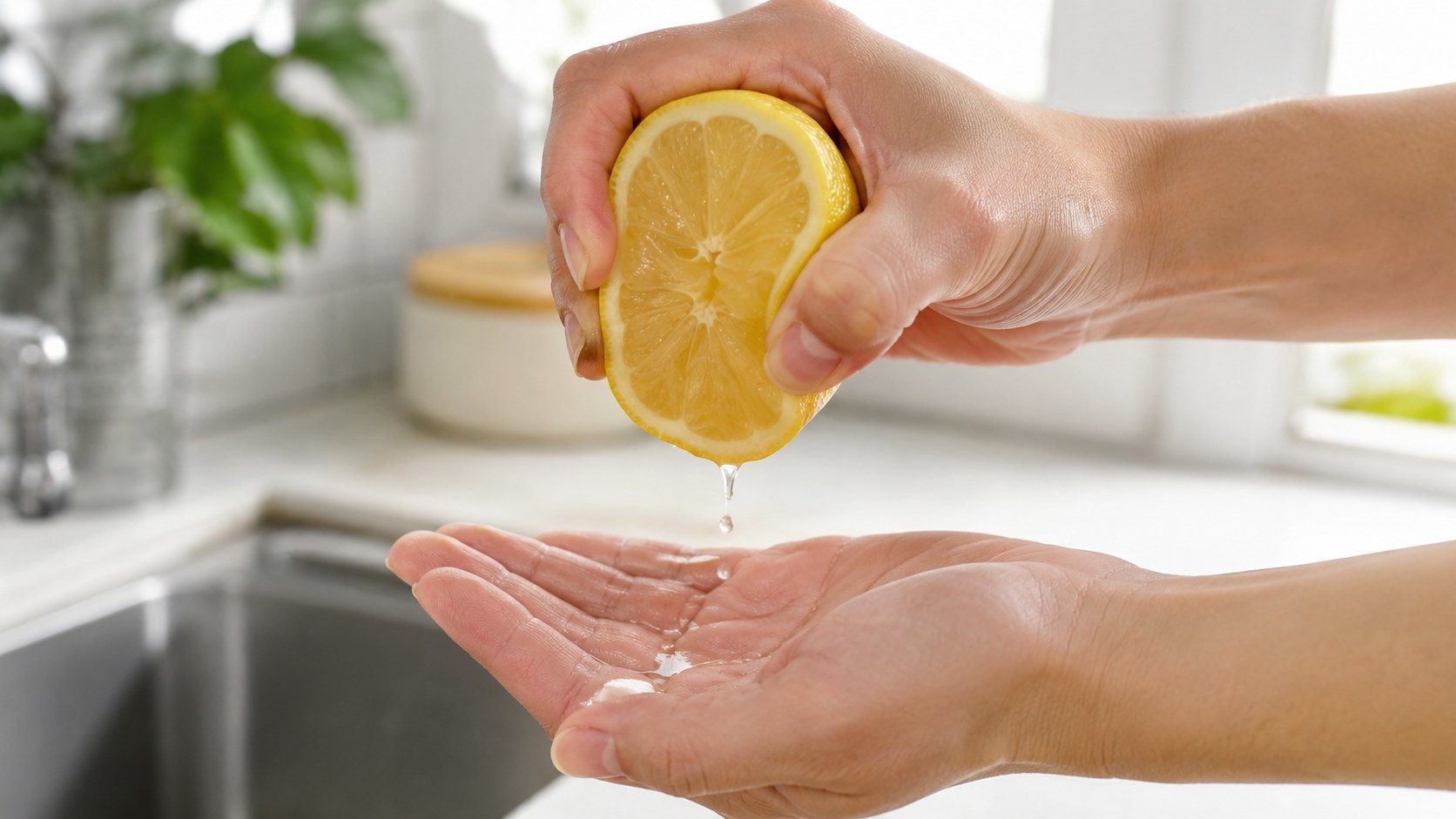
After handling fish, garlic, or onions, lingering smells on your hands can be stubborn. A few drops of lemon juice can help: wash hands with soap first, then rub a couple of drops of lemon juice into your palms, rinse thoroughly, and dry.
People with dry or sensitive skin should be cautious. Lemon juice is acidic and can sting cuts or compromised skin. Rinse well after use and apply moisturizer. If lemon juice remains on skin exposed to sunlight, it may increase irritation—wash it off before going outdoors.
Precautions for white laundry
Lemon juice can help fade some stains on white fabrics. For sturdy white items—like cotton dishcloths or socks—dilute lemon juice in water and soak briefly before washing to help reduce yellowing.
Do not use this on all fabrics. Delicate fibers—wool, silk, and rayon—can be damaged by acids. Colored garments risk fading or staining. Always test an inconspicuous area first. Using excessive lemon juice or soaking too long won’t improve results and can harm fibers.
Making a lemon cleaning solution from peels
Save leftover lemon peels to make a cleaning solution. Place clean peels in a glass jar, cover them with vinegar, and seal the lid. Let the mixture steep in a cool, shaded place for 1–2 weeks to infuse the vinegar with lemon scent. Strain out the peels, dilute the vinegar with water, and pour into a spray bottle.
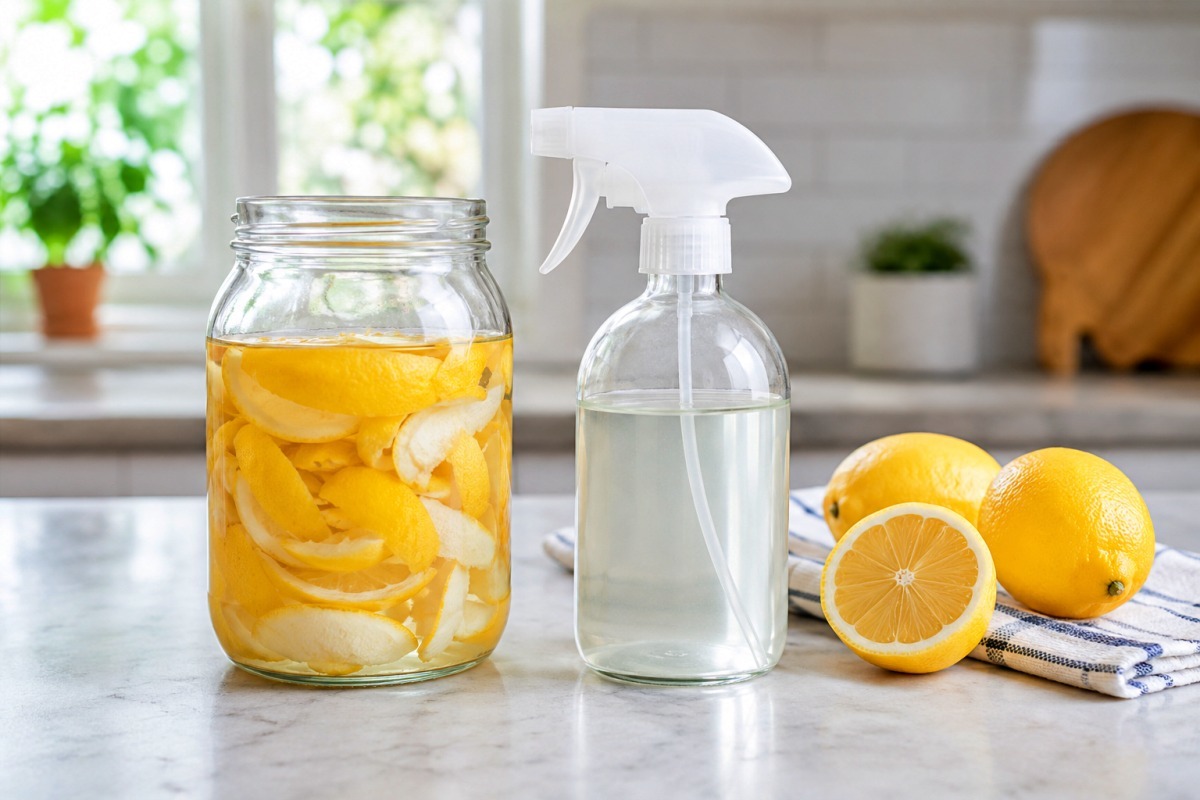
Use this solution to wipe light grease around the stove or on table surfaces. Because it’s acidic, avoid marble, natural stone, aluminum, copper, or surfaces with weak coatings. Don’t spray it directly on wooden furniture or electronics—apply a small amount to a cloth and wipe, keeping moisture away from device openings.
Homemade cleaners lack commercial preservatives, so don’t store them long. Discard the solution if its smell changes or you see particles. Use the spray bottle within a short time and keep it out of reach of children and pets.
Wash lemons before cleaning
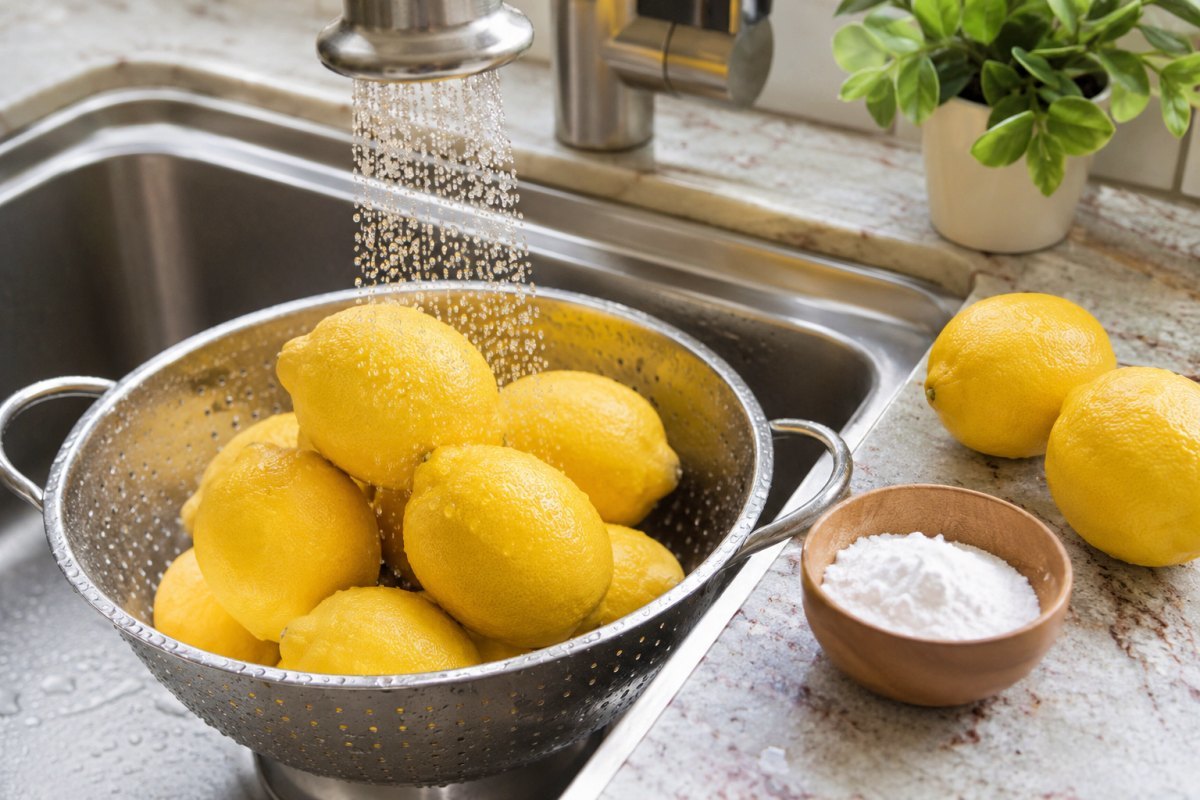
People often use whole lemons, including the peel, for cleaning. Wash the lemon surface thoroughly under running water and, if needed, scrub with a little baking soda before rinsing well. Any residue on the peel can transfer to other surfaces during cleaning.
If you cut a lemon but don’t use it immediately, store it in an airtight container in the refrigerator. Old lemons can dry out or grow mold—check them before use. If you plan to use lemon juice only for cleaning, freeze it in an ice tray and thaw as needed to reduce waste.
Be cautious with marble and aluminum
Lemons help in many kitchen tasks, but they aren’t safe everywhere. Materials high in calcium, such as natural marble and limestone, react to acids—lemon juice can cloud or strip their shine. Avoid using lemon on those countertops or floors.
Aluminum and copper can discolor if lemon juice remains on them. Stainless steel is more forgiving, but don’t let lemon sit on it—rinse promptly. Rubber seals and silicone parts may also be sensitive to acids, so avoid repeated use on those components.
Remember that lemon doesn’t replace specialty cleaners or disinfectants. It helps reduce light scale and odors but won’t handle mold or situations that require food-safety disinfection. For tools used with raw meat, fish, or eggs, wash with detergent and dry thoroughly.
Leftover lemons still have uses before you toss them. They can help loosen microwave grime, reduce kettle scale, and manage odors on cutting boards and sinks. Their effectiveness comes from acidity, so choose appropriate surfaces and limit contact time. Use lemon briefly where appropriate and rinse well—that’s the safest way to get the most from it.