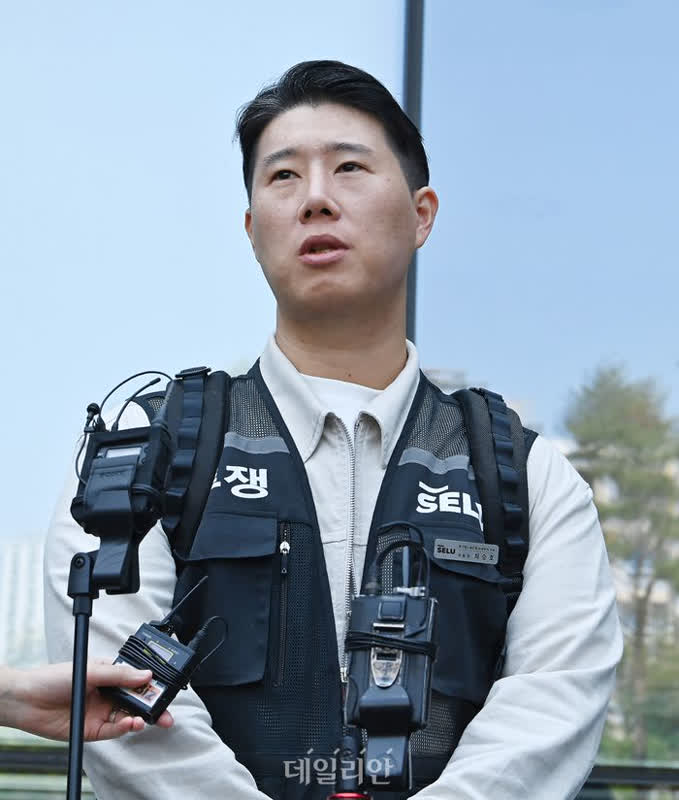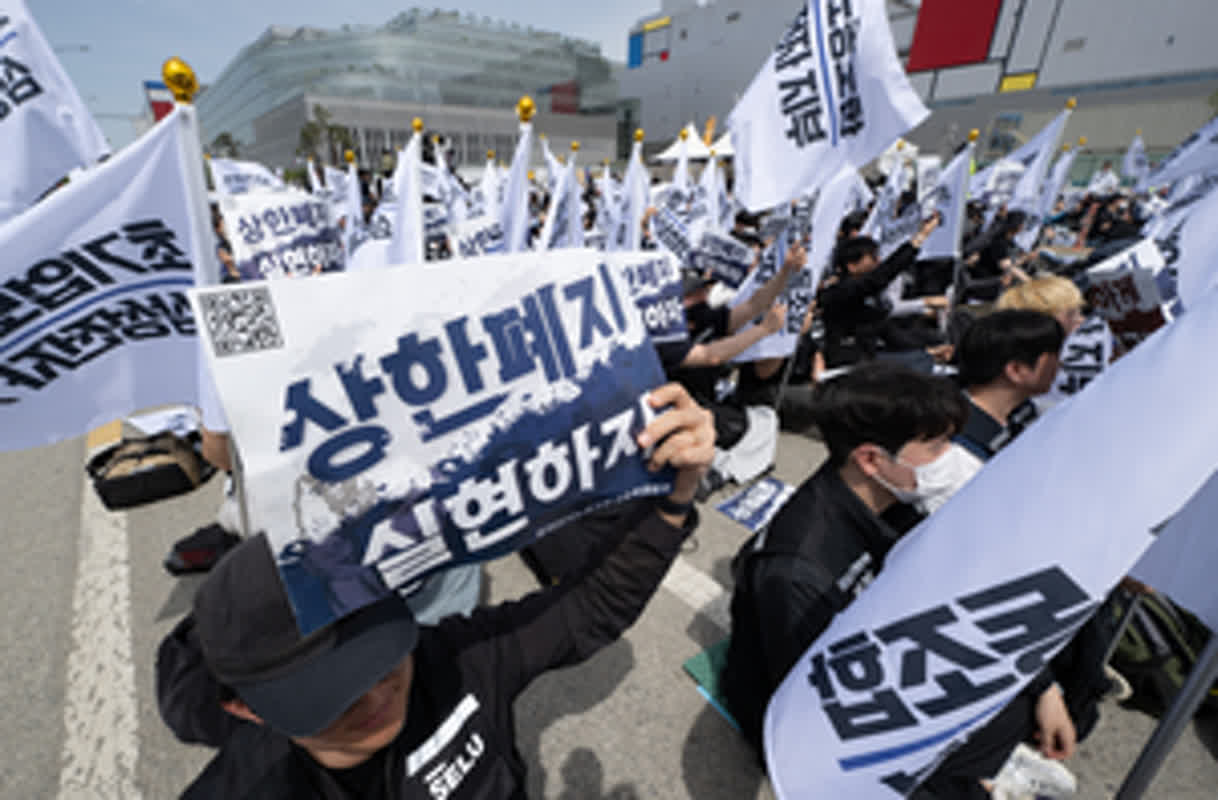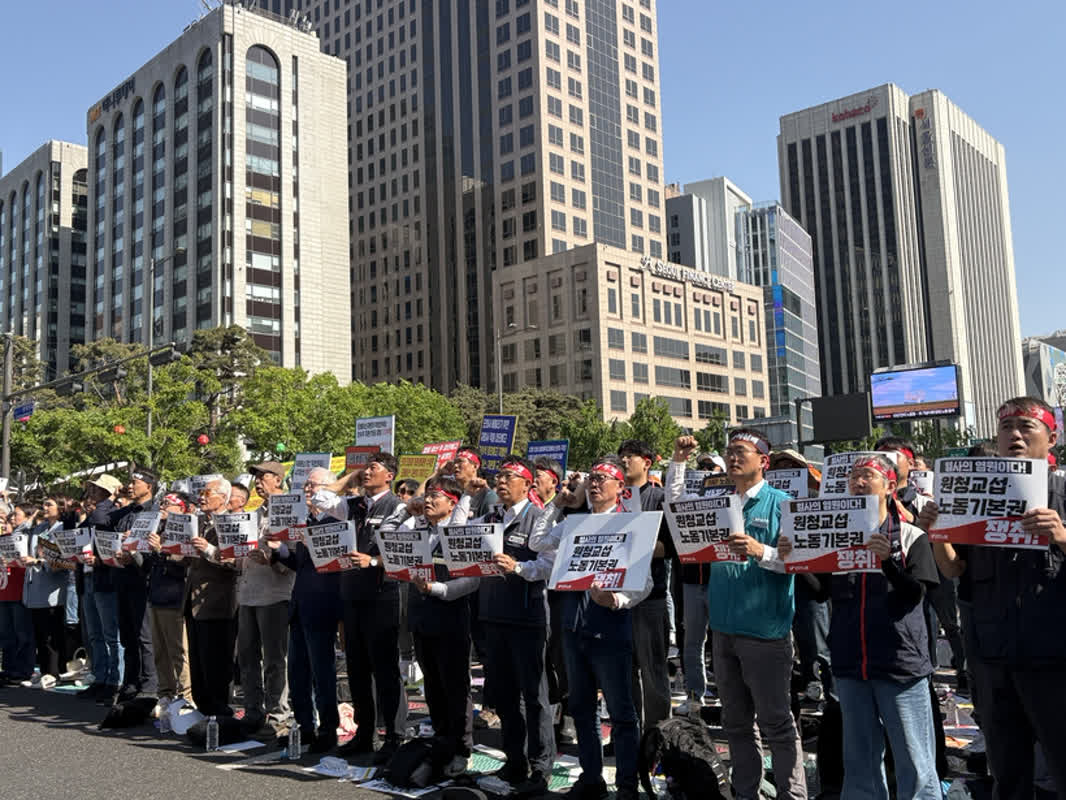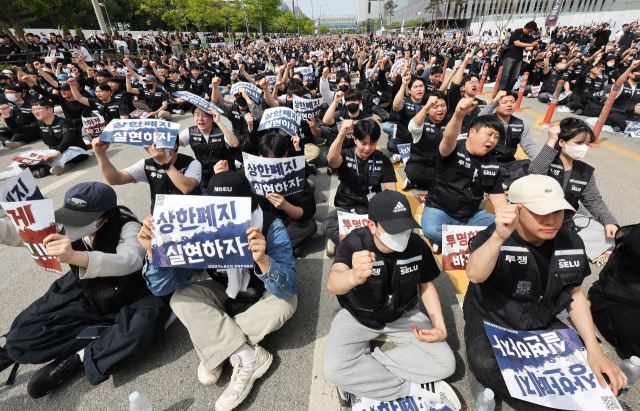
A recent poll of the South Korean public finds roughly seven in 10 view the full strike announced by the Samsung Electronics union negatively, citing concerns that the union’s demands are excessive and could weaken the industry’s competitiveness.
Realmeter conducted the survey for Energy Economy News and found that 69.3% of respondents judged the Samsung union’s planned strike “inappropriate” on the grounds that its demands are excessive and could hurt industrial competitiveness.
By contrast, just 18.5% said the strike was “appropriate” as a legitimate exercise of rights and a demand for compensation. Negative assessments were about 3.7 times more common than positive ones.
The union is demanding a performance bonus equal to 15% of operating profit—about 45 trillion KRW (approximately $33.75 billion). It has said it will launch an 18-day full strike from May 21 to June 7 if the company does not accept the demand.
On a per-employee basis for Samsung’s domestic semiconductor workforce, the demand approaches 600 million KRW per person (about $450,000), and the total far exceeds last year’s Samsung Electronics R&D spending of 37.7 trillion KRW (approximately $28.28 billion).
The union also warned that a strike could inflict up to 30 trillion KRW in losses (approximately $22.50 billion).
Negative opinions exceeded 60% across all regions. Gwangju and the Jeolla provinces registered the highest negative response at 80.7%. Negative views constituted a majority in every age group, peaking at 81.0% among people in their 60s, followed by 71.7% for those in their 50s, 70.5% for those 70 and older, 65.0% for people in their 40s, 62.6% for ages 18–29, and 62.4% for people in their 30s.
Asked what they feared most if the strike occurs, 33.3% cited a loss of confidence in South Korea’s semiconductor industry due to global supply-chain disruption. Other top concerns included financial distress for parts and equipment suppliers and a domestic economic slowdown (25.9%), widening gaps with competitors and weakened market leadership (18.0%), and stock-price declines and losses for individual investors (14.1%).
On resolving labor-management conflict, 44.0% said the union should refrain from hard-line tactics and shift to dialogue-based negotiations. Another 28.2% favored establishing a transparent, data-driven wage and performance-reward system. Government or third-party mediation and management’s proposal to raise performance payouts each received 11.3%.
Respondents aged 50 and older were especially likely to emphasize dialogue-based negotiations, while those under 40 showed similar levels of support for greater transparency in compensation systems and a shift toward negotiated settlements.
Realmeter interpreted the results as indicating that a majority of the public prefers dialogue over the extreme measure of a strike, and that respondents under 40 tend to prioritize institutional reforms over unilateral concessions.
The poll surveyed 1,000 men and women nationwide in South Korea aged 18 and older from April 27–28 using random-digit-dialing (RDD) automated mobile calls. The margin of error is ±3.1 percentage points at the 95% confidence level, and the response rate was 4.6%.