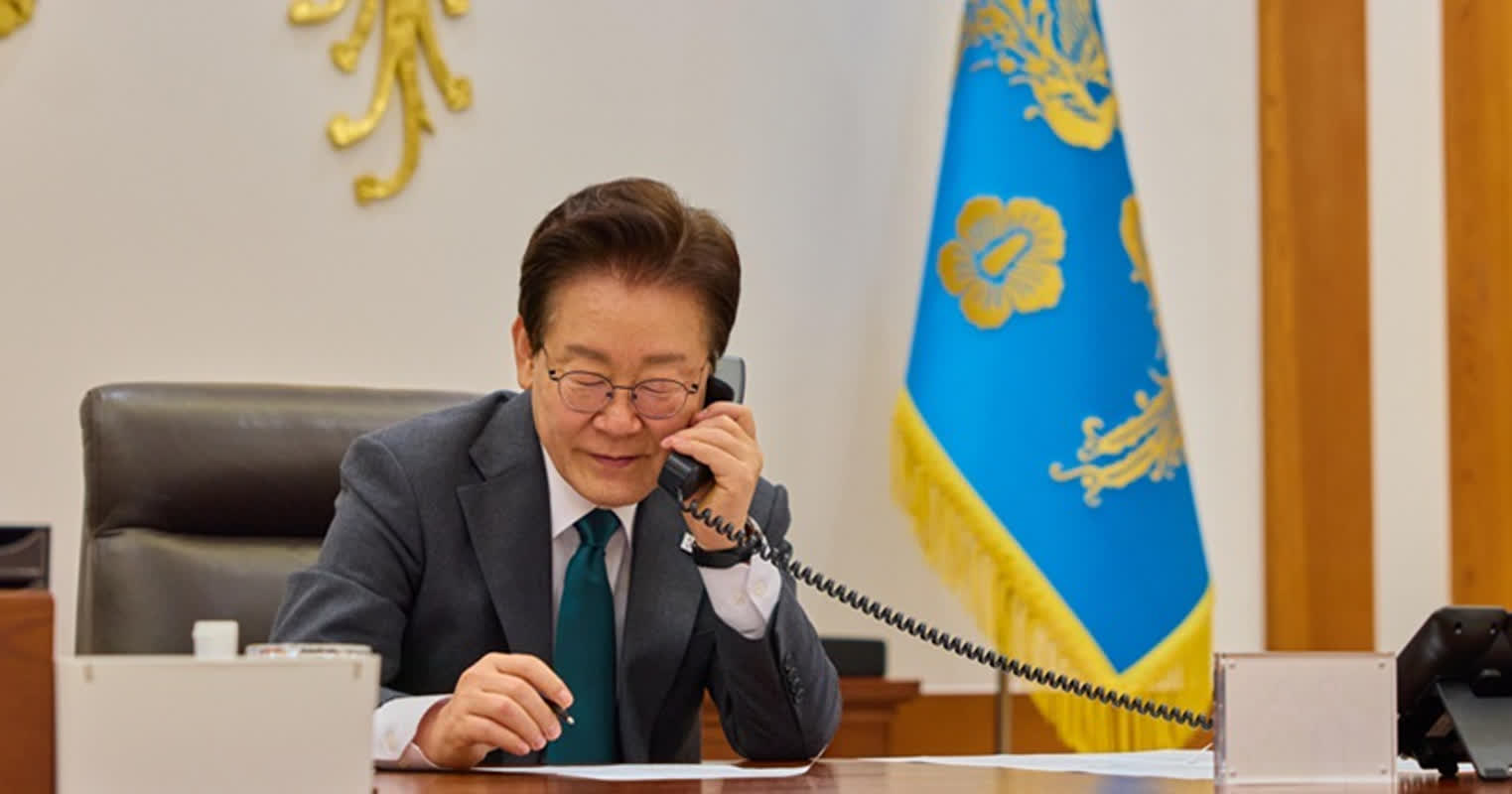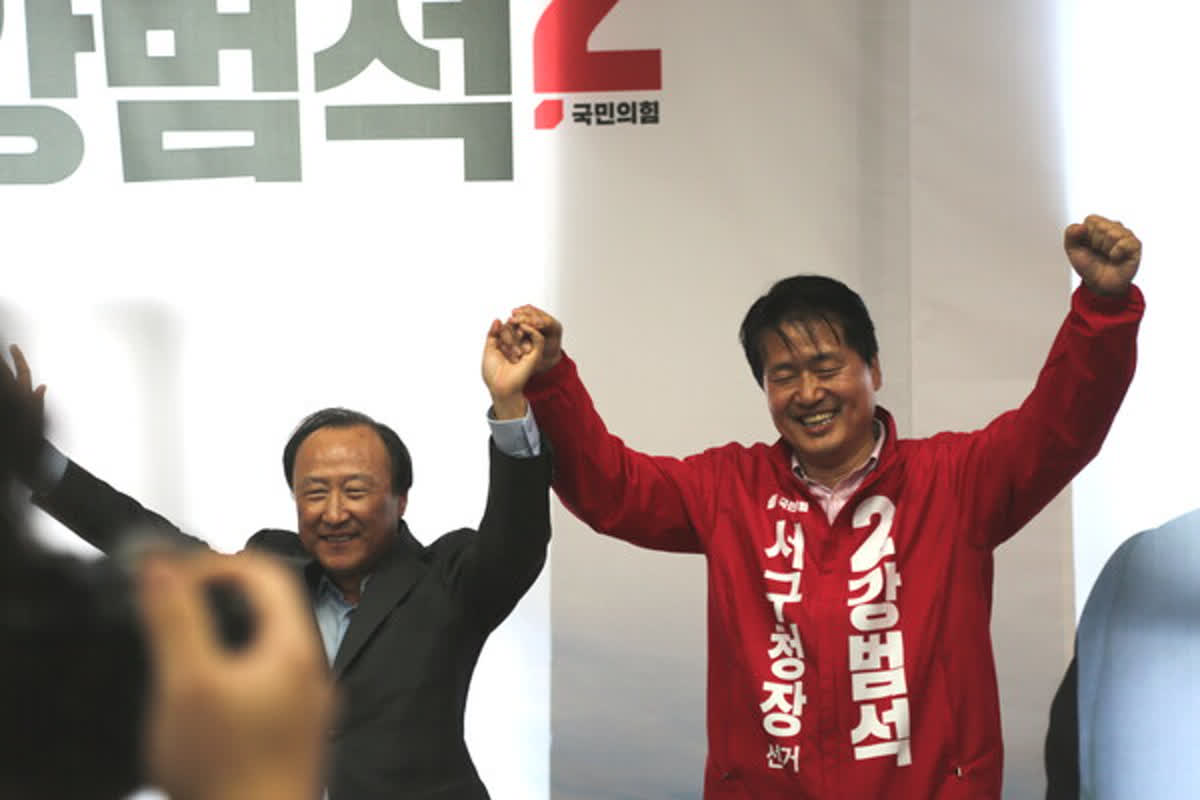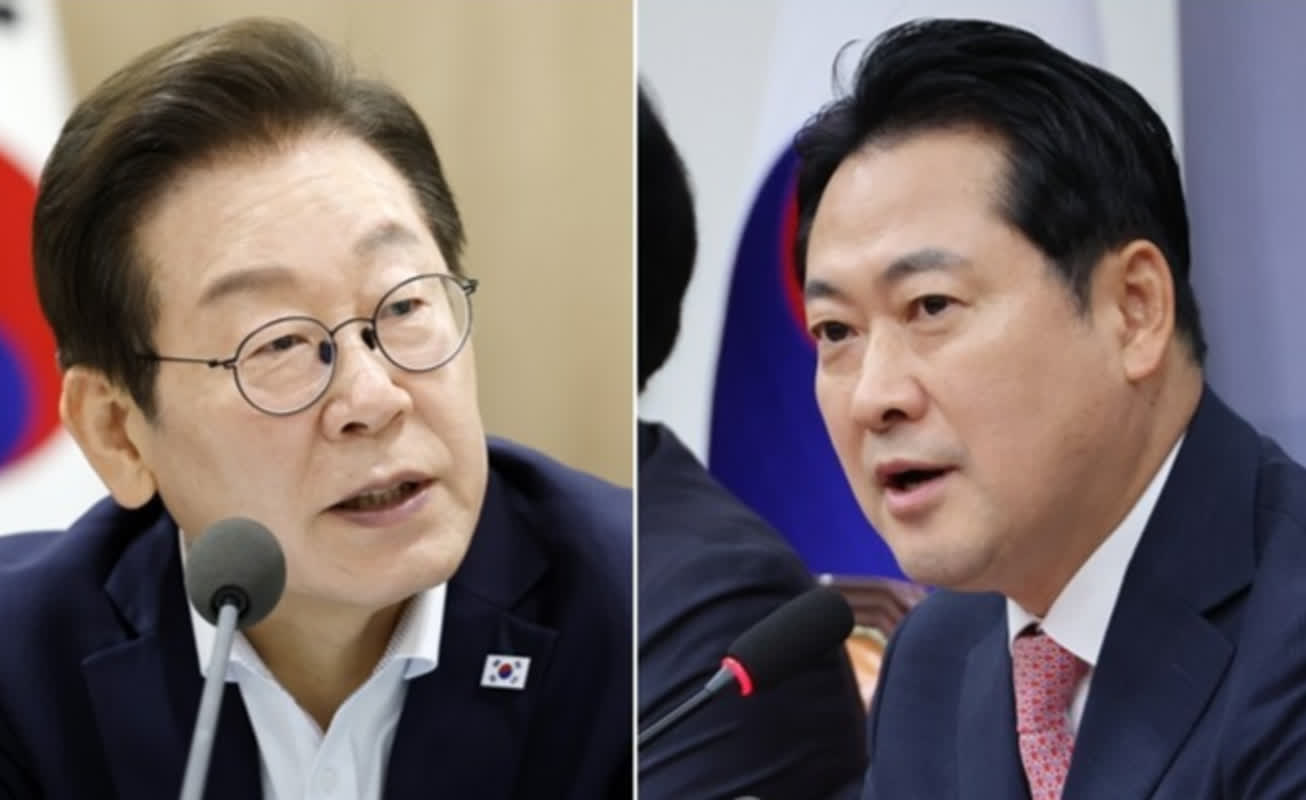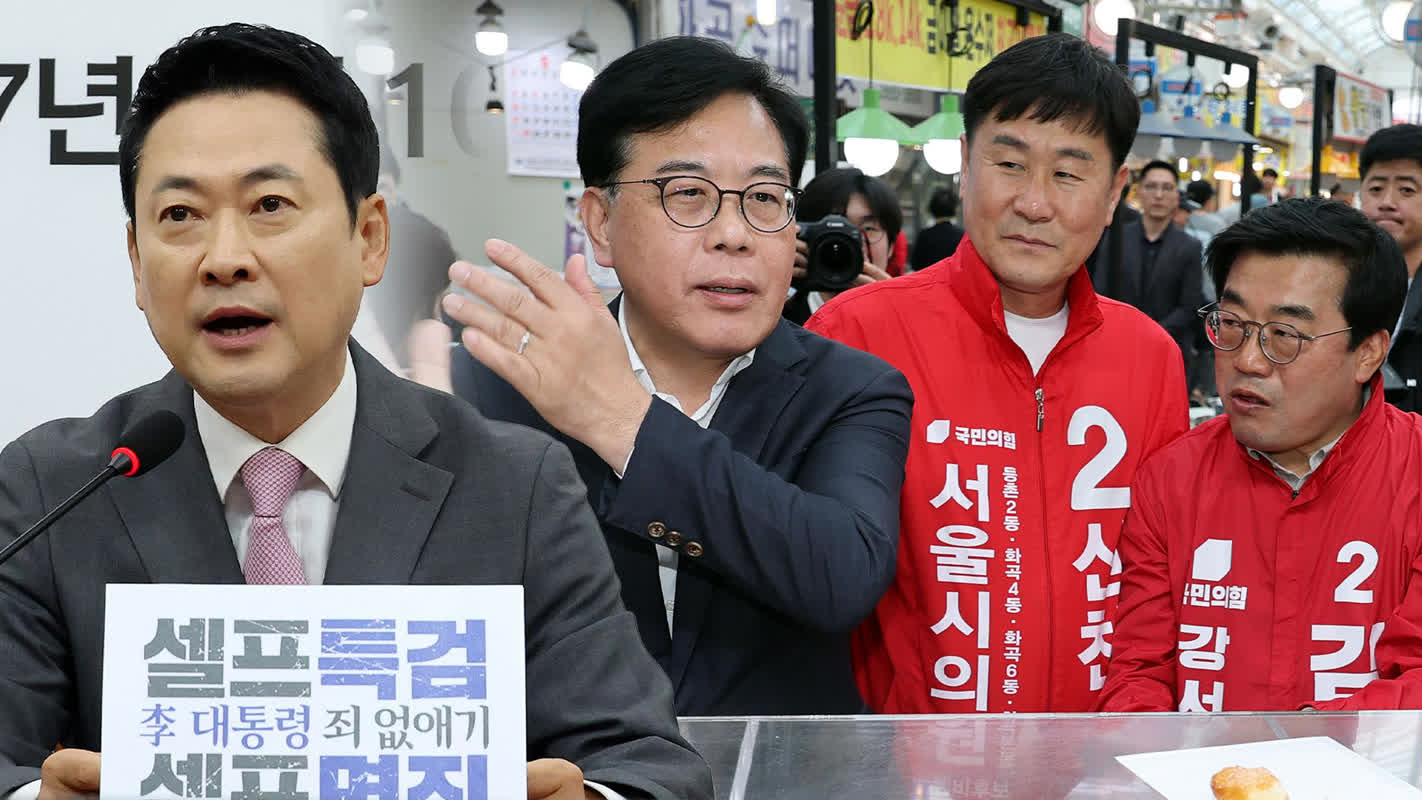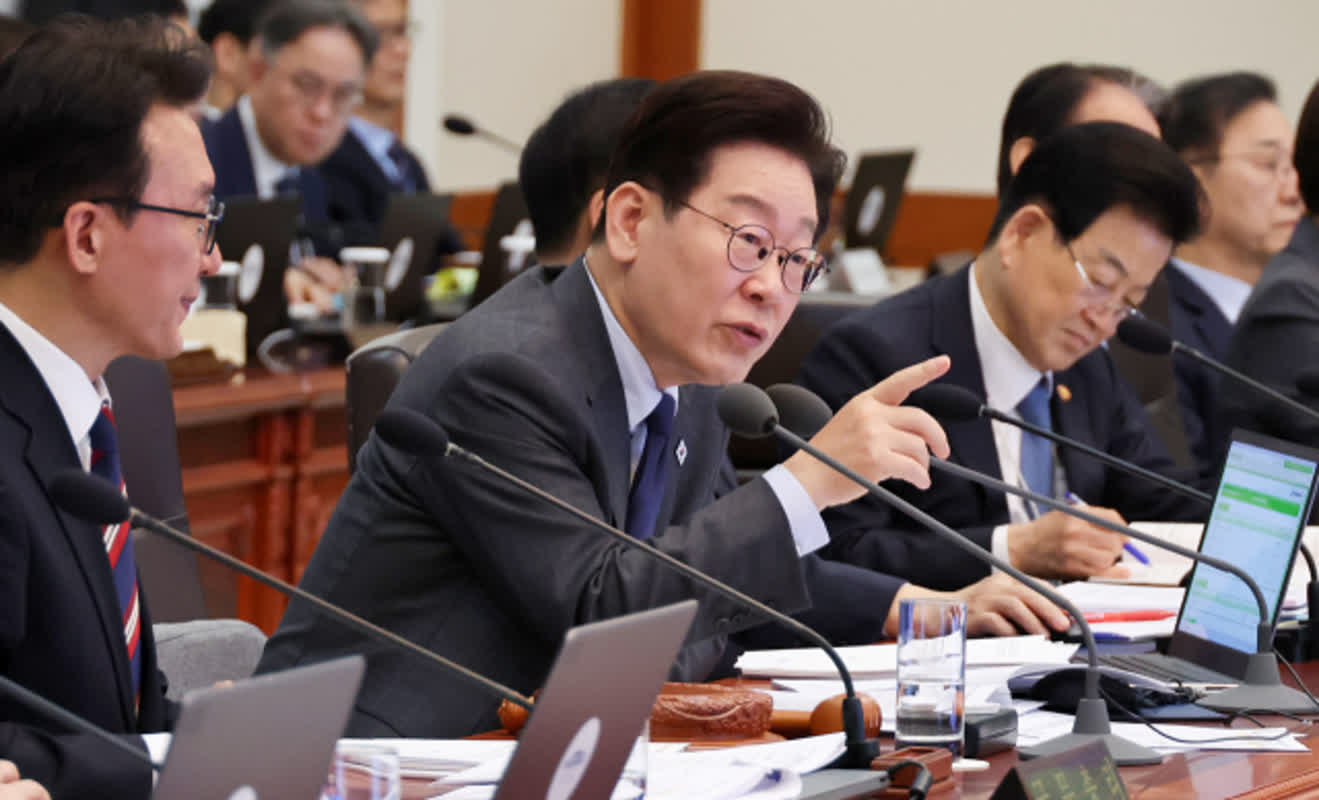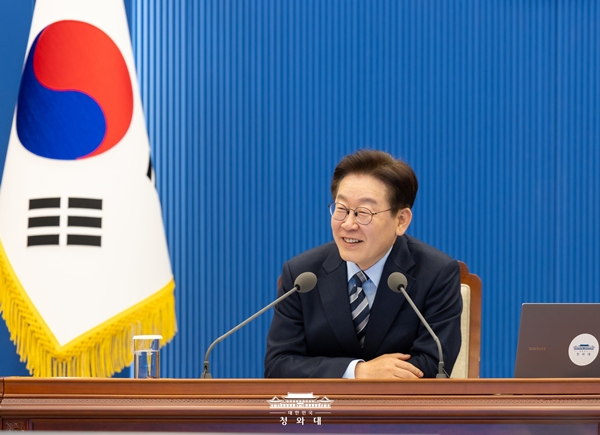
President Lee Jae‑myung reportedly asked freshman Democratic Party lawmakers for their cooperation on prosecutorial reform during a dinner on the 15th. He plans to meet the freshman lawmakers he missed on the 16th. With allegations of a "prosecution‑dismissal deal" driving intra‑party tensions to a peak, Lee began by meeting freshman lawmakers—many of whom are aligned with him—to explain his thinking. Observers say the pro‑Lee faction is now leading party discussions and helping to resolve internal disputes.
According to the Dong‑A Ilbo, one attendee quoted Lee as saying, "Reform cannot be achieved by simply pushing it through bluntly." The attendee added that Lee argued, "Under the government's proposal, prosecutors' investigative powers would be stripped," and that he even questioned the changes to the title and role of the prosecutor general. JTBC reported Lee as saying, "Not all prosecutors are bad people, are they?"
President meets freshman lawmakers, many pro‑Lee
Meeting draws attention amid swelling 'prosecution‑dismissal deal' controversy
Why did Lee convey this message specifically to freshman lawmakers? The Hankook Ilbo pointed to the rising visibility of pro‑Lee freshmen, who have begun to speak out in key moments. The paper reported that 46 Democratic lawmakers publicly criticized the alleged deal—that the president's indictment would be dropped in exchange for granting prosecutors supplemental investigatory powers—in interviews, on social media, or at party meetings. Of those 46, 24 (52.2%) were freshmen, a higher share than freshmen's 42% representation among the party's 162 members (68 freshmen).
The Hankook Ilbo noted that many freshmen entered the National Assembly during the 22nd term while Lee led the party, filling their ranks with pro‑Lee members, including the so‑called Seongnam‑Gyeonggi line and many who worked on Lee's 2021 presidential campaign. Against that backdrop, Lee invited 34 of the party's 67 freshmen to the Blue House for a meal and plans to meet the rest on the 16th. Democratic Party spokesperson Park Ji‑hye said Lee urged, "Let's maintain a stable, cooperative relationship between the government and the ruling party and address our stacked reform agenda."
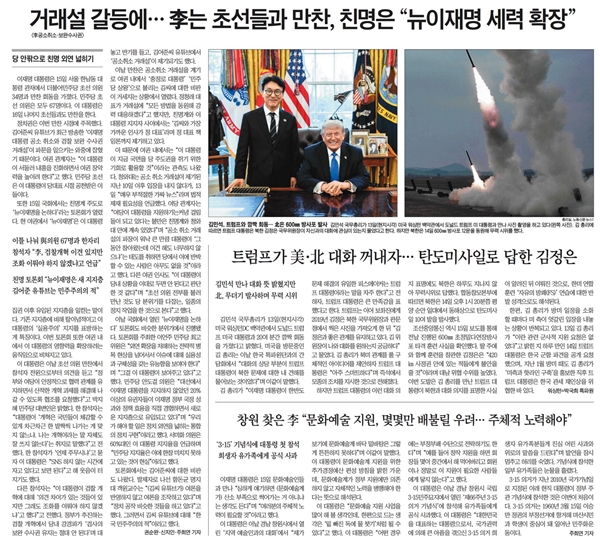
News outlets have given significant coverage to Lee's meetings with freshman lawmakers. The Chosun Ilbo's March 16 political front‑page story, headlined "Deal controversy… Lee dines with freshmen; pro‑Lee say 'New Lee force expands,'" said political circles focused on the timing of the dinner because it coincided with the uproar triggered by Kim Eo‑jun's YouTube broadcast alleging the president's indictment would be dropped in a deal. The paper also noted a parliamentary forum titled "Discussing the New Lee," hosted by Democratic Party senior member Lee Eon‑ju, where panelists reportedly criticized Kim Eo‑jun.
Ruling camp reorganizes around Lee Jae‑myung
How do conservatives view internal criticism of Kim Eo‑jun?
The Munhwa Ilbo interpreted the intra‑party conflict as a consolidation of control by Lee and his allies. In its March 16 report, the paper cited analysts who say pro‑Lee forces now hold the initiative after the dispute over so‑called prosecutorial reform. It reported that by gathering ruling‑party freshmen and effectively urging swift passage of prosecutorial reform legislation, Lee has placed party hardliners who oppose the government's proposal on the defensive.
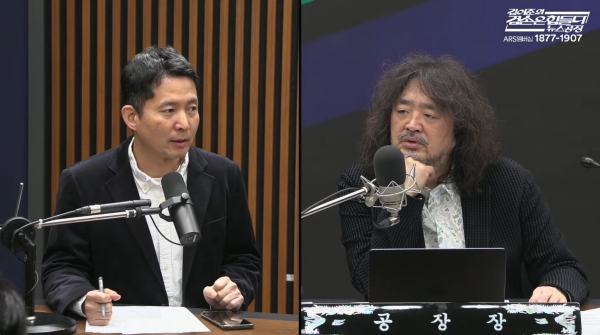
Some commentators argue that ruling‑party lawmakers helped amplify Kim Eo‑jun's platform. In a March 16 column titled "Kim Eo‑jun's politics and the party's belated reality check," the JoongAng Ilbo wrote that it is difficult to deny the ruling camp used Kim's conspiratorial broadcasts as political fuel. The column said Kim became a kind of shadow king—laughing as candidates bowed deeply to him; Lee visited his studio several times before taking office, and Representative Jeong Cheong‑rae effectively received Kim's backing during the party leadership race. The piece added that the same camp now disowns Kim much like Peter denied Jesus before the rooster crowed.
The column's subtitle asked, "Wasn't the Democratic Party the one that raised the 'monster'?" It likened former party leader Song Young‑gil's remark—that one should reflect on whether fighting a monster turned you into one—to Kim Eo‑jun.
Criticism that the ruling camp won't criticize Kim Eo‑jun
On the 14th, Lee criticized irresponsible media on social media—saying, "Irresponsible media are more terrifying than weapons"—after lawyer Jang Young‑ha, who had alleged the president's ties to organized crime, received a final guilty verdict; Lee condemned outlets that relayed the claim. The Hankook Ilbo cited Lee's remark in a March 16 editorial titled "Irresponsible media are more terrifying than weapons…No exception for 'our side,'" and flagged that the "presidential indictment‑drop deal" rumor originated within the progressive camp.
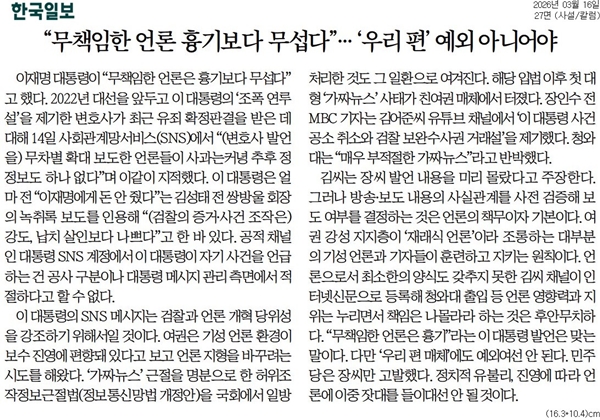
The Hankook Ilbo criticized MBC alumnus Jang In‑su for raising the deal allegation on Kim Eo‑jun's YouTube channel, saying that while Kim claims he did not know Jang's remarks in advance, the media has a duty to verify the factual basis of broadcasts and reports before deciding to air them. The paper added that this is the professional standard most mainstream journalists follow, even as some hard‑line supporters of the ruling camp deride them as traditional media.
The paper argued that Kim's channel, which lacks basic journalistic standards, has registered as an online newspaper and enjoys Blue House access and media influence while shirking responsibility—an act of shamelessness. It agreed with the president that irresponsible media are more terrifying than weapons, but said that remark should not exempt outlets aligned with "our side." The paper noted the party filed charges only against Jang and warned against applying double standards to the media based on political advantage or camp.
Meanwhile, on the 16th Lee shared a JoongAng Ilbo article on X titled "In response to Lee's claim about the government's proposal… Kim Eo‑jun: 'Now that you're in power, you're lenient; I want to be persuaded,'" and wrote that although the government's prosecution‑reform proposal was posted for public comment, the party and government produced a revised draft through party‑government consultations and adopted that revision as the ruling party's position—so the revision is a party‑government proposal, not solely the government's. He added that they must build an objective, even‑handed system: one that will remain valid over time and through shifting power dynamics, and that is rational, efficient, and difficult to abuse.