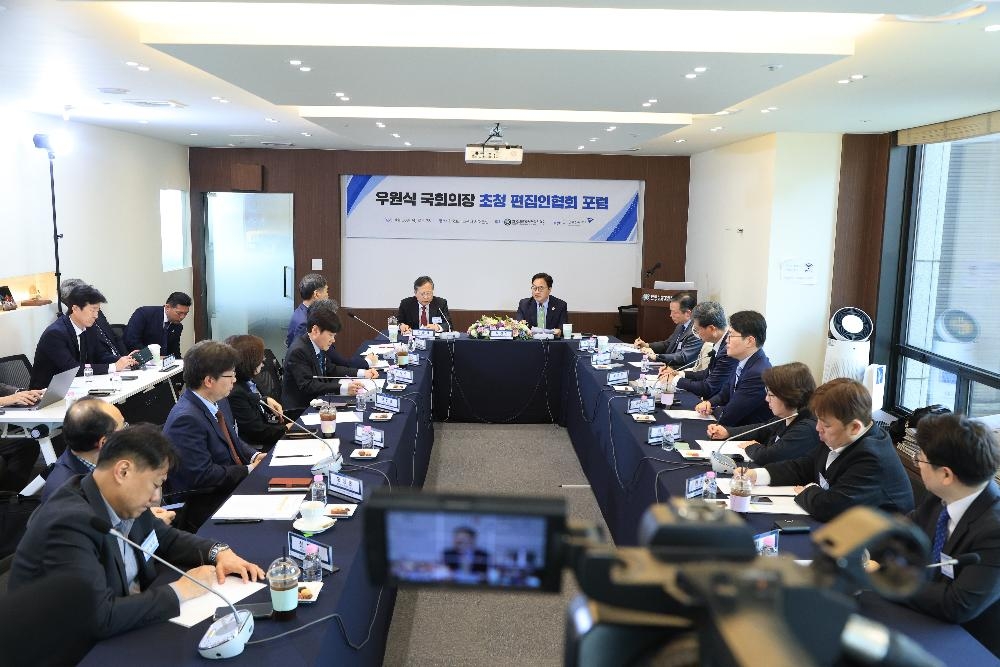
 [Herald Economy = Shin Dae-won, reporter] Speaker Woo Won-sik said on the 30th that he is doing everything he can, driven by the urgent belief that if he fails to open the door to a constitutional amendment this time, another opportunity may not come.
At a forum hosted by the Korea Newspaper and Broadcasting Editors Association at the Press Center in Jung-gu, Seoul, Speaker Woo added, “The People Power Party opposes this as party policy, so it does look difficult.”
Responding to concerns that holding a constitutional referendum on the same day as the June 3 local elections would overshadow those contests and create a “constitutional amendment black hole,” Speaker Woo said voters’ turnout is the main issue. “If the referendum fails to secure a majority and is invalidated, the cost to the nation would be enormous. A topic has to be genuinely contentious to become a black hole, and the People Power Party has not argued against the substance of the amendment being proposed,” he said.
Earlier, 187 lawmakers from parties other than the People Power Party introduced a constitutional amendment that would add language to the preamble recognizing the spirit of the Bu-Ma (Busan–Masan) Democratic Uprising and the May 18 Democratization Movement alongside the April 19 Revolution, and would strengthen parliamentary oversight of martial law, among other changes.
Rejecting calls for more public debate, Speaker Woo argued the proposals on democratic constitutional principles, stronger parliamentary controls, and the state’s responsibility for balanced regional development are rooted in lived experience. “These are demands born from episodes such as emergency martial law and persistent regional disparities — issues people have painfully endured and still face today,” he said.
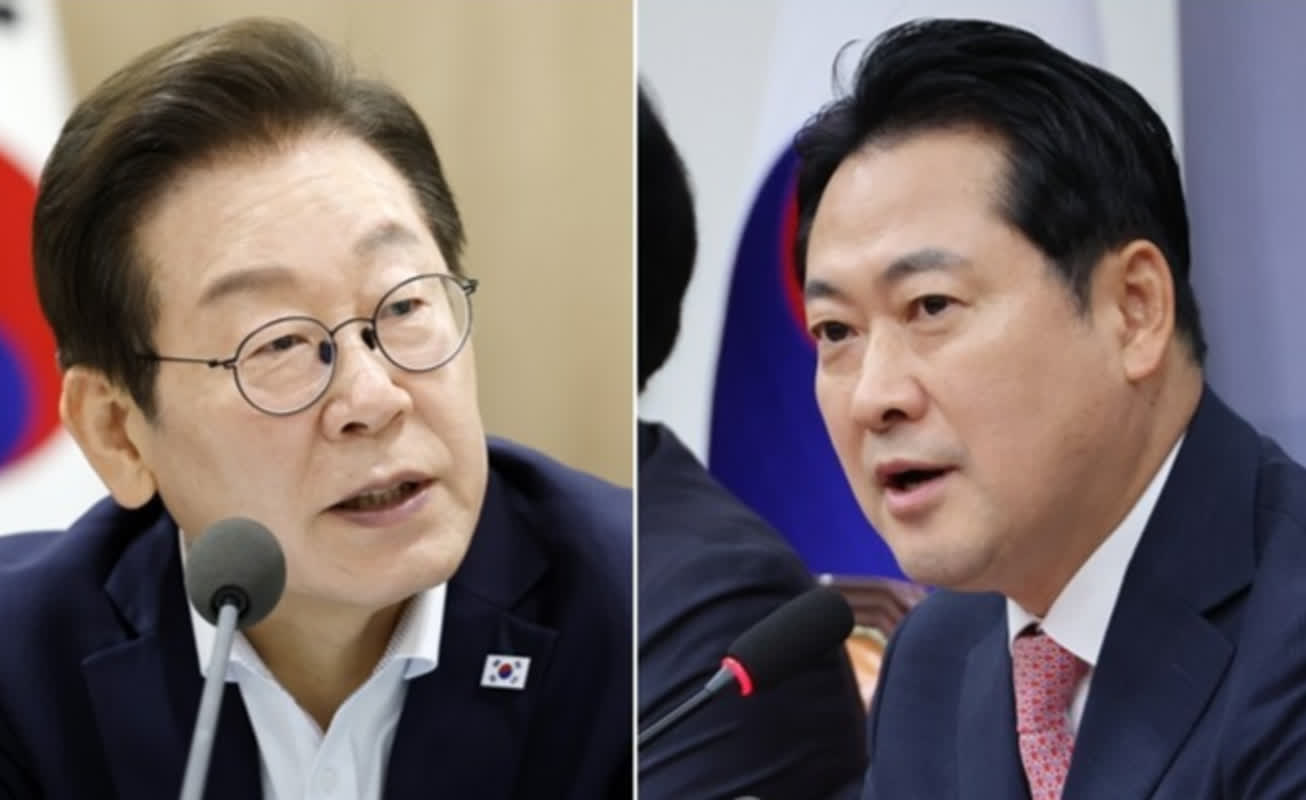
Addressing suspicions that the amendment is intended to enable President Lee Jae-myung to seek a second term, he drew a firm line: “That’s impossible, and the president has already said it’s not possible.”
Speaker Woo noted that nine lawmakers resigned their seats to run in local elections, reducing the number of sitting members from 295 to 285. “For a constitutional amendment you need a two-thirds majority — 191 votes — so we are 12 short. This isn’t about poaching members; if the People Power Party lifts its party-line opposition to the amendment, I believe it is something we could realistically pursue,” he said.
With just over a month left in his term, Speaker Woo reflected, “Serving as Speaker during such a complex and demanding period has been a great honor. I played a significant role during emergency martial law, an impeachment, an early presidential election, and the early reform phase of this administration. Two years passed without my noticing because of the workload.”
He added, “Above all, my greatest satisfaction comes from defending constitutional values and the spirit of democracy, and from seeing the National Assembly’s role and credibility strengthened in the process.”
Asked about his plans after stepping down as Speaker, he said, “I still consider opening the door to a constitutional amendment extremely important, and I am focused on that. I haven’t given detailed thought to other plans.”
He left the possibility open to requests from the public or colleagues: “If someone tells me ‘this is something you must do,’ or the public asks, ‘you should do this,’ I will consider it. Otherwise, I will devote myself to supporting younger colleagues.”