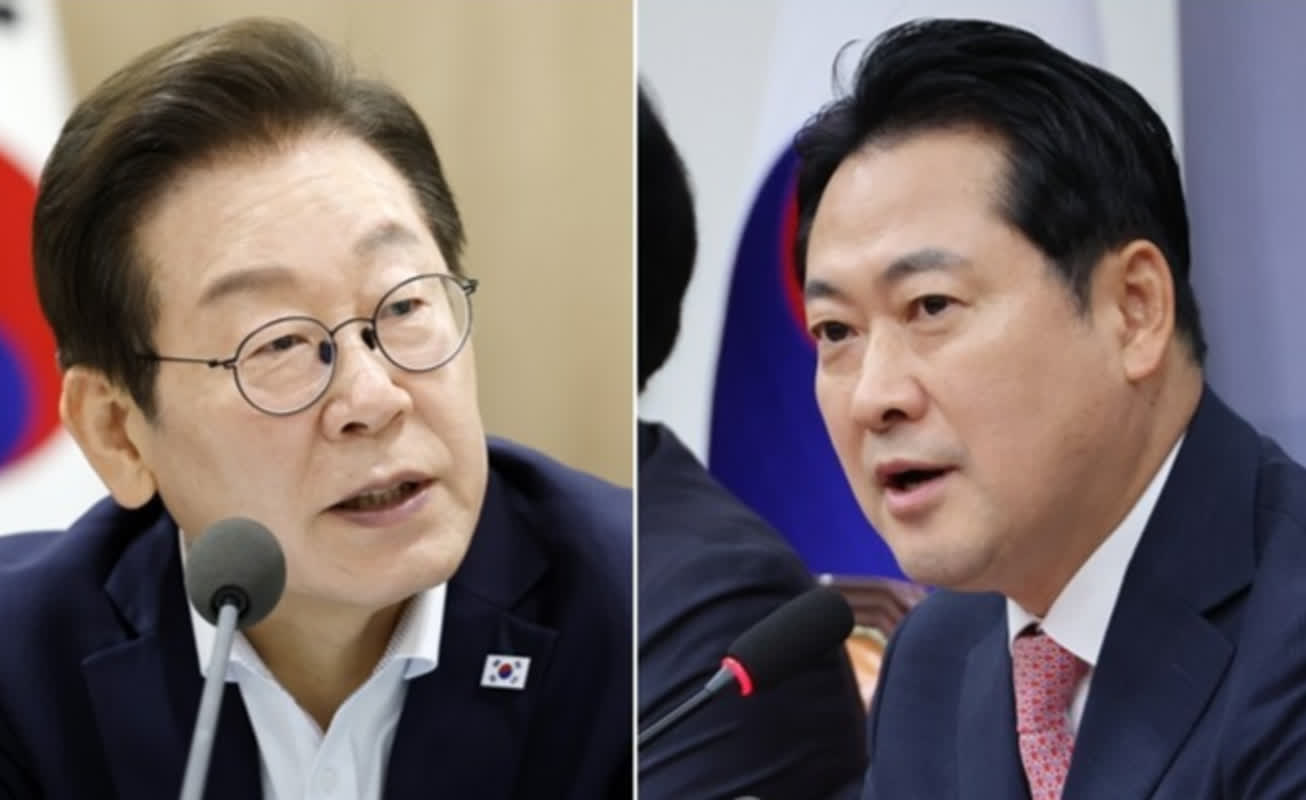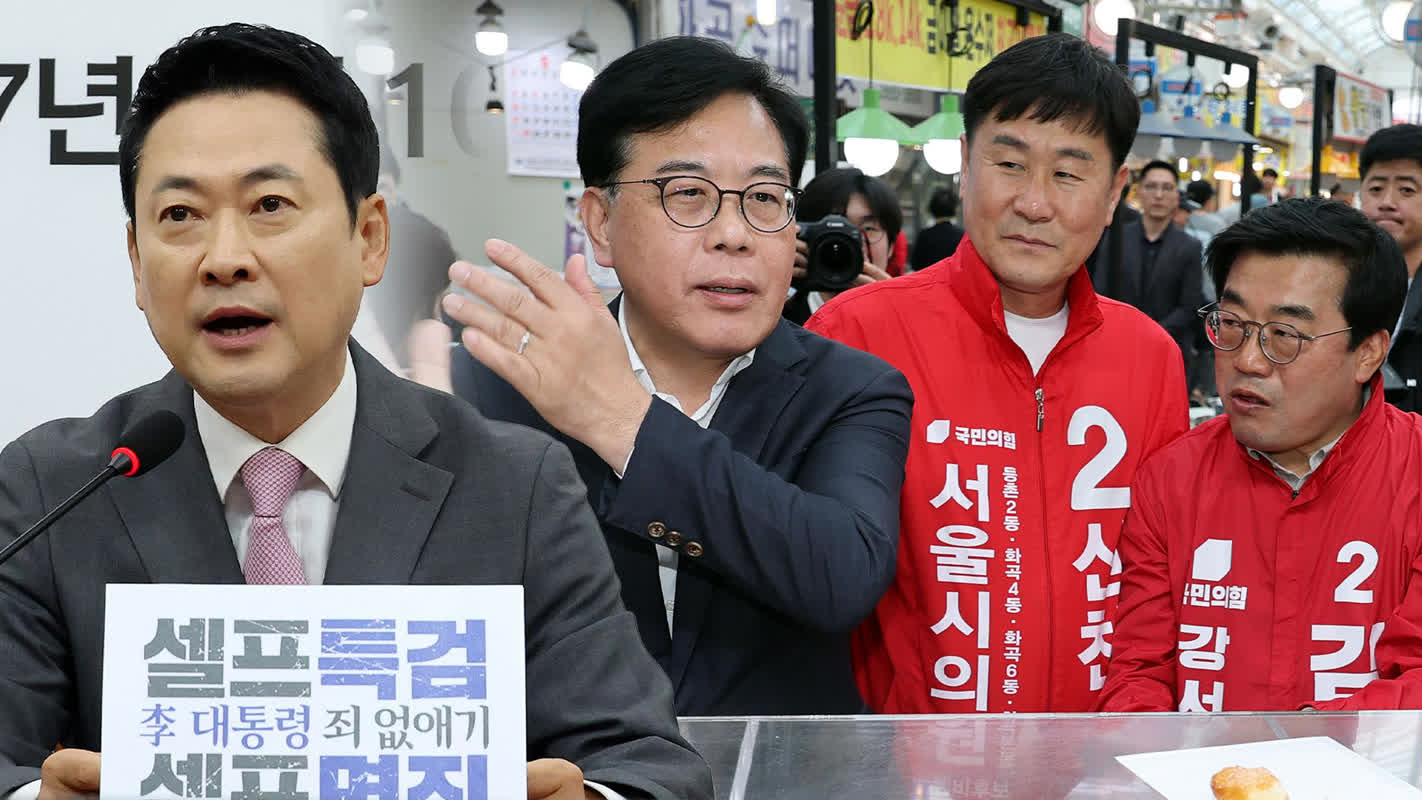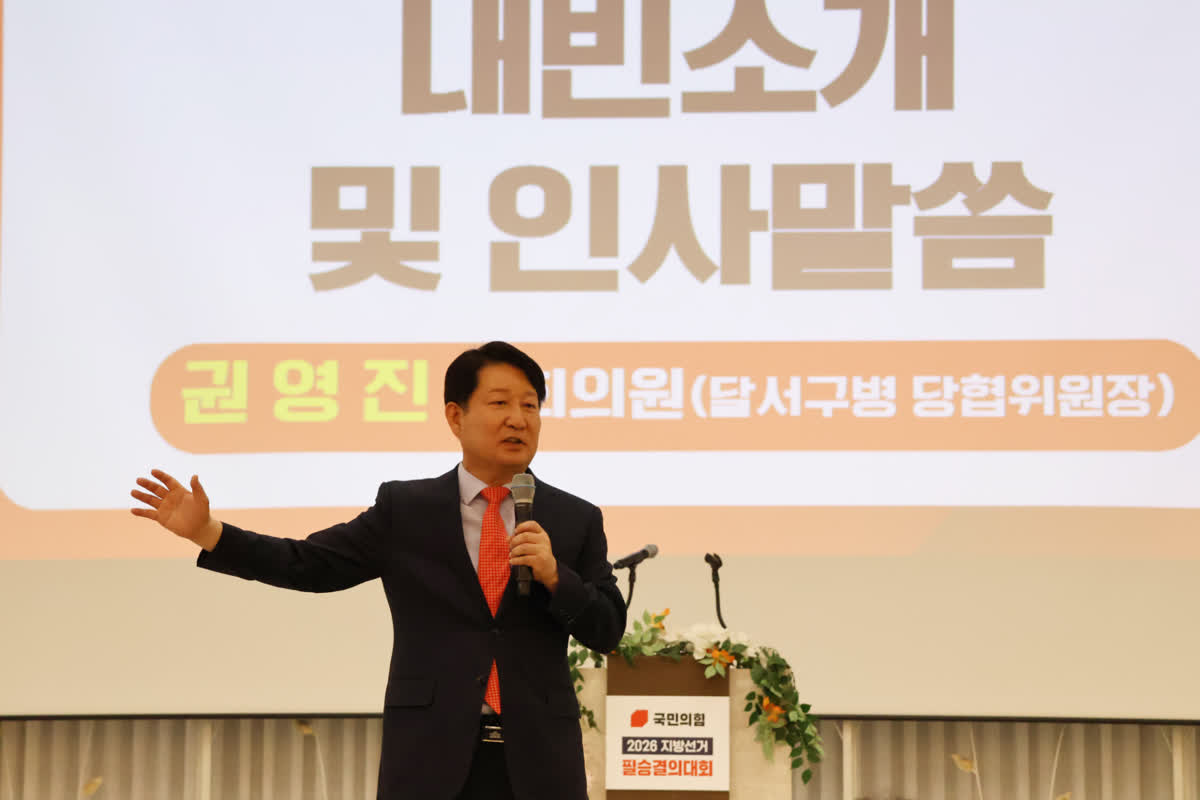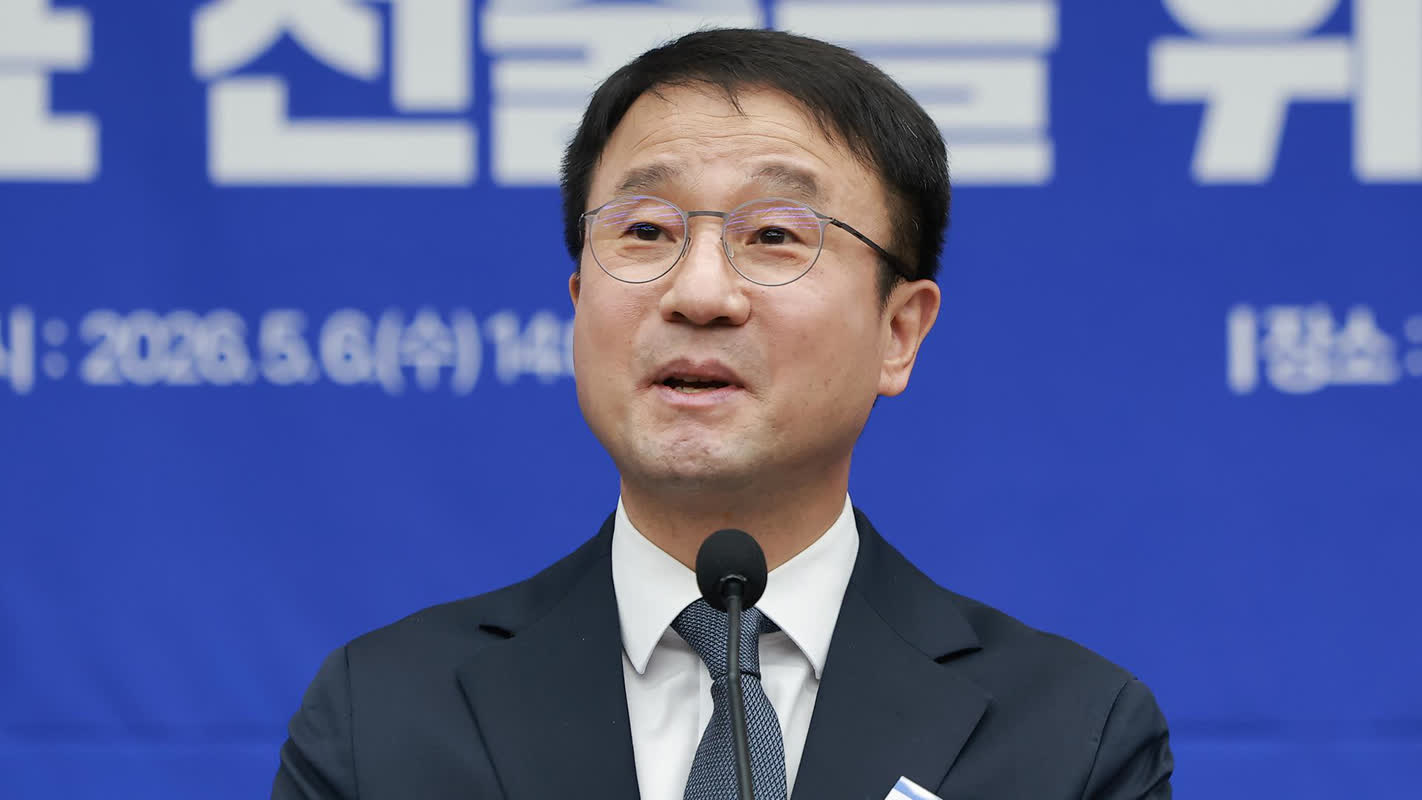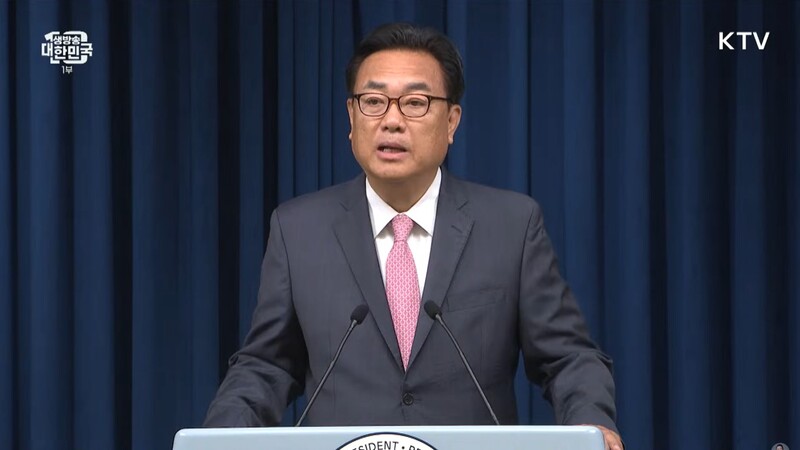
Former presidential chief Jeong Jin-seok announced he will run in a by-election, prompting a sharp response from the progressive daily Hankyoreh. Progressive outlets also voiced concern about a special-prosecutor bill the Democratic Party introduced on April 30 that would give special prosecutors the authority to withdraw indictments. Below is a roundup of editorials from major newspapers on May 1–2.
Hankyoreh: “People Power Party must bar Jeong Jin-seok from nomination”
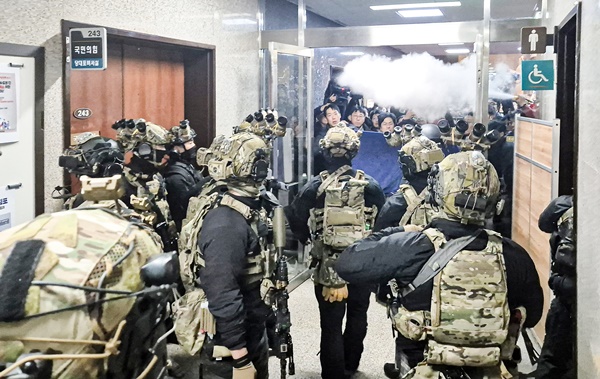
In an editorial titled “Jeong Jin-seok shows no repentance over the ‘Yoon Seok-yeol rebellion’; the People Power Party must exclude him from nominations,” Hankyoreh called Jeong’s statement—“I could not ignore my final duty to rebuild the party and the conservative movement in this emergency; I will restore parliamentary democracy in the National Assembly and set our camp straight”—an “outrageous rationalization.” The paper asked, “Does Jeong really claim no responsibility for the crisis now gripping the party and the conservative movement? On the night the president illegally declared martial law and ordered Special Forces into the main National Assembly building to remove lawmakers—the ‘night of insurrection’—where was Yoon’s top aide, Jeong Jin-seok, and what was he doing?”
Hankyoreh noted that “police are investigating allegations that, immediately after President Yoon’s removal, he ordered about 1,000 presidential office computers to be wiped.” The paper also reported that Jeong faces trial over allegations that in April 2025 he intervened in judicial nominations—pressuring then–Acting Prime Minister Han Deok-su, Legal Affairs Director Lee Wan-gyu, and Seoul High Court Presiding Judge Ham Sang-hoon—to appoint successors for seats that should have succeeded Moon Hyung-bae and Lee Mi-sun without proper vetting.
Hankyoreh wrote that “it is natural to suspect he aims to use an elected office as a shield against his legal risks,” adding, “Above all, the president he once served as chief of staff has been convicted of leading an insurrection and sentenced to life. The proper course for Jeong is to step back, show remorse, and cooperate fully with investigations and the courts.” The paper urged the People Power Party to “make a swift decision to exclude Jeong Jin-seok from its candidate list—unless the party intends to turn the June 3 local elections into a ‘Yoon again’ contest.”
Even Hankyoreh criticizes bill granting special prosecutors power to drop indictments as a conflict of interest
Editorials across major dailies—despite differing political leanings—expressed shared concern over the Democratic Party’s April 30 bill that grants special prosecutors the authority to withdraw indictments. Notably, the progressive Hankyoreh also objected to this provision.
The conservative Dong-A Ilbo argued that the special prosecutor’s investigative scope covers not only seven cases previously targeted by parliamentary probes—such as Ssangbangwool’s alleged North Korea remittances and the Daejang-dong and Wirye development scandals—but also cases remanded by the Supreme Court with findings of guilt on the merits and alleged perjury-coaching in the so-called “impersonating prosecutor” case. The paper warned that “the bill would give the special prosecutor the power to decide whether to maintain indictments in those cases.” It added that if the president—who is a party to some of these trials—appoints such a special prosecutor, it would immediately raise conflict-of-interest concerns and call into question the special prosecutor’s impartiality.
Hankyoreh’s editorial, “Giving a ‘fabricated-indictment’ special prosecutor the power to withdraw indictments goes too far,” began by acknowledging that “if the prosecution politically manipulated a case to fabricate charges, it must be corrected.” Still, it argued, “allowing a presidentially appointed special prosecutor to dismiss prosecutions against the president invites criticism that the ruling party is violating the separation of powers and improperly intervening in judicial proceedings.” The paper sharply criticized the proposal, saying, “A special prosecutor appointed by the president dismissing charges in a case where the president is the defendant contradicts core criminal-law principles prohibiting judgment in one’s own case and rules intended to prevent conflicts of interest.”
Hankyoreh nevertheless recognized the need for a special prosecutor given parliamentary investigations that revealed troubling signs—such as the alleged coercion of testimony by former Gyeonggi Deputy Governor Lee Hwa-young in the Ssangbangwool North Korea remittance case and coerced investigations and recanted statements linked to Nam Wook in the Daejang-dong matter—which raised suspicions that prosecutors abused their power to neutralize political opponents during Yoon’s administration. “The ‘political prosecution’ tactics of Yoon’s faction prompted the use of the exceptional measure of a special prosecutor,” the paper added.
The conservative Chosun Ilbo criticized the Democratic Party in an editorial headlined “Democrats put all eight of President Lee’s cases before a ‘prosecution-withdrawal special prosecutor,’” noting that “eight of the 12 probes assigned to the special prosecutor involve President Lee.” It said the list included all criminal cases in which Lee faces charges—ranging from the Daejang-dong and Baekhyeon-dong corruption allegations to alleged North Korea remittances and misuse of provincial corporate cards. The paper warned that, although current law does not allow dismissal of indictments to overturn final judgments, Democrats might seek to broaden the range of cases eligible for dismissal by alleging fabricated charges or legal distortions.
Hankyoreh also cautioned that “raising the possibility of dismissal before investigations even begin will fuel perceptions that a special prosecutor could be used to neutralize President Lee’s legal risks.”
Conservative outlets criticize Samsung unions’ bonus demands
Conservative media criticized bonus demands from unions at Samsung Electronics and Samsung Biologics ahead of Labor Day, and they interpreted President Lee Jae-myung’s remarks about “some organized labor groups” as aimed at the Samsung Electronics union.
Dong-A Ilbo, in an editorial titled “To overcome a pro-labor vs. pro-business dichotomy, unions must show restraint,” highlighted President Lee’s comment that “when some organized labor groups demand excessive or unfair things to save themselves, they draw public scorn and harm other workers,” and analyzed that, although he did not name a specific company, he was likely criticizing the Samsung Electronics union’s aggressive bonus demands.
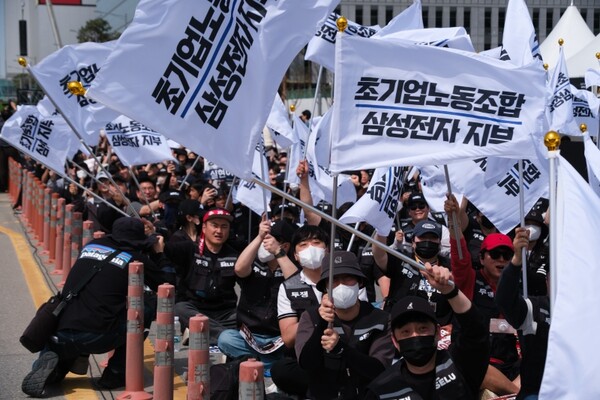
The Korea Economic Daily wrote in “Samsung union ignores public and presidential concerns” that the Samsung Electronics union is demanding an annual cash bonus equal to 15% of annual operating profit—about 45 trillion KRW (approximately $33.75 billion) this year—which most of the public would view as excessive. The paper quoted Trade Minister Kim Jeong-gwan asking whether Samsung’s profits, which are linked to vast infrastructure, partner companies, and more than 4 million small shareholders, should be divided only among company insiders.
By contrast, Kyunghyang Shinmun focused on the threat of AI-driven job displacement. In an editorial titled “President Lee says ‘workers must not be sacrificed to AI’—he chose the right direction for coexistence,” the paper highlighted Lee’s warning that, while machines and artificial intelligence will likely replace much human labor, we should not force unilateral sacrifices on workers in the name of productivity gains. Kyunghyang cautioned against treating AI-driven labor displacement as inevitable and relying solely on after-the-fact redistribution. It emphasized that technological progress delivers broad prosperity only through deliberate economic, social, and political choices.
Other issues the press focused on
Seoul Shinmun argued in “Largest wage gap in a decade—labor reform can’t wait” that the pay gap between regular and non-regular workers widened the most in ten years. Last year, non-regular workers earned just 65.2% of regular workers’ hourly wages; regular workers’ hourly pay rose 3.2% while non-regulars saw only a 1.3% increase. The paper said non-regular workers’ real wages effectively fell because their raises lagged inflation.
“When a regular worker at a large firm earns 10,000 KRW (about $7.50) an hour, a non-regular worker at a business with fewer than 300 employees earns only about 4,150 KRW (about $3.11),” the paper wrote, arguing that a dual structure—based on employment type and firm size—has entrenched wage inequality. It urged carefully designed reforms that link pay-structure overhauls, rehiring policies, and youth employment measures to prevent longer retirement ages from widening the gap further.
Dong-A Ilbo asked in “Is setting the elderly threshold at 65 still appropriate?” reporting Gallup Korea polling that found roughly six in ten people support raising the official elderly threshold from 65 to 70. While a similar 2015 survey split opinion evenly, this year support (59%) nearly doubled opposition (30%). Given that the elderly population exceeded 10 million last year and average life expectancy now stands at 83.7 years, the paper said maintaining the current elderly definition is becoming increasingly difficult.
Kyunghyang criticized Chief Justice Cho Hee-dae in “Two months with a vacant Supreme Court seat—how long will Chief Justice Cho leave it unfilled?” The paper noted that Cho has not nominated a successor to Justice Noh Tae-ak, who retired on March 3, and that the Supreme Court’s Nominating Committee recommended four candidates to Cho on Jan. 21. “Even after 100 days, the nomination process remains stalled,” the editorial said. It pointed out that Article 104, Paragraph 2 of the Constitution requires the president to appoint Supreme Court justices with the National Assembly’s consent upon the chief justice’s recommendation, so without Cho’s recommendation neither parliamentary consent nor presidential appointment can proceed. The paper urged Cho to fulfill the constitutional duty to complete the court’s composition.
Media Today brings you an “AI News Briefing.” Knowledge-content startup Underscore uses generative AI to compare and reframe major domestic news articles by issue. This article underwent review and editing by the Media Today newsroom and received support from the Korea Press Foundation. (Editor’s note)