Minister Kim met with leaders of the two major unions at their request. Labor leaders voiced concerns about job losses from AI adoption and urged measures to preserve employment in the auto and petrochemical sectors. Kim: “Industrial policy must ultimately deliver jobs…companies create jobs.” Kim: “When times are tough, labor and management must act together.” He called for cooperation to overcome crises such as the conflict in the Middle East. Industry ministry to establish a communications system with labor.
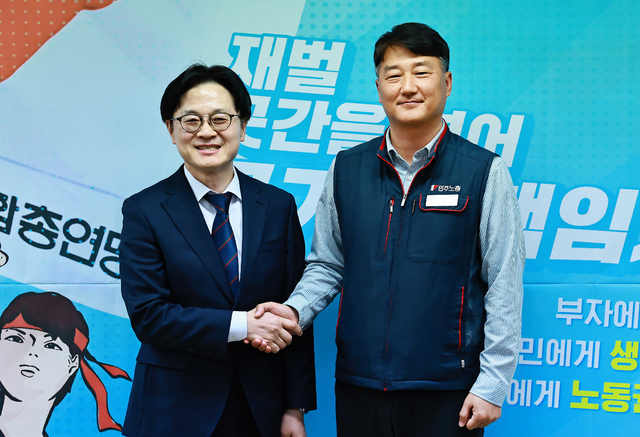
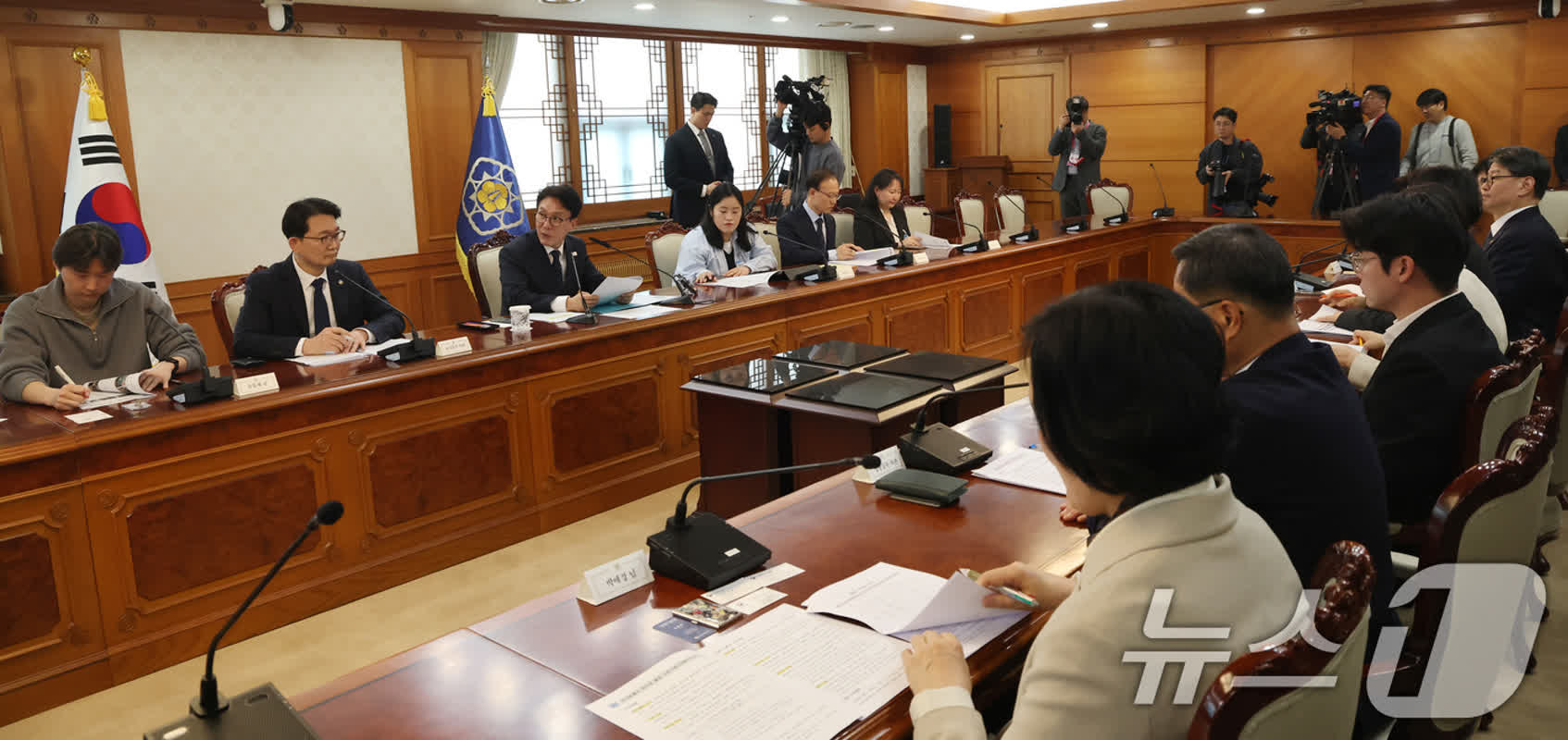
Minister Kim Jeong-gwan said he welcomed the chance to meet with the chairs of the Federation of Korean Trade Unions (FKTU) and the Korean Confederation of Trade Unions (KCTU), and urged them to work together to help the country navigate crises such as the conflict in the Middle East. He emphasized that the ministry’s industrial policies—including the manufacturing AI transition initiative, M.AX—are intended to protect jobs.
In a social media post on the afternoon of April 4, Kim reflected on his meetings with the two union leaders.
“The world has changed a long time ago, and it’s regrettable that we hadn’t had an opportunity to sit down together for anywhere from six to 20 years,” Kim wrote. “I’m relieved we finally met.”
According to the ministry, Kim visited the FKTU on March 30 to meet with Chair Kim Dong-myeong and visited the KCTU on April 3 to meet with Chair Yang Kyung-soo. It was the first direct visit by an industry minister to each union in those respective intervals—20 years since meeting the FKTU chair and six years since meeting the KCTU chair. It was also the first time the minister visited both unions in person.
Both visits were arranged at the unions’ requests. The unions sought dialogue to express concerns about potential job losses driven by the spread of artificial intelligence (AI) and humanoid technologies.
At the meeting, the FKTU argued that, even as AI adoption, automation, carbon-neutral policies, the shift to future vehicles, and industrial crises reshape the economy simultaneously, government industrial policy remains centered on corporate interests and does not sufficiently reflect workers’ employment and rights.
The KCTU raised similar concerns about job reductions from on-site AI deployment and urged measures to preserve employment and improve working conditions in sectors such as automotive, shipbuilding, and petrochemicals. It called for policies that place labor at the center.
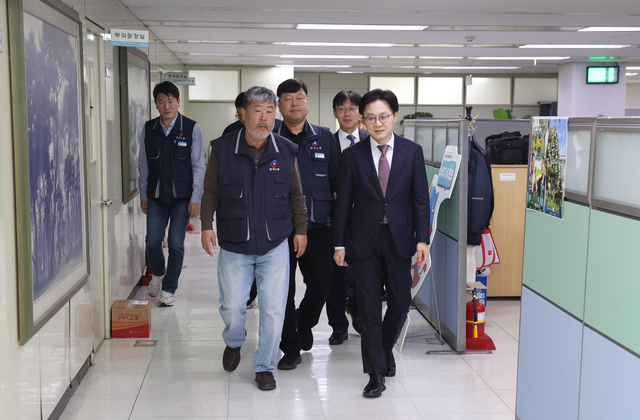
Kim wrote that both chairs stressed the need for industrial policy to cover workers’ livelihoods and employment amid AI and automation, petrochemical and steel restructuring, and the energy transition. They warned not only about the number of jobs at risk but also about job quality and the erosion of the manufacturing base itself.
Kim responded: “Even when our approaches differ, I’ve grappled with the same issues in the field. Industrial policy must ultimately result in jobs—companies create jobs. Government efforts to boost industrial competitiveness will gain support only when they protect and create employment.”
He added, “My priority program, M.AX, is designed to revive manufacturing and thereby preserve and grow jobs. The petrochemical restructuring effort has the same objective.”
Kim also noted that the meetings showed labor and management can cooperate to overcome crises. “In the textile sector, both sides spoke with one voice to expand military procurement of domestic products; in the steel sector, they united to press for lower electricity rates,” he wrote.
“When times are hard, labor and management must act together,” he said. “We now face a period of heightened uncertainty in energy supplies and global supply chains because of the conflict in the Middle East. If labor and management unite and the government supports that unity, this crisis can become an opportunity for our economy to take another leap forward.”
Kim said both unions emphasized the need for briefings and ongoing communication to build a broader understanding across the industrial sector. “I fully agree,” he wrote. “We will create diverse forums to share the perspectives and concerns of trade and industry policymakers. We will continue communicating to expand industrial competitiveness and increase employment.”
He added that FKTU Chair Kim Dong-myeong’s call to “maintain continuous dialogue rather than treat this as a one-off” and KCTU Chair Yang Kyung-soo’s remark that “attitude can matter more than content in some cases” left a strong impression.
The ministry said it will build a communication system with the FKTU and KCTU and pursue ongoing consultations to strengthen labor-management cooperation.
Sejong=Lee Won-bae lwb21@viva100.com