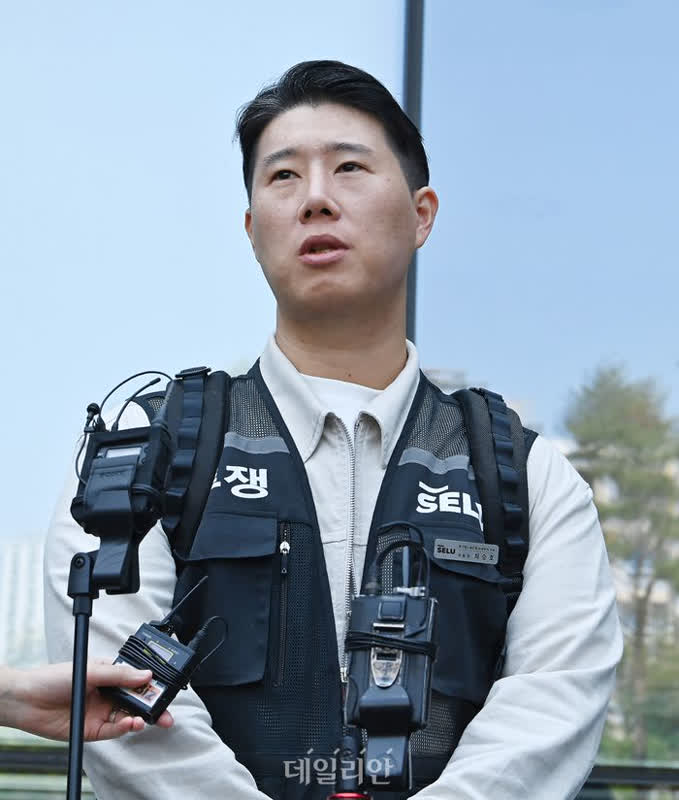
![Choi Woo-hyeok, director of the Network Policy Office at the Ministry of Science and ICT, briefed reporters on facial recognition for mobile phone activations at the Government Complex Seoul in Jongno District on Dec. 24 last year. [Photo: Yonhap]](https://contents-cdn.viewus.co.kr/image/2026/03/CP-2023-0397/image-dfc6aaa1-c871-4a4b-a7d1-bc14736da753.jpeg)
On March 13, the National Human Rights Commission urged the minister of Science and ICT to reconsider a policy that would make facial recognition mandatory when activating mobile phones and to develop alternative options.
The Ministry of Science and ICT has pushed to require facial recognition during phone activations for the three major mobile carriers and mobile virtual network operators (MVNOs), citing a rise in financial crimes such as voice‑phishing that use so‑called burner phones.
The ministry began a pilot program on Dec. 23 last year and plans to roll out the measure on March 23.
The commission said smartphones have become essential infrastructure for everyday life — used for financial transactions, mobile identity verification and more — and that mandating facial recognition could affect a range of fundamental rights, including the right to informational self‑determination, freedom of communication, freedom of expression and the public’s right to know.
It pointed out that, unlike the Immigration Control Act or the Electronic Financial Transactions Act, which provide legal grounds for collecting and using biometric data, the Telecommunications Business Act contains no such provisions and urged the ministry to establish them.
The commission added that biometric data are unique identifiers based on an individual's physical characteristics, are effectively immutable, and require stricter protection than ordinary personal data. Authorities should explain in detail how biometric information will be collected and used before the policy takes effect, and they should disclose information on the reliability and safety of facial recognition technology after implementation.
[Yonhap]