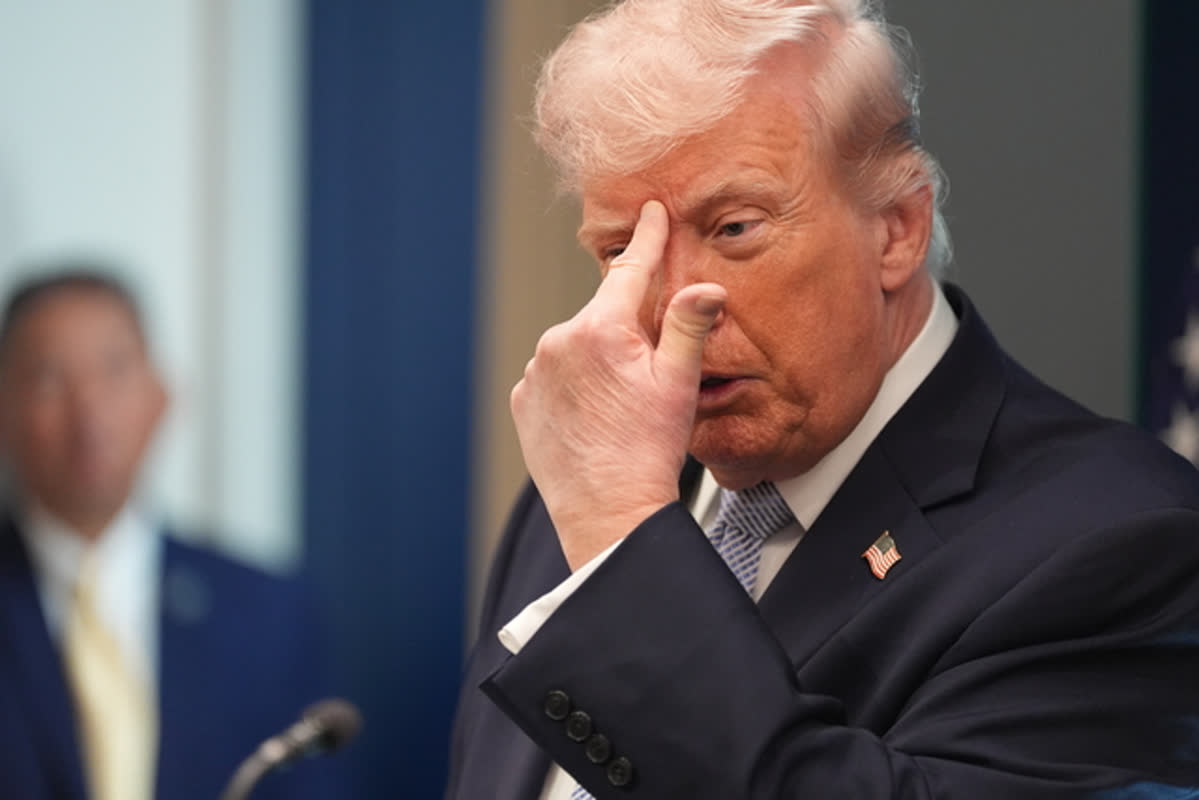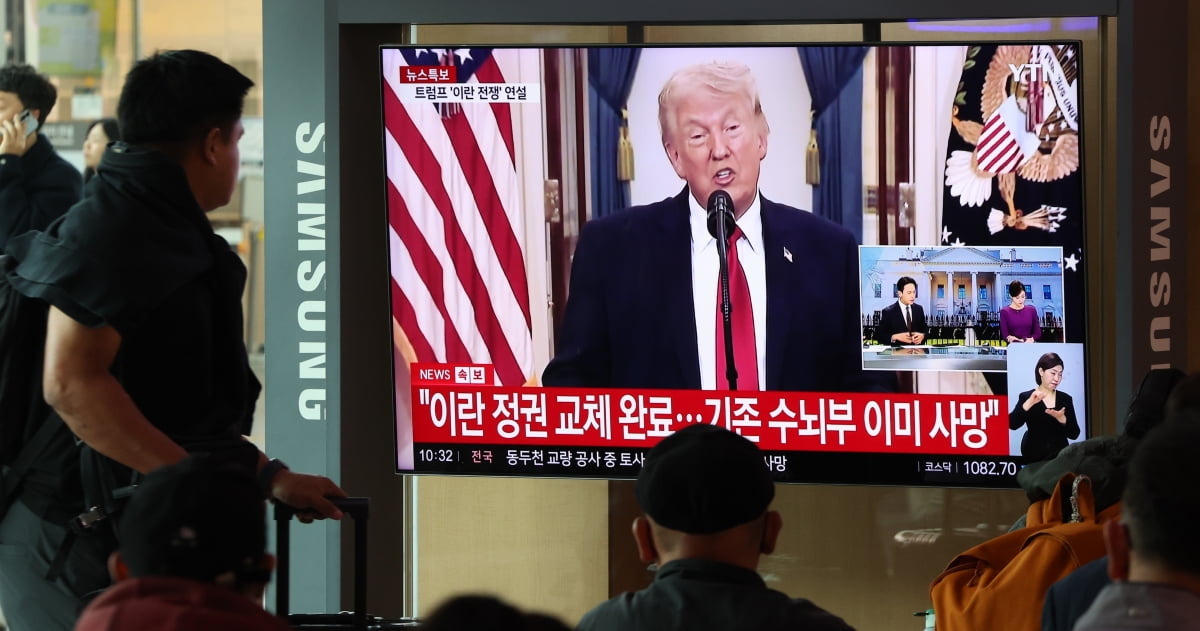
Analysts have long debated President Donald Trump's temperament. His erratic, impulsive statements have earned him unflattering labels—TACO (tough talk, always retreat) and the “madman” strategy among them—and many commentators describe him as unpredictable. He seldom bothers to rebut those characterizations.
Still, he would likely resist the claim that he acts without strategy. Reviewing his past statements reveals a consistent logic. In a 1987 open-letter ad placed in The New York Times and other outlets—titled “Why we should stop paying to protect countries that can protect themselves”—he criticized Japan for “free-riding” on both economic and security fronts. He warned that, if elected, he would take a tough line and impose tariffs on imported cars and Japanese goods. He wrote, “I trust no one—neither allies nor Russia,” arguing that the United States was bearing substantial economic, deficit, and tax burdens while essentially underwriting Japan’s defense at no cost to them.
In a 1988 interview with The Guardian, he adopted a forceful stance toward Iran: “They don’t just psychologically strike us; they make us look foolish. We must respond strongly. If a single bullet is fired at our ships, we’ll seize Harg Island. We must not allow anyone to treat America lightly.” At the time he targeted Japan, then an emerging economic powerhouse; today he has expanded his tariff battles globally and pressures allies to increase their security contributions, but the underlying perspective remains similar. He has long charged China with illegal technology copying, blocking U.S. firms, and using massive subsidies to stifle foreign competition—problems he argues previous administrations failed to correct (Edward Fishman, What Nations Fight For).
◆Don’t reveal a predictable pattern if you want to unsettle an opponent
His memoirs also point to a deliberate approach. In The Art of the Deal (1989), he described himself as a businessman unafraid of bold moves or controversy: “A little exaggeration and swagger never does any harm,” he wrote. In his 2016 campaign book Crippled America, he articulated a core foreign-policy principle: My approach is the use of power. I will reward nations that cooperate with us and punish those that do not. If the U.S. plays world police, we must be compensated. On the Iran nuclear freeze negotiated under President Barack Obama, he said he would never have accepted a deal short of dismantling all nuclear facilities and permitting inspections anytime and anywhere. He invoked Reagan’s “trust but verify” and added, “I don’t show a predictable pattern. That keeps opponents off balance.” His eldest son summed it up: “My father’s greatest strength is that no one knows what he will do; that unpredictability pressures negotiations.”
That business-minded approach from four decades ago has left a clear imprint on his foreign policy in office. His flair for hyperbole and willingness to act unpredictably reflect a distinct Trump diplomatic logic. Yet many of his early aides have been critical of applying dealmaking wholesale to governance. Former Homeland Security adviser Tom Bossert called him “the most undisciplined and disorderly person I have seen,” saying he often ignored procedure and made decisions without process (George Stephanopoulos, White House Situation Room). One aide complained that when Trump posts major foreign-policy moves on Twitter without consultation, “someone should take his phone—left unchecked, he could start World War III.” Close advisers have admitted that his oscillation between hostility and flattery toward China left them bewildered (What Nations Fight For). John Bolton, who served as national security adviser, described Trump’s tweet inviting Kim Jong Un to meet at the DMZ as “disgusting” in his memoir (The Room Where It Happened). Supporters, however, praise his record: former Secretary of State Mike Pompeo said Trump substantially strengthened U.S. security, and former Treasury Secretary Steven Mnuchin called him an exceptional hostage negotiator whose economic policies produced historic results.
Regardless of praise or criticism, the central question is whether the principles of private-sector dealmaking are appropriate for governing a nation. Corporate dealmaking seeks to maximize private gain; statecraft and diplomacy operate under different objectives and norms. Diplomacy—though aimed at national interest—interacts with security, economics, ideology, values, and human rights, complicating any simple cost-benefit calculus. Diplomacy depends on assets like trust and reciprocity. The value of alliances—mutual support in crises—cannot always be reduced to short-term accounting. Military cooperation affects national security directly and cannot be treated purely as a transactional expense. Ignoring international norms risks degrading the international order into disorder. If a country damages other states’ interests and trust in pursuit of its own, it may accumulate enemies and ultimately undermine its long-term national interest. Sound policy requires credible theory and deep deliberation (John Mearsheimer and Sebastian Rosato, How States Think). If Trump bypasses those processes and broadcasts major decisions on social media, he risks short-circuiting democratic policymaking.
◆A nightmare: nuclear material reaching terrorist groups
At the same time, international politics remains governed by stark power dynamics. Trump’s foreign-policy mindset—prioritizing the nation over international institutions, treating power as primary over ideology or norms, and viewing aggressive expansion as sometimes necessary—reflects classical realist international-relations theory. It also connects to the idea that a single hegemon can stabilize the international order.
Seen through that lens, Trump could not dismiss Iran’s strategic importance. If Iran succeeded in developing nuclear weapons and used them to threaten neighbors, or if nuclear weapons or materials reached anti-American terrorist groups, the region’s diplomatic and security architecture would unravel. The 2015 nuclear agreement left Iran with some enrichment capacity, meaning it retained the technical potential to resume a weapons program. After the deal, Iran’s continued missile tests and other activities raised suspicion. For a United States still scarred by 9/11, preventing the possibility that terrorists might gain access to nuclear material is imperative.
Could Trump claim victory after a war with Iran? Any political payoff would require broad domestic support. Even if the U.S. wins militarily, failure to secure the larger objectives—eliminating Iran’s nuclear capability and guaranteeing the security of the Strait of Hormuz—could trigger an early political decline and further strain alliances. Given the enormous costs of war, Washington would likely press allies such as South Korea, Japan, and European partners for greater security and tariff contributions regardless of the outcome. They should prepare accordingly.
Hong Young-sik, former editorial writer at The Korea Economic Daily and former senior correspondent at Hankyung Business