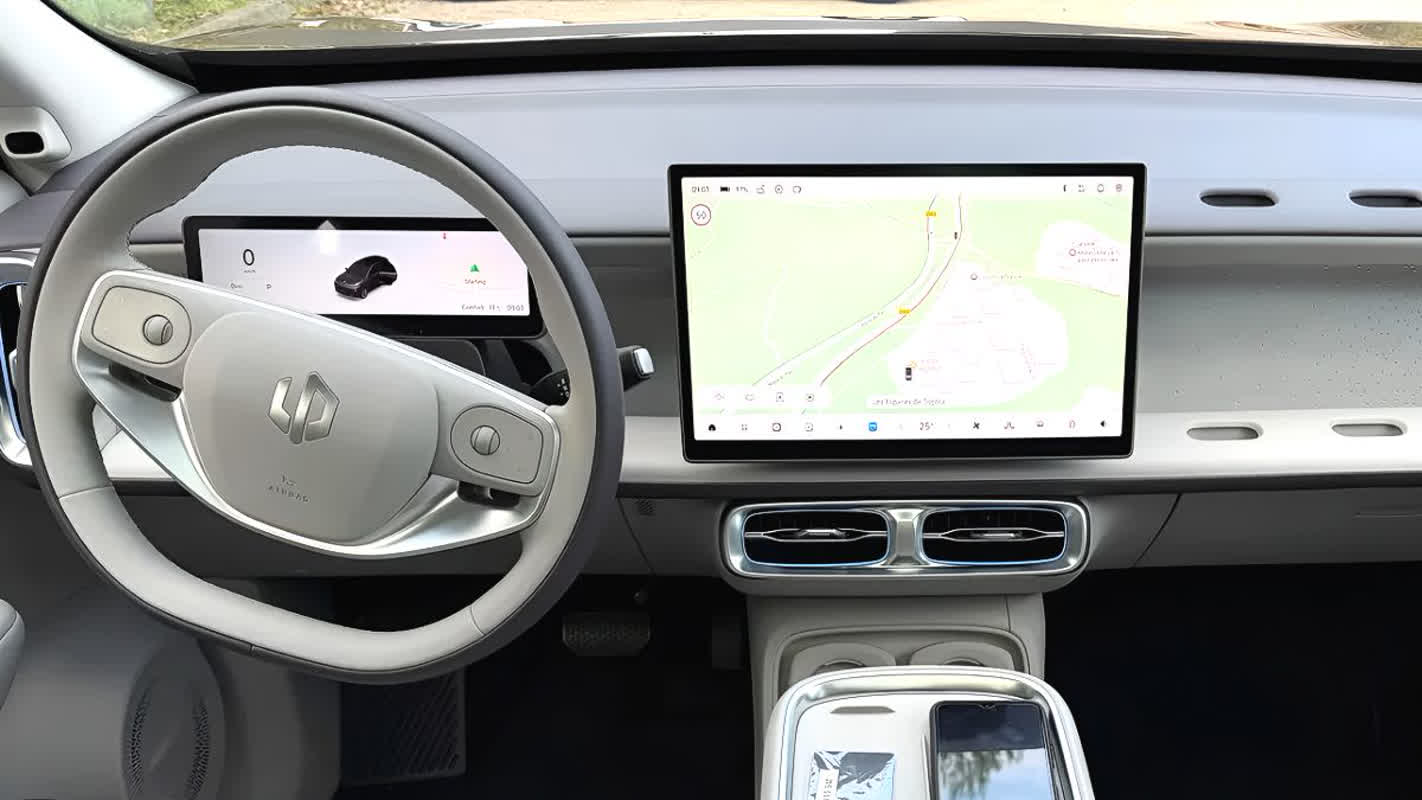
Large displays replace physical buttons
Mazda makes a major shift in interior design philosophy
Driver-focused design vs. digital experience clash
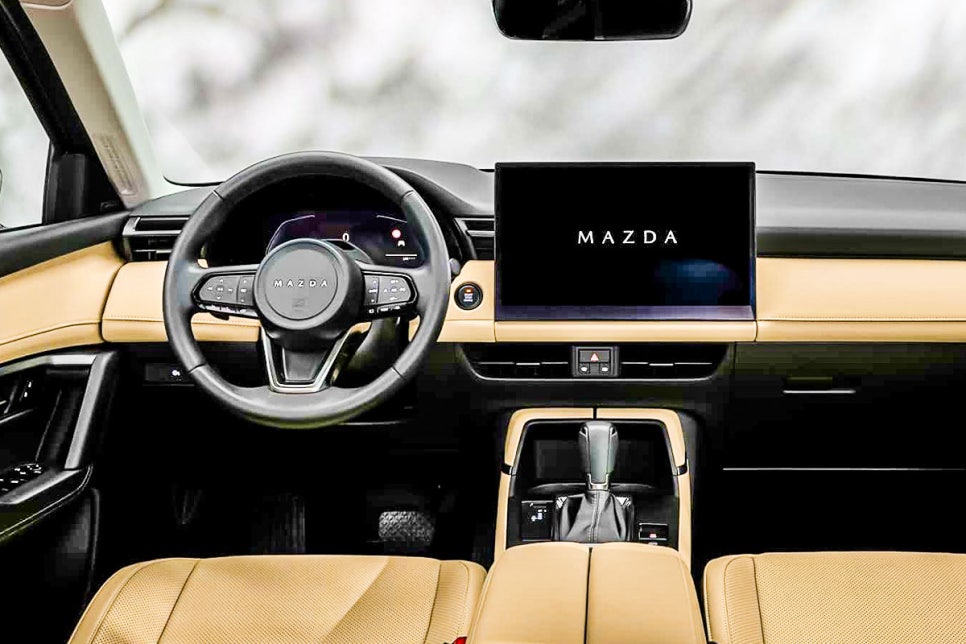
CX5 - Source: Mazda
Mazda, long committed to physical buttons and driver-centric layouts, has significantly revised its interior design strategy.
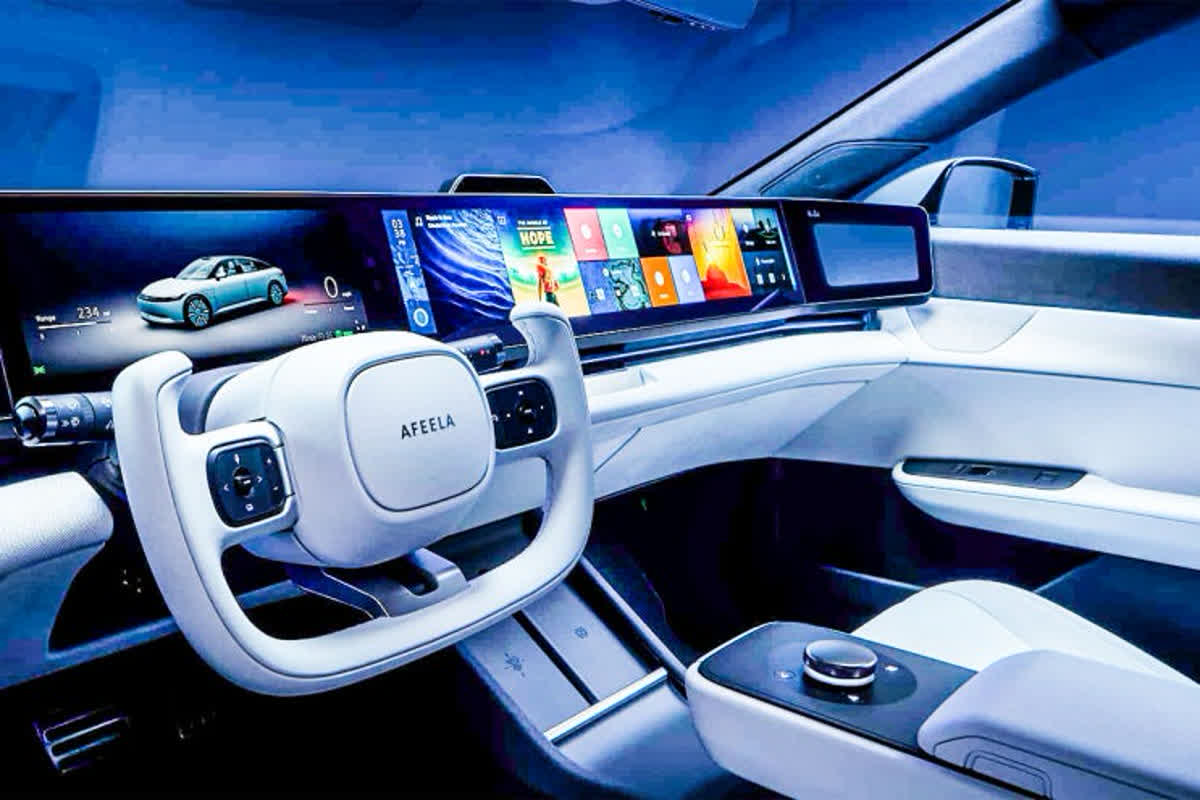
On recently revealed models, the company has put large screens front and center, shifting the focus from an analog feel to a digital experience.
Industry observers say the move reflects a broader trend and responds to growing consumer demand for screen-centered interfaces.
26-inch ultra-large display…
“Communicates information more clearly”
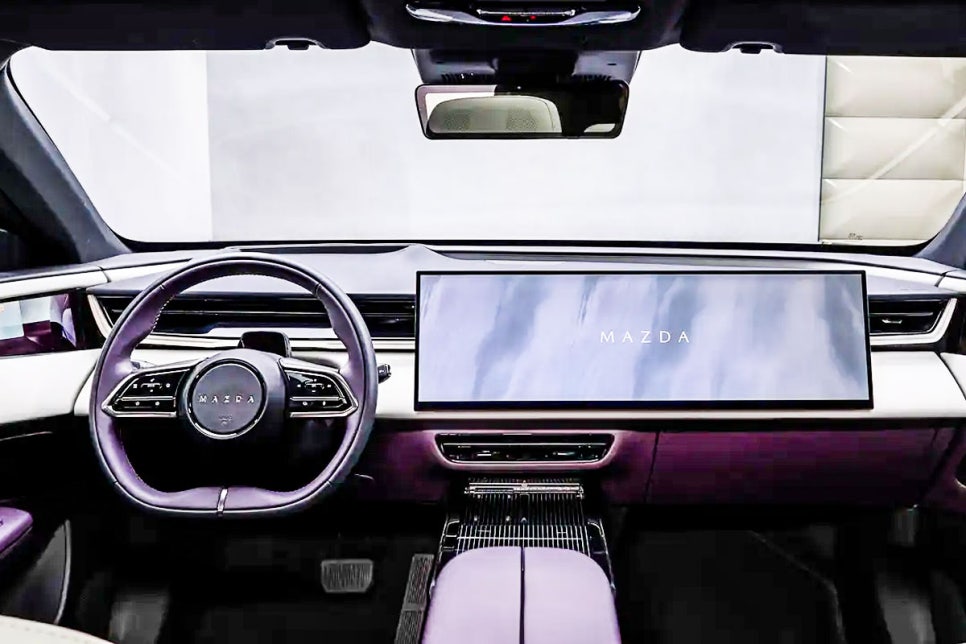
CX-6e - Source: Mazda
The most notable change is the 26-inch touchscreen fitted in the CX-6e.
Mazda’s head of European design said, “The large screen isn't about more information; it's about delivering information more clearly,” emphasizing that the goal is to improve the user experience, not simply to enlarge the display.
They also extended the display toward the passenger side so all occupants can engage with the vehicle experience.
HUD instead of instrument cluster…
“Keeps drivers focused on the road”
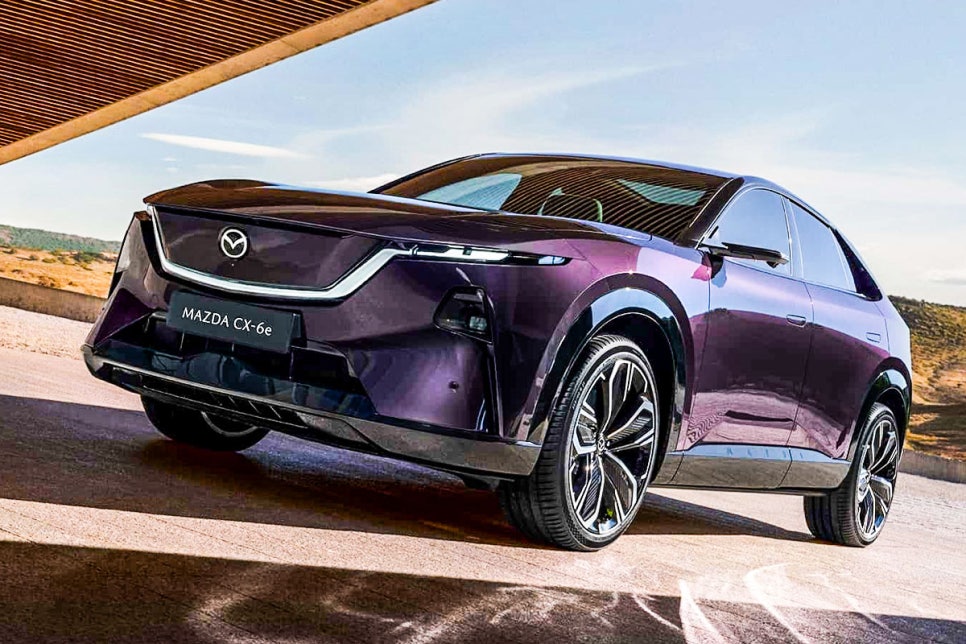
CX-6e - Source: Mazda
To address potential driver distraction from larger screens, Mazda made the head-up display (HUD) a core element of the design.
Rather than a traditional instrument cluster, speed and driving information are projected via the HUD so drivers can keep their eyes on the road.
This approach distinguishes itself from Tesla-style interfaces by prioritizing driver attention and focus rather than simple digitization.
Reduction of physical buttons…
A choice driven by market shifts
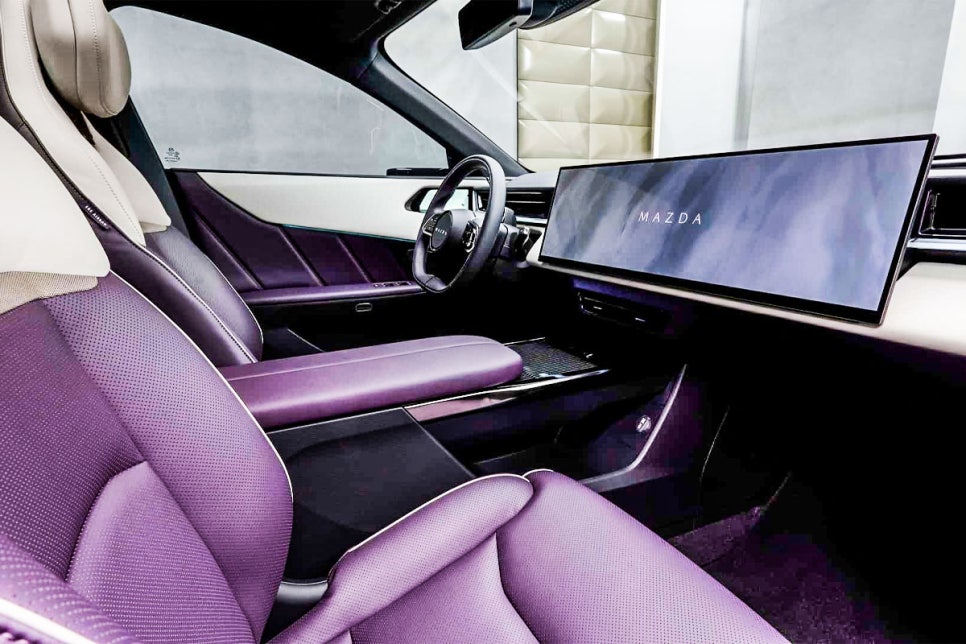
CX-6e - Source: Mazda
The changes extend to core models such as the CX-5.
Along with a larger 15.6-inch display, rotary dials and many physical buttons have been reduced, and a touch-first interface has been adopted.
Mazda says this is an experience-driven change based on customer demand, not simple cost cutting.
Ultimately, observers view this shift as evidence that car interiors are evolving from driver-focused machines into digital platforms.
However, industry experts warn that reducing physical buttons could compromise usability and safety, so designing a balanced interface remains a key challenge.