2026 BMW 520i Hybrid: Latest Price and Fuel‑Economy Analysis
The 2026 BMW 520i Hybrid is a key entry in BMW’s premium sedan lineup, pairing updated hybrid technology with refined design and strong efficiency. With growing demand for electrified luxury sedans globally, the 520i Hybrid is drawing attention for its competitive pricing and notable fuel economy. This piece examines the latest pricing and real‑world fuel‑efficiency characteristics to assess the model’s competitiveness and owner value.
2026 BMW 520i Hybrid: Current Price Trends
Pricing for the 2026 BMW 520i Hybrid depends on trim level and option packages. In South Korea, the base model starts at roughly 78 million KRW (≈ $58,500) and can rise into the mid‑86 million KRW range (≈ $64,500) with added options. In overseas markets, currency and local taxes affect pricing, but the model typically lists around $55,000–$60,000. Those ranges position the 520i Hybrid competitively against other premium sedans, and when you factor in BMW’s brand equity and advanced safety and convenience features, many buyers consider it a reasonable value.
That pricing reflects the car’s hybrid powertrain, driver‑assist systems (ADAS), a large digital instrument cluster, premium interior materials, and the latest infotainment. Despite its electrified setup, BMW preserves its characteristic driving dynamics, delivering strong perceived value. Buyers can further customize the car with Luxury or M Sport packages and other option bundles that increase cost but let customers tailor the car to their preferences.
Exchange rates, import duties, local taxes and option configurations can push the final price up or down. At expected price points, the BMW 520i Hybrid remains competitive with rivals such as the Mercedes‑Benz E‑Class Hybrid and Audi A6 Hybrid, making it an attractive choice for buyers balancing price, performance and brand prestige.
2026 BMW 520i Hybrid: In‑Depth Fuel‑Economy Performance
The 2026 BMW 520i Hybrid uses an updated hybrid powertrain to deliver strong fuel efficiency. BMW reports a combined figure of 17.5 km/L (≈ 41.2 mpg US), with city driving at 16.2 km/L (≈ 38.1 mpg US) and highway driving at 19.1 km/L (≈ 44.9 mpg US). Those numbers are ahead of comparable plug‑in rivals such as the Mercedes‑Benz E300e Hybrid (combined 16.8 km/L ≈ 39.5 mpg US) and the Audi A6 45 TFSI e (combined 16.5 km/L ≈ 38.8 mpg US).
BMW achieves this efficiency by pairing a 2.0‑liter turbocharged gasoline engine with a high‑output electric motor and advanced electronic controls. The electric motor handles low‑speed and urban driving to minimize fuel use, while the engine and motor cooperate efficiently at higher speeds. Regenerative braking recovers energy during deceleration, further improving overall economy.
Driver feedback and independent tests show the 520i Hybrid delivers steady, predictable fuel economy across a range of driving conditions. The model tends to excel on long highway runs, while electric‑drive operation reduces fuel consumption in stop‑and‑go city traffic. Mileage will vary with season and driving style, but overall the 520i Hybrid ranks among the most efficient cars in the premium‑sedan class.
Powertrain and Technical Highlights of the 2026 BMW 520i Hybrid
The 520i Hybrid pairs a 2.0‑liter four‑cylinder turbo gasoline engine with an electric motor in a hybrid configuration. Combined output is about 204 horsepower (engine 156 hp + motor 48 hp) and 320 Nm of torque (≈ 236 lb‑ft), delivering responsive acceleration in both city and highway driving. BMW mates the system to an 8‑speed automatic transmission for smooth shifts and immediate throttle response.
At the core of the hybrid system is BMW’s latest eDrive technology, which monitors battery state, driving conditions and driver inputs in real time to optimize engine and motor output. The car can operate on electric power alone in low‑speed or congested conditions, while the engine and motor work together at higher speeds or under heavy load to minimize losses. A high‑capacity lithium‑ion battery provides roughly 50 km (≈ 31 miles) of electric‑only range on a full charge, making daily commutes and short city trips possible without burning fuel.
The 520i Hybrid also includes regenerative braking, energy‑recovery systems and selectable drive modes that maximize efficiency. ECO PRO mode reduces engine output and adjusts systems like climate control to extend range, while SPORT mode prioritizes responsiveness and dynamic driving. These modes let drivers balance efficiency and performance for different situations.
Economics and Operating Costs for the 2026 BMW 520i Hybrid
The Hybrid powertrain reduces fuel costs and improves overall ownership economics. Compared with comparable gasoline models, owners can expect monthly fuel expenses to decline by roughly 20–30%. Urban drivers benefit most because electric driving is used more frequently in stop‑and‑go traffic.
Because of the hybrid architecture, oil‑change intervals and engine‑related service needs are typically reduced versus conventional internal‑combustion models. Improvements in motor and battery durability also support reliable long‑term operation. BMW offers an 8‑year or 160,000 km (≈ 99,000 miles) warranty on the hybrid battery, lowering owners’ risk. Buyers may also qualify for registration incentives—tax breaks, public‑parking discounts and similar perks—that further cut ownership costs.
Those savings make the 2026 BMW 520i Hybrid an appealing option for premium‑sedan shoppers, especially those who plan to keep the vehicle long term and benefit from cumulative fuel and maintenance savings.
Comparative Analysis: 2026 BMW 520i Hybrid vs. Rivals
In the premium hybrid sedan segment, the BMW 520i Hybrid competes with the Mercedes‑Benz E‑Class Hybrid, Audi A6 Hybrid and Lexus ES300h. Across price, fuel economy, performance and features, the 520i Hybrid offers a balanced package.
Price is generally in line with competitors but the 520i Hybrid often comes better equipped as standard. Its combined fuel economy of 17.5 km/L (≈ 41.2 mpg US) compares favorably with the Mercedes‑Benz E300e Hybrid (16.8 km/L ≈ 39.5 mpg US), Audi A6 45 TFSI e (16.5 km/L ≈ 38.8 mpg US) and Lexus ES300h (17.0 km/L ≈ 40.0 mpg US). The model stands out on electric range, regenerative‑braking efficiency and real‑world mileage.
On the road, the 520i Hybrid delivers BMW’s trademark handling, stability and refinement. It also integrates modern ADAS, a large digital cluster and advanced connectivity features that enhance convenience and safety. These attributes help the 520i Hybrid earn high owner satisfaction and strong perceived value.
Advanced Safety and Convenience Features
The 520i Hybrid comes with a comprehensive ADAS suite, including adaptive cruise control, lane‑keep assist, automatic emergency braking, intersection warning, blind‑spot alert and automated parking assist. These systems reduce crash risk and ease driver workload during long drives and in congested traffic.
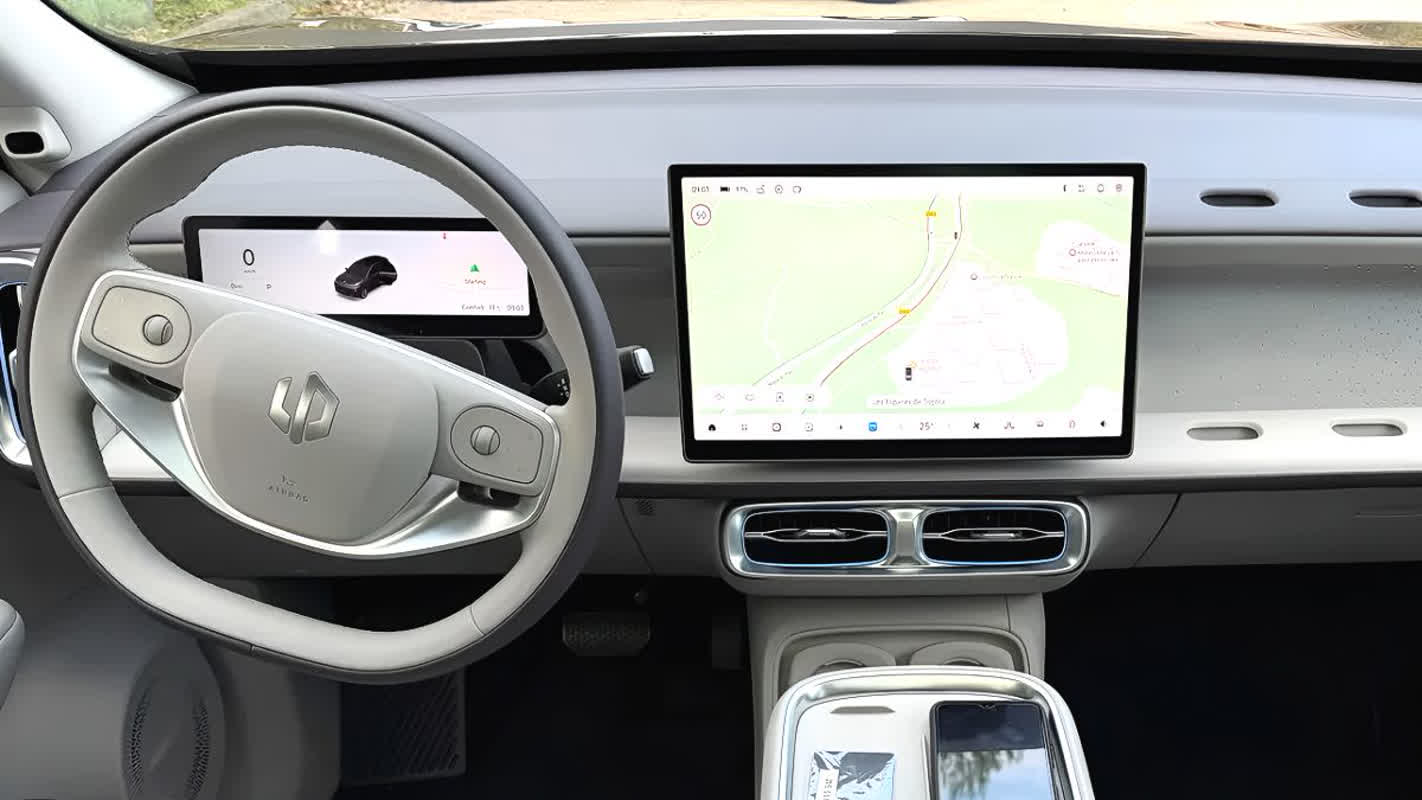
Standard and available convenience features include a 14.9‑inch curved display, the latest iDrive infotainment, augmented‑reality navigation, wireless Apple CarPlay and Android Auto, a Harman Kardon premium sound system, four‑zone automatic climate control, ventilated and heated seats, and a panoramic sunroof. Smart key, remote start and wireless charging are also available on many trims, delivering the tech buyers expect in a premium sedan.
BMW’s iDrive interface emphasizes intuitive controls and fast responsiveness so drivers can manage systems safely while underway. Augmented‑reality navigation simplifies routing in dense urban areas, and the premium audio package elevates cabin ambiance.
Design and User Experience, Inside and Out
The 520i Hybrid adopts BMW’s latest family styling with a luxury‑oriented interior. The exterior shows a clean profile, a large kidney grille, slim headlamps and athletic body proportions that communicate both elegance and motion.
Inside, the cabin features a large digital instrument cluster and curved display, premium leather seats, wood and aluminum trim, and ambient lighting. Occupants benefit from generous legroom and headroom, ergonomically shaped seats and practical storage, all designed for comfort on long drives and daily commutes.
The 520i Hybrid impresses for its quietness: electric driving is nearly silent and transitions between motor and engine are smooth. Climate control, ventilated and heated seats and the premium audio system enhance comfort on extended trips.
Real‑World Ownership and Maintenance
Owners report strong satisfaction with the 520i Hybrid, noting its value despite a higher upfront cost. Over time, fuel savings, lower maintenance demands and healthy residual values make it economical to own. The hybrid system and BMW’s brand strength help keep depreciation lower than many peers.
BMW’s dealer network supports routine maintenance and warranty claims, easing long‑term ownership. Major hybrid components receive extended warranty coverage, reducing the risk of unexpected repair bills. Eco incentives and tax benefits also help lower effective ownership costs.
Buyers praise the quiet ride, strong fuel economy, abundant tech features and engaging driving dynamics. Many drivers report real‑world fuel economy that meets or exceeds official figures, reinforcing the model’s cost‑effectiveness.
Outlook and Market Value
Analysts expect the premium hybrid sedan market to expand as emissions rules tighten and consumer demand for electrified vehicles grows. The BMW 520i Hybrid aligns with that trend and should sustain healthy demand and brand value.
Ongoing tech improvements, broader adoption of electrified powertrains and expanded safety and convenience features will keep the 520i Hybrid competitive. As charging and service infrastructure grow, the model’s appeal and accessibility should increase.
Overall, the 2026 BMW 520i Hybrid combines modern hybrid technology, strong fuel economy, reasonable pricing and premium brand appeal. It’s a recommendable choice for buyers seeking a fuel‑efficient, well‑equipped luxury sedan and is likely to remain a central player in the electrified premium segment.