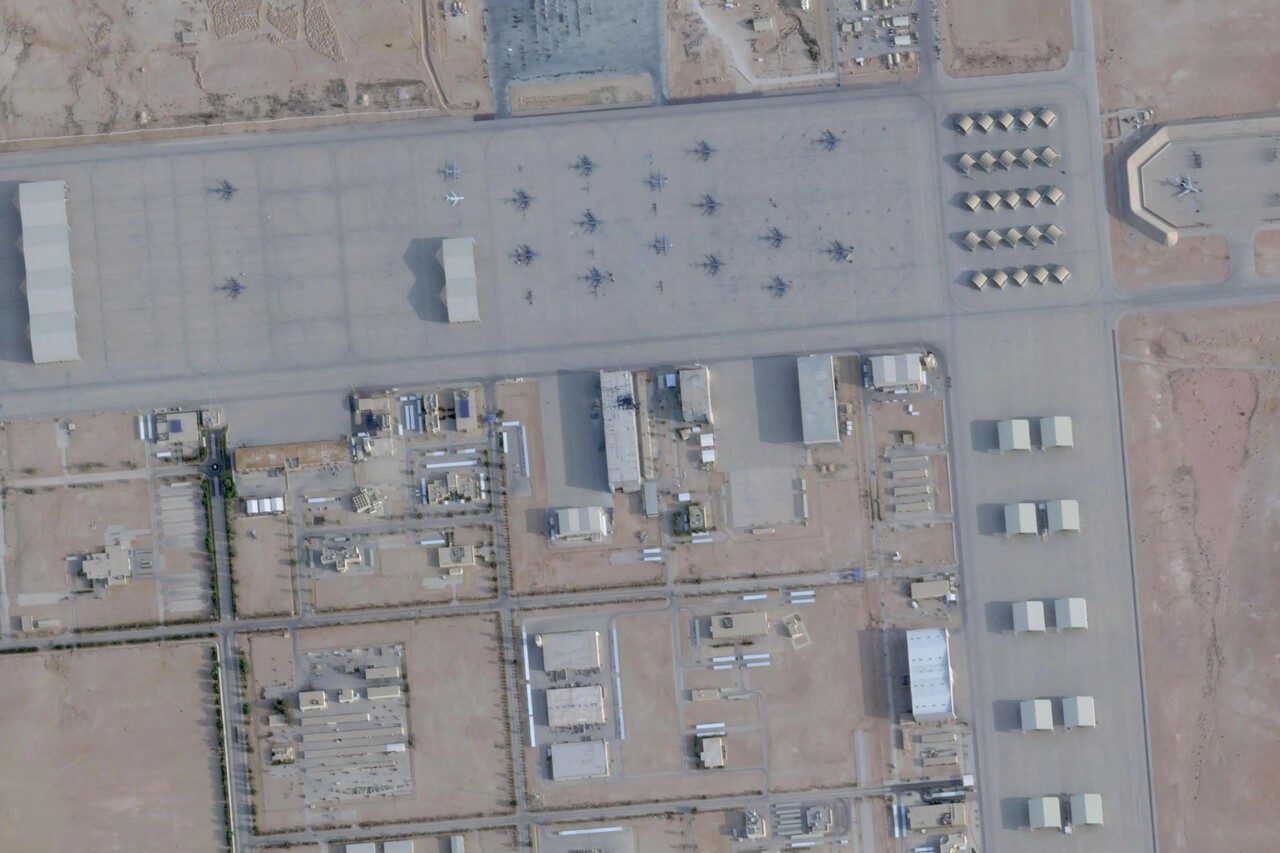
On the 6th (local time), The Washington Post reported that, after independently verifying satellite imagery taken between Feb. 28, when the war began, and Apr. 14, it identified 228 military assets that were damaged or destroyed across 15 U.S. bases in the region.
The Post’s analysis found 217 damaged structures — including barracks, hangars and storage buildings — and 11 major military facilities, such as satellite communications antennas, Patriot missile systems, power plants and fuel storage tanks.
The review also reconfirmed damage to a THAAD radar site in Jordan and to an E-3 Sentry airborne early-warning and control aircraft at a Saudi air base.
Experts who examined the imagery said the findings indicate U.S. forces underestimated Iran’s drone and missile strike capabilities. They argued some bases were left exposed and defenses were not sufficiently adjusted to confront contemporary drone threats.
Mark Cancian, senior adviser at the Center for Strategic and International Studies, said, “Iran’s strikes were precise,” noting analysts found “no random craters indicating misses.”
Kelly Grieco, a senior researcher at the Stimson Center, added that U.S. assessments did not fully account for Iran’s target‑reconnaissance capabilities or limits in interceptor missile inventories.
The analysis also concluded Iran concentrated on so‑called soft targets — barracks, lodging, gyms and dining facilities — frequently employing suicide drones. William Goodhind, an investigator with satellite‑analysis firm Contested Ground, said the imagery suggests Iran deliberately targeted military housing.
Still, some experts cautioned that, despite the damages, the U.S. military’s overall posture against Iran has not necessarily suffered catastrophic degradation. They suggested commanders may have accepted hits on lower‑priority facilities to conserve limited air‑defense interceptors for higher‑value targets.
U.S. Central Command (CENTCOM) declined to comment in detail on The Post’s report but said, “Assessing base damage is complex and, in some cases, can be misleading.”
The Washington Post said it cross‑checked roughly 100 images released by Iran against EU Copernicus satellite data and high‑resolution commercial imagery from Planet. The newspaper reported it found no manipulated Iranian images among those it verified.