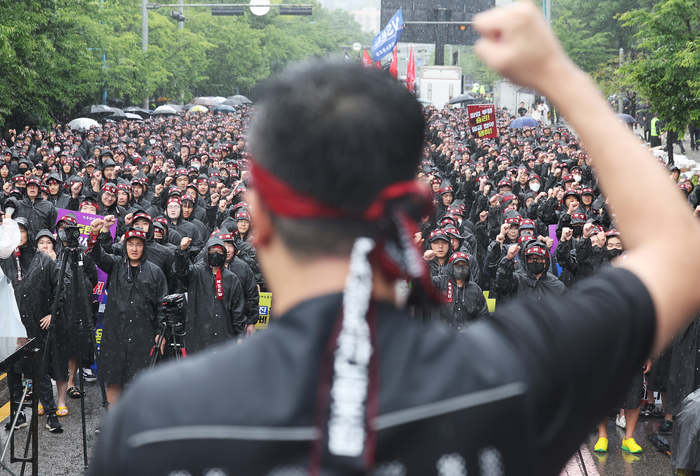
As the Samsung Electronics union begins a vote on strike action, legal experts warn that statements suggesting forced transfers or dismissals for employees who refuse to join could violate current law.
They say warning nonparticipants of personnel sanctions exceeds the bounds of legitimate union activity.
On the 10th, lawyers told reporters that the Samsung Electronics Joint Struggle Headquarters' comments about prioritizing forced transfers and dismissals, or about compiling lists of nonparticipants and returning employees, are likely to constitute unfair labor practices.
Such conduct could violate the Trade Union and Labor Relations Adjustment Act, the experts say, because it interferes with individual workers' free decision-making and amounts to an abuse of the right to organize. The constitutionally protected right to unionize must be based on voluntary worker choice.
Hiring, firing and transfers are the employer's prerogative, they added. The union's practice of compiling lists and threatening to make personnel measures a priority appears likely to exceed the bounds of lawful union activity.
They also flagged potential violations of the Personal Information Protection Act. Collecting data on workers' strike participation without consent, compiling it into lists and using it like a blacklist to impose personnel penalties would breach principles that prohibit collecting or using personal information for purposes beyond its original intent.
Some observers said prosecutors might also consider whether the comments meet criminal thresholds for threats or coercion. Language such as "we will guide them toward dismissal" signals a concrete harm that could induce fear and coerce workers into abandoning strike participation.
Legal experts noted the remarks also undermine the union's duty of good faith and fair representation. Unions are obliged to represent all members fairly; excluding or discriminating against members for holding certain views would violate that duty.
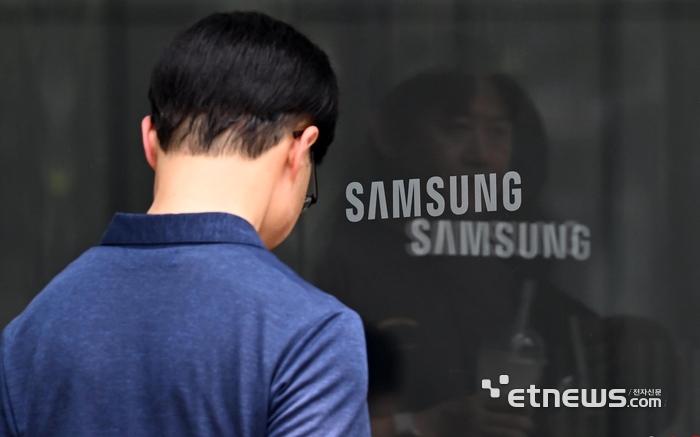
Critics say the union's rhetoric has been used to pressure members and display power rather than to justify its dispute. If the union actually imposes personnel penalties, the matter is likely to end up in court.
Earlier, the Joint Struggle Headquarters urged participation in a general strike in a YouTube broadcast, saying, "All executive teams will occupy the Pyeongtaek office and hold rallies. We will recruit staff to manage and supervise every office at the Pyeongtaek plant. If anyone works for the company, we will record their names and prioritize them for forced transfers or dismissals that later require consultation with the union."
Samsung's union and management negotiated 2026 wages, but talks collapsed over disagreements that included whether to lift the cap on performance pay. The union says it will hold a strike authorization vote; if a majority approves, it plans a general strike from April 21 through June 7.
Reporter Ho-gil Lee eagles@etnews.com