[Anchor]
A five‑day license‑plate parking restriction for private cars in public parking lots takes effect tomorrow (the 8th).
The rule applies not only to vehicles owned by public institutions but also to privately owned cars.
Some lots are exempt, but drivers must check each location individually, so authorities expect confusion during the initial rollout.
Reporter Kim Tae‑wook reports.
[Reporter]
This is the Jongmyo public parking lot in Jongno District, Seoul, with roughly 1,300 parking spaces.
A notice at the entrance details the new five‑day plate‑based restriction for private vehicles.
After the government raised the resource‑security crisis alert level to \"caution\" on the 2nd, authorities decided to implement the five‑day system at public parking lots.
The measure covers about 30,000 public parking lots nationwide.
Entry will be restricted by the final digit of license plates on specific days. On the first day of the measure, vehicles whose plates end in 3 or 8 are barred from public parking lots.
Parking is unrestricted on weekends and public holidays.
Electric and hydrogen vehicles, vehicles for people with disabilities, national veterans, pregnant women, and emergency response vehicles are exempt from the five‑day rule.
Public parking lots may also be granted exceptions for valid reasons.
For example, the head of a public institution can exempt lots such as those serving traditional markets or park‑and‑ride facilities at tourist sites from the restriction.
In Seoul, the rule will apply to 75 public parking lots and 33 will be exempt, but mapping services such as Naver and Kakao have not yet been updated.
Drivers will need to confirm whether a lot is exempt before they go, which could cause confusion. Officials say they have not yet completed identifying all lots eligible for exceptions.
Some citizens have voiced concerns about the sudden rollout.
Choi Hyun‑ae of Buk‑gu, Daegu said, \"If I drive a long way only to have to turn back, it won't work. Who's going to remember the five‑day schedule when they're busy?\"
Meanwhile, the plate restriction already in place at public agencies will be tightened into a two‑group system: on odd‑numbered days, only vehicles with odd final digits may travel; on even‑numbered days, only vehicles with even final digits may travel.
Civilians visiting public institutions will be subject to the same five‑day rule that applies to public parking lots.
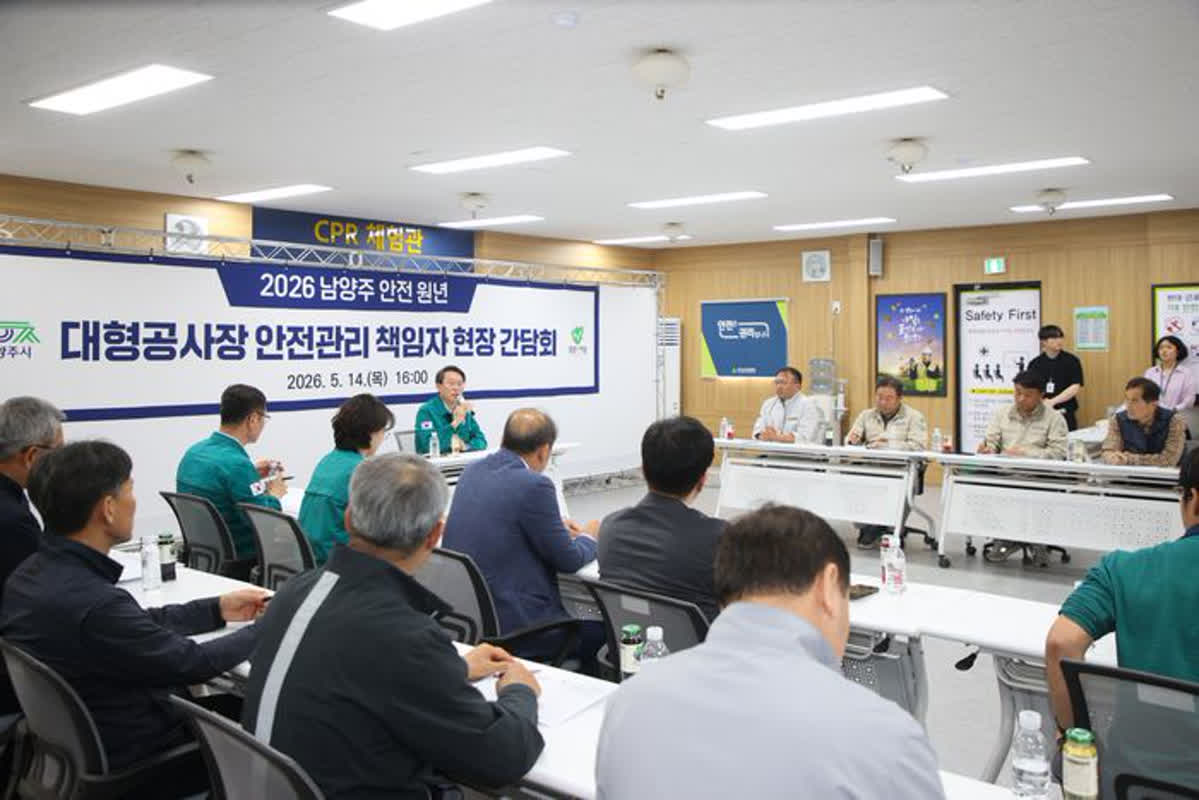
Lee Ho‑hyun, First Vice Minister at the Ministry of Climate, Energy and Environment, said, \"If the public joins in saving energy, that participation will be a significant force in helping us overcome this energy crisis.\"
The government plans to maintain the two‑group system for public institutions and the five‑day rule for public parking lots until the resource‑security crisis alert is lifted.
This is Kim Tae‑wook for Yonhap News TV.
[Video reporting: Yang Jae‑jun]
[Video editing: An Yoon‑sun]
[Graphics: Seo Young‑chae]
#MinistryOfClimate #Citizens #VehicleFiveDayRule #PublicParking #Inconvenience
For Yonhap News TV story tips and inquiries: KakaoTalk/Line jebo23
Kim Tae‑wook (tw@yna.co.kr)