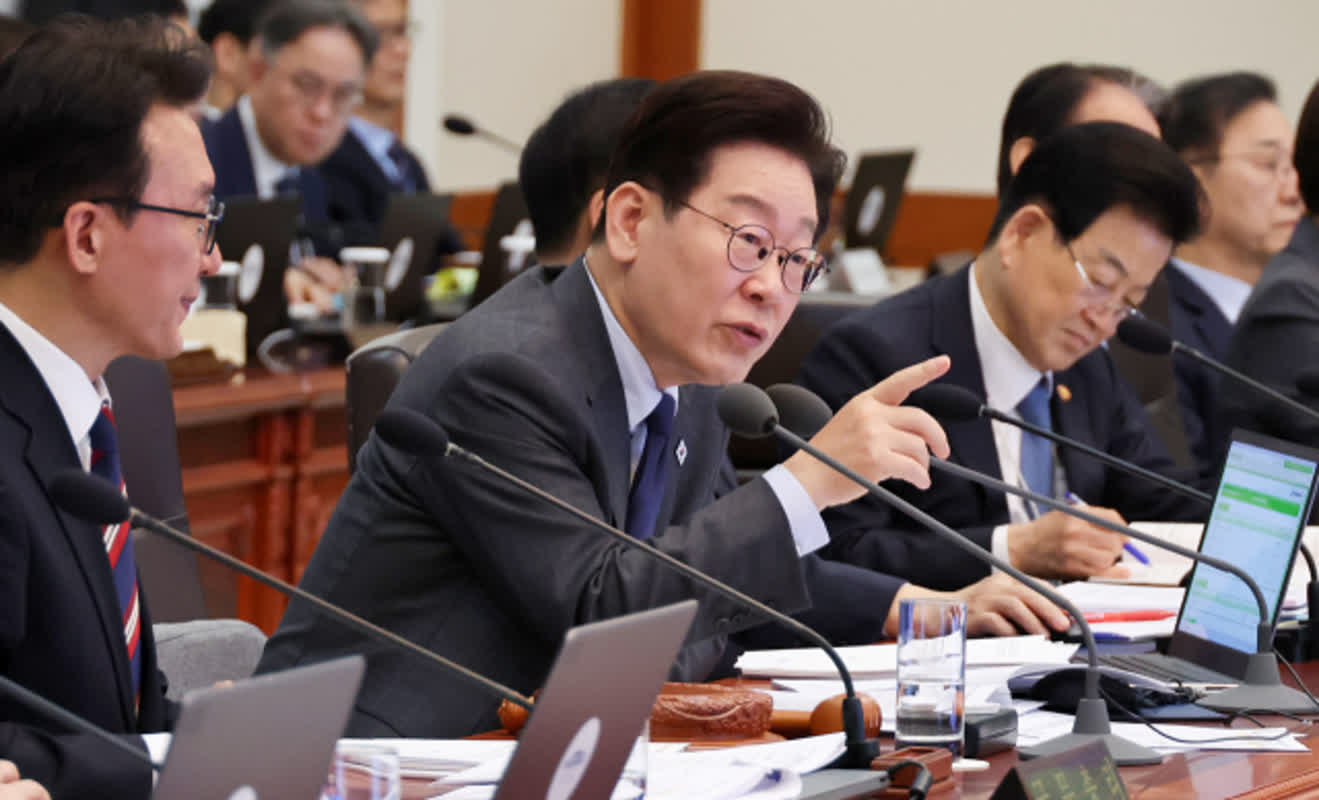
President Lee Jae-myung’s private lunch with former Daegu Mayor Hong Joon-pyo has jolted the political sphere. Speculation spread quickly — from suggestions that Hong might be tapped as prime minister to talk of supporting his bid in the Daegu mayoral race — but Hong was explicit: no bargaining or negotiations over any post took place.
On the 18th, speaking on his YouTube channel, he said, “Unlike sparrows chattering, our lunch focused on the country’s stability and prosperity.” He added that they “spoke naturally for about an hour and a half, trading old stories and frank talk,” and directly denied that the meeting was held to discuss any specific appointment, including the premiership.
Hong also outlined the meeting’s agenda with greater detail. He said he asked the president for state support for the TK new airport project in the Daegu–North Gyeongsang region and raised matters related to former President Lee Myung-bak, requesting that legal constraints be relaxed so the former president could play a concluding role. In short, the discussion touched on regional development and the treatment of a former head of state.
Yet the political focus has shifted from the meeting’s format to its potential ramifications. Because Hong had earlier backed Kim Bu-gyeom, the Democratic Party’s Daegu mayoral candidate, then met separately with the president, observers see implications for the June 3 local election in Daegu and for debates about Hong’s possible role in future governance. The principals deny such implications, but outside actors are already contesting rival interpretations.
Some within the Democratic Party have not ruled out possibilities. Park Chan-dae, the party’s Incheon mayoral candidate, said, “If it helps the country, promotes national unity, and advances people’s livelihoods — if there is a role to be played — I believe the president can make any decision.” The comment left room to read a potential appointment as possible under the banners of unity and economic relief.
By contrast, tensions inside the People Power Party run high. Critics both inside and outside the party have questioned Hong’s recent moves, and some warn that, given local sentiment in Daegu, the steps could backfire. The Reform New Party also cautions against a simplistic reading. Floor leader Chun Ha-ram said, “Naming Hong as prime minister could be a shrewd move to project unity,” but warned that “if it clashes with the sentiment of People Power supporters, the political fallout could be considerable.”