[iNews24 reporter Seo Byung-gi]
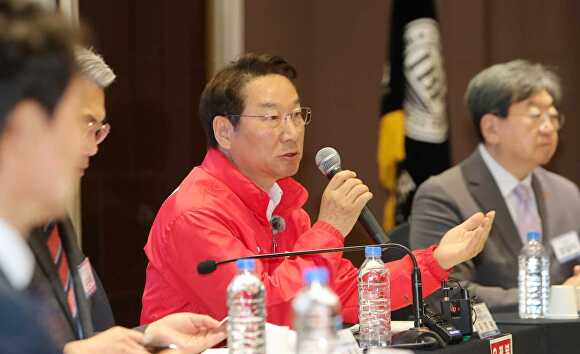
One notable element of Incheon mayoral candidate Yoo Jeong-bok’s platform is his declaration of an "Incheon International Free Special City — the Third Opening Era."
On the 7th, Yoo unveiled three core strategies under that declaration: creating an Incheon International Free Special City, restructuring the secondary administrative system, and relocating public institutions to Incheon.
The "Third Opening Era" carries significance because it builds on Incheon's historical foundations — the opening of Incheon Port in 1883 (the first opening) and the opening of Incheon International Airport in 2001 (the second opening).
The opening of Incheon Port (Jemulpo Port) in 1883 — the first opening — followed Japanese imperial forces pushing into the waters off Ganghwa and using shows of force to compel Joseon to open the port, leaving Joseon with little choice. Under the 1876 Ganghwa Treaty, Joseon first opened Busan in 1876, Wonsan in 1882, and then Jemulpo in 1883 as the third port.
Those treaties applied to Incheon's opening and granted Japan extraterritoriality and concession rights, while forcing Joseon to sign the Supplement to the Protective Regulations and the Commercial Code — clearly unequal treaties. That process solidified Japan’s economic foothold in Joseon and left Joseon vulnerable in protecting its domestic industries.
It took 118 years after the opening of Incheon Port for the city to enter the Second Opening era with the inauguration of Incheon International Airport in 2001. If the first opening opened sea routes, the second opened air routes. With Yeongjongdo’s skies opened, travel to anywhere on the globe became far more accessible. The Second Opening allowed Incheon to secure the social overhead capital (SOC) required to leap toward becoming a global city.
Yoo’s declaration of an "Incheon International Free Special City — the Third Opening Era" represents a marked advancement of that vision. That helps explain why his statement — "Incheon’s standard is not Seoul; Incheon’s competitor is the world" — resonates.
Yoo has been preparing Incheon’s Third Opening to position the city among the global top ten, including efforts to attract an agency for overseas Koreans. He intends to implement the Third Opening not as a slogan but through concrete institutions and policies.
Yoo said, "The Third Opening for Incheon opens a path for the city to compete directly with the world," adding, "That path is called the Incheon International Free Special City."
He emphasized that he will pursue three strategies for the Third Opening: first, establishing the Incheon International Free Special City (an institutional transformation); second, reforming Incheon’s secondary administrative system (designing a future-oriented administration); and third, transferring public institutions and special local administrative agencies to Incheon (securing autonomous authority).
He noted that the Third Opening will only be complete when all three elements are in place: the Incheon International Free Special City will create the framework to compete globally; the secondary administrative reform will produce institutions suited to citizens’ lives and a future city; and the transfer of public institutions will give Incheon the authority to make its own decisions.