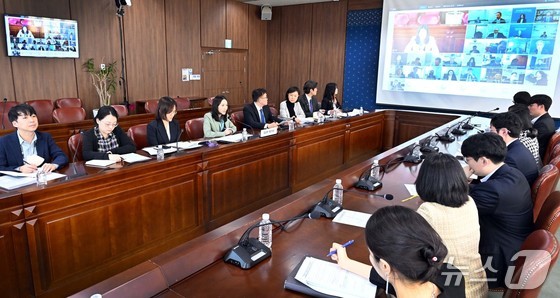
The Foreign Ministry said on March 25 that, in response to rising military tensions and growing instability in the Middle East, it held a video conference titled \"Heads of Mission Meeting to Review Supply‑Chain Crisis Items,\" chaired by Vice Foreign Minister Kim Jin-ah and attended by heads of overseas missions from key countries.
Vice Minister Kim said the Middle East's geopolitical instability directly threatens South Korea's industry and economic security, making real‑time monitoring of supply‑chain disruptions across key regions essential. She urged each mission to closely monitor host‑country resource export and import trends and logistics flows.
The heads of mission at the meeting shared the supply‑and‑demand situation for key items in their host countries and discussed mission‑level steps to minimize procurement disruptions. They also exchanged views on securing alternative sourcing for at‑risk items and on coordinating actions with host governments.
The Foreign Ministry said it will keep the overseas mission Early Warning System (EWS) fully operational and maintain close, coordinated communication with missions to quickly detect signs of global supply‑chain disruption. It will also mobilize emergency response mechanisms in cooperation with relevant ministries and private‑sector firms to minimize impacts on South Korea's economy and companies.