Room bookings at the four-star Stanford Hotel Andong for the 18th and 19th have sold out, drawing attention to the reasons behind the sudden spike in demand.
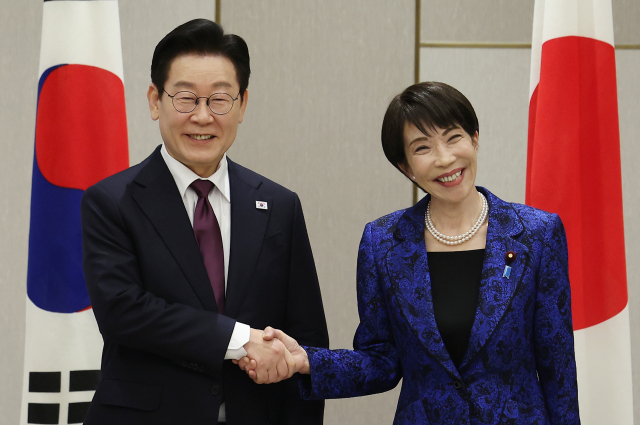
Observers say this development likely ties into ongoing speculation that a South Korea–Japan summit could take place in mid‑May in Andong, the hometown of President Lee Jae‑myung.
The Stanford Hotel Andong sits adjacent to the Gyeongbuk provincial office — a leading candidate for a summit venue if shuttle diplomacy is held in Andong — and is attached to a hanok‑style hotel expected to house Japan’s Prime Minister Sanae Takaichi and her delegation. That proximity, officials say, helps explain the sold‑out rooms and raises the likelihood of a summit.
Talk of a mid‑May Korea‑Japan summit in President Lee’s hometown has circulated for some time.
Earlier this year, the president directed officials at Cabinet meetings and during his New Year’s press conference to explore the option of holding the summit in Andong.
Since then, the Foreign Ministry’s protocol office, the National Intelligence Service and the Japanese Embassy in Seoul have reportedly conducted multiple site inspections centered on Hahoe Village, and diplomatic vehicles have been observed touring Hahoe Village and nearby locations.
If the summit is held in Andong, officials expect UNESCO World Heritage sites such as Hahoe Village and Byeongsan Seowon — which drew global attention during Queen Elizabeth II’s April 1999 visit — to figure prominently in the summit schedule.
Diplomatic experts note that shuttle diplomacy can be arranged on as little as a week’s notice, so the Stanford Hotel Andong’s sold‑out bookings appear to be precautionary preparations for a possible South Korea–Japan summit.
Local officials and residents say hosting the summit in President Lee’s hometown could spotlight Andong as Korea’s spiritual and cultural capital — its Confucian heritage, cuisine and tourist sites — and serve as a significant turning point for regional development.