Online survey of 1,079 cooperative members and 1,000 citizens
Misconduct and opaque operations cited as the main drivers for reform demands
Misconduct and opaque operations cited as the main drivers for reform demands
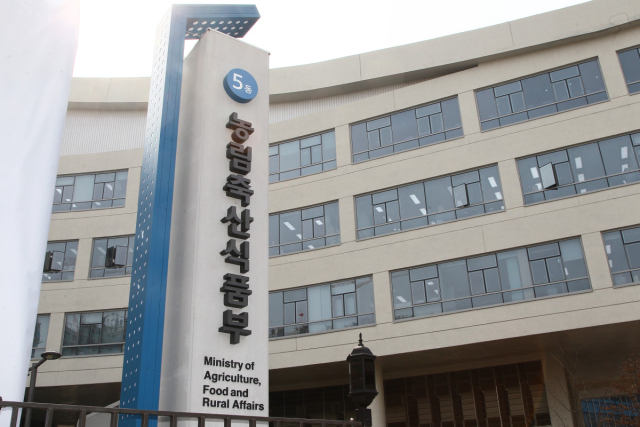 Both cooperative members and the general public showed roughly 95% support for reforming the NongHyup. Broad backing for key government proposals—such as switching to direct elections and creating an audit committee—has added momentum to discussions about overhauling NongHyup’s governance.
 On the 27th, the Korea Rural Economic Institute said an online survey of 1,079 NongHyup members and 1,000 citizens, conducted from the 21st to the 24th, found that 94.5% of members and 95.1% of the public support reforming the NongHyup.
Respondents identified executive misconduct and structural management problems as the primary drivers for reform. A majority of members pointed to executive misconduct, and about half viewed the chairperson-led management structure as problematic. More than 70% of the public named misconduct as the single biggest cause, while nearly half cited governance issues. Respondents also highlighted shortcomings in agricultural distribution and price-stabilization functions.
Looking at specific proposals, 83.1% of members and 90.5% of the public supported switching to direct elections for the president of the NongHyup Central Association. Members said the change would strengthen member sovereignty and democratic governance. At the same time, respondents expressed concerns about higher campaign costs, popularity-driven pledges, power concentration, and potential politicization.
Establishing a NongHyup audit committee received support from 85.8% of members and 93.3% of the public, reflecting hopes for fair audits by an independent external body. Some respondents, however, voiced wariness about potential government influence.
Strengthening government oversight of the NongHyup holding company and its subsidiaries drew support from 67.5% of members and 85% of the public. Relaxing rules to allow individual members to request disclosure of cooperative information received support from 68.9% of members and 79.7% of the public. Overall, the results indicate broad agreement on the need to boost transparency and accountability.
Based on the survey results, the Ministry of Agriculture, Food and Rural Affairs plans to refine reform proposals during parliamentary discussions and to develop follow-up measures.
Song Miryeong, minister of Agriculture, Food and Rural Affairs, said, “These results show that reforming the NongHyup is an agenda both members and the public agree on. We will promptly prepare follow-up reforms, including measures to revitalize economic operations and to scale up cooperatives.”
- U.S. negotiating team cancels Pakistan trip...Trump says, “Call me if you want to talk” [U.S.-Iran war]
- Samsung strike could cost tens of trillions of KRW (approximately 7.5–67.5 billion USD)…A chilling warning: “Irreparable damage”
- Even “expertise” is at risk…The tacit-knowledge debate feared in the AI era has begun [Yang Jong-gon’s Labor Deep Dive]
- Samsung, the only one of the four major groups still holding open recruitment, again moves to create jobs this year…GSAT held at 18 affiliates
- Korea’s real economy reflects the Middle East war…U.S., Japan and the Eurozone face a “rate week” [Han Dong-hoon’s Weekly Outlook]
- Rate hold is a near certainty; whether AI will generate profits is the variable [Trump Stocker]
- Shooting at a dinner attended by Trump...Suspect targeted the U.S. administration [Global Morning Briefing]
- From assessed-value ratios to transfer and holding taxes…Is a comprehensive tax package aimed at cooling house prices coming? [Pick Economy]
- [Exclusive] KF-21 full operational deployment pushed back four years to 2036 [Lee Hyun-ho’s Military Talk]
- Will the KOSPI and KOSDAQ keep surging? Korea’s market faces a “super week”—direction draws attention [Weekly Market Outlook]