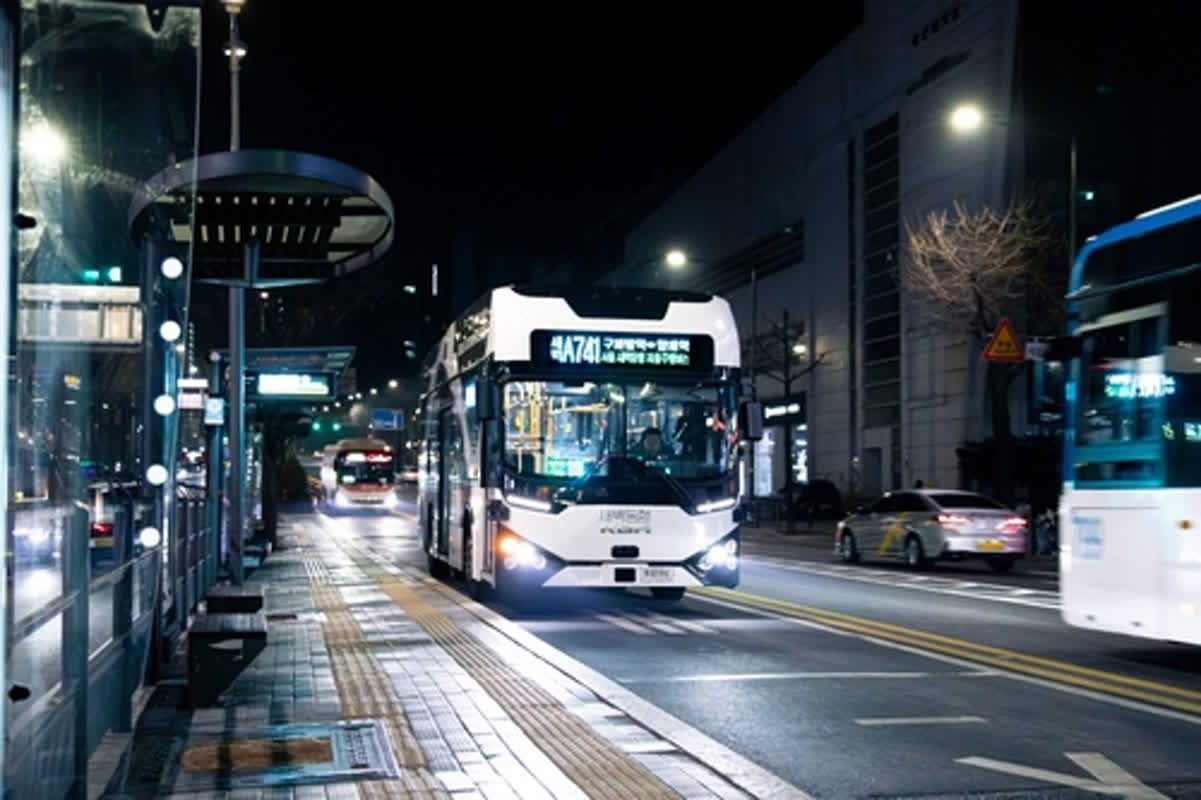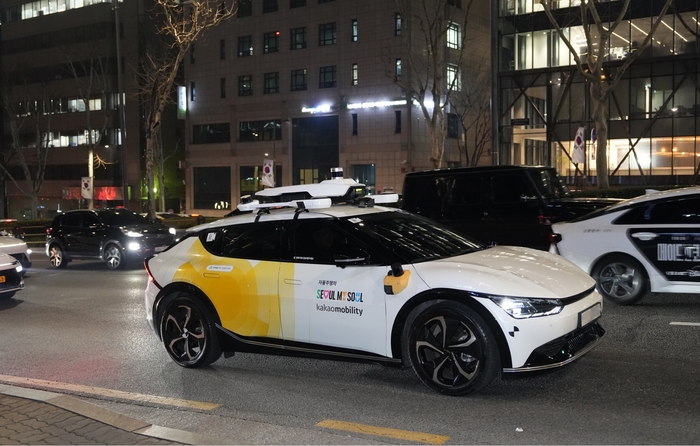
[Sports Seoul | Reporter Pyo Kwon-hyang] Kakao Mobility, selected by the Seoul Metropolitan Government as an autonomous passenger-transport operator, begins full operations of its "Gangnam Late-Night Seoul Autonomous Vehicle" service on the 16th. The launch follows the company's 2024 appointment as the city’s integrated transport platform operator and serves as another validation of its autonomous-driving capabilities.
The Gangnam Late-Night Seoul Autonomous Vehicle will operate on weekdays within the Gangnam-gu autonomous-driving pilot zone during late-night hours (10:00 p.m.–5:00 a.m.). Riders can request the service via the "Seoul Autonomous Vehicle" icon on the Kakao T app’s "View All" screen or through the app’s standard taxi-hailing menu.
The service is currently free to users. Kakao Mobility plans to convert it to a paid service in April, in line with Seoul’s autonomous-vehicle transport policy.
The program tested both the company’s AI Planner–based end-to-end (E2E) autonomous-driving core technology—the vehicle “brain” refined with dense urban data from areas such as Pangyo and Gangnam—and its platform operations and service-delivery capabilities.
Since 2018, Kakao Mobility has been collecting real-world urban driving data using its modular autonomous-sensor rig, the AV-Kit. That data is processed with AI-driven auto-labeling and fed into the company’s in-house AI data pipeline to train autonomous-driving models.
The company says this work enabled it to field a core autonomous-driving solution in Seoul vehicles that upgrades perception and decision-making systems with AI, built on proprietary hardware design and its AI data pipeline. Specifically, the architecture combines a deep-learning Perception Core Model tuned for urban scenarios to detect traffic lights and pedestrians; an AI Planner that makes flexible, human-like decisions in unpredictable situations; and a rule-based layer that ensures predictable, high-safety behavior—together maximizing real-time responsiveness.
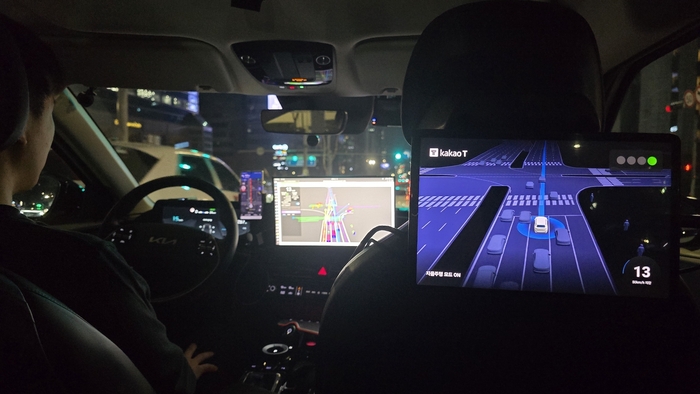
Kakao Mobility also offers an intelligent, integrated safety-management platform to respond immediately to incidents and an in‑vehicle visualization device (AVV) to boost passenger confidence and transparency.
"This is a pivotal moment to secure independent autonomous-driving technology in a domestic mobility market not fully dominated by global big tech," Kakao Mobility CEO Ryu Geung-seon said. "We will leverage our accumulated mobility data infrastructure and operational experience to compete in autonomous driving—the core of future mobility—and evolve into a physical-AI technology company." gioia@sportsseoul.com