Now that it's old news, I can say it: I'll start with the Hyundai Ioniq.
Hyundai's handling of the Ioniq name is a textbook example of smart branding. Ioniq debuted in 2016 as the name for a lineup dedicated to eco-friendly powertrains. A model family made up exclusively of hybrid, plug-in hybrid and battery-electric powertrains had few global precedents. Even the Prius—the poster child of eco cars—never offered a full battery-electric version. As a result, Ioniq planted Hyundai's green-technology image in markets such as Western Europe and delivered solid sales.
Then Hyundai developed its dedicated EV platform, the E-GMP. With specs such as an 800-volt architecture that were poised to shake up the EV market, Hyundai needed a striking sub-brand name to house models built on the E-GMP platform. Impact mattered.
At the time, I proposed elevating Ioniq into the electric-car sub-brand. Ioniq had already earned its place as the model that opened the door to eco powertrains, so promoting the name to lead a purpose-built BEV lineup made sense. Hyundai's green strategy succeeded in stage one with the Ioniq model; stage two—expanding into advanced EVs—was a logical next step, and the model-name-to-sub-brand evolution reflected that plan.
For a mainstream maker like Hyundai, reassuring customers is a key purchase driver. When a model name graduates into a sub-brand, it signals to buyers, “This was a success.” That instant recognition helps sell EVs, which can still feel like an unfamiliar choice for many.
I also proposed one more use for the Ioniq name: position it as a brand for pioneers and early adopters. EVs would soon go mainstream, and a permanent, separate EV sub-brand wouldn't always be necessary. Volkswagen and Mercedes-Benz have already started to back away from strategies that separated EVs under 'ID' and 'EQ.' As EV lineups expand and ICE models are phased out, treating EVs as a special category becomes less logical.
In reality, Volkswagen's ID and Mercedes' EQ have already begun to fade. Hyundai's Ioniq will likely follow a similar path as EVs normalize. That's why I argued for using the Ioniq name more broadly and for longer—not just as an EV sub-brand, but as an innovation brand to carry future breakthroughs.
Because Ioniq is already established as an EV-focused name, it can effectively house the next wave of innovation. New models that showcase cutting-edge technology and concepts inevitably carry higher price tags. Putting them under a meaningful, established brand helps consumers recognize and accept that value. That's the rationale behind proposing Ioniq as an innovation-driven brand. I hope Ioniq continues to serve as Hyundai's platform for future innovative products.
Kia took a different approach. It chose a much more literal naming strategy. Kia labels its electric vehicles with the straightforward 'EV*' tag, and it named its world-first purpose-built vehicle line 'PV*.' By adding numbers to indicate size, the lineup clearly communicates class and purpose—simple, direct and easy to understand.
Now let's talk about the Niro. Kia's Niro has been the eco-specialist counterpart to Hyundai's Ioniq. Unlike the Ioniq's fastback hatchback shape, the Niro is a crossover SUV, and it consistently outsold the Ioniq. In both brand image and commercial viability, the Niro led the Ioniq. That's why the Niro reached a second generation, while the Ioniq was discontinued after seven years.
But Niro's current situation is less favorable. After Kia launched the EV3, the Niro EV was discontinued—the EV3 assumed the role of mainstream EV. Overseas markets still offer a plug-in hybrid, but domestically only the hybrid model remains.
Now the Niro hybrid faces another threat: Kia introduced a Seltos hybrid. Many, myself included, expected the Niro hybrid might face the same fate as the Niro EV after the EV3 arrived. It seemed unlikely the Niro brand could be reassigned a new mission the way Hyundai did with Ioniq.
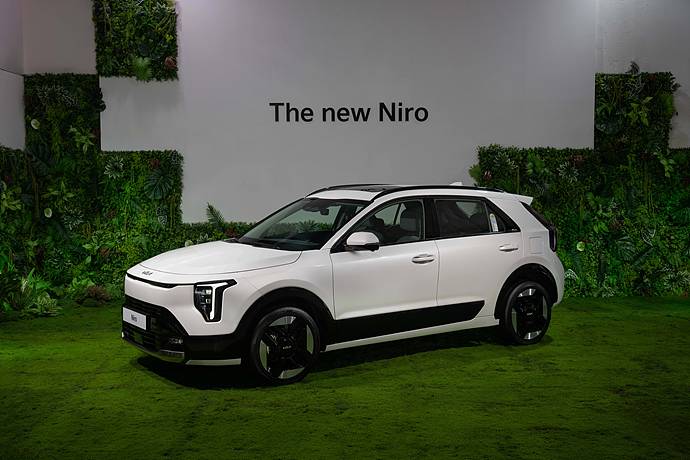
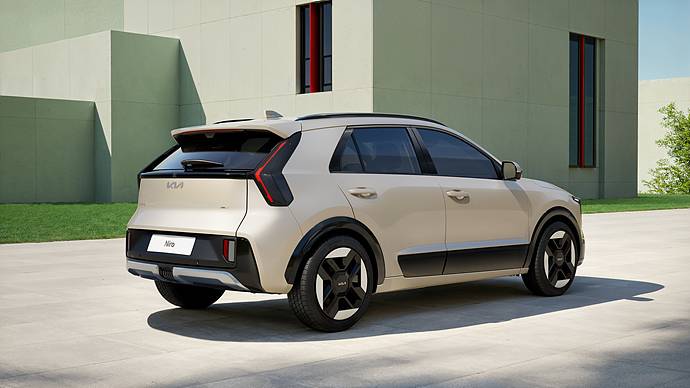
But Niro chose a different path. It effectively changed careers. After serving as a pioneering eco model, it has returned to everyday life and taken on a more conventional role. With this facelift, the New Niro adopts a cleaner, more restrained design than the previous model and than the rugged, traditional-SUV look of the Seltos. Bold touches such as the multi-color C-pillar garnish have been removed.
Was Kia simply aiming for a more mature tone than the Seltos? Partly. Niro owners tend to report high satisfaction with fuel economy and interior space and often keep their cars longer. That customer profile differs from buyers who chase the latest trends. The New Niro strips away transient flash in favor of a neat, elegant image — a move toward a steady seller focused on consistent sales rather than short-term spikes.
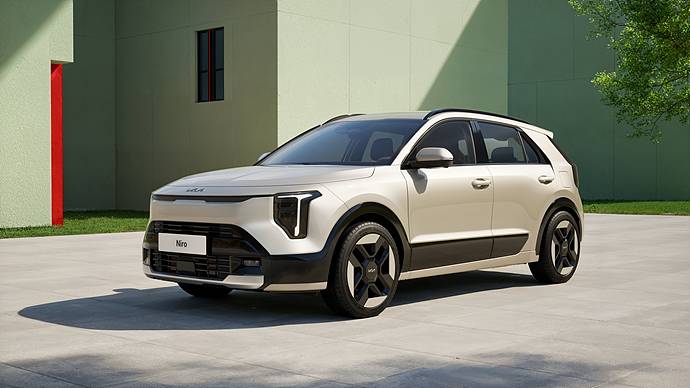
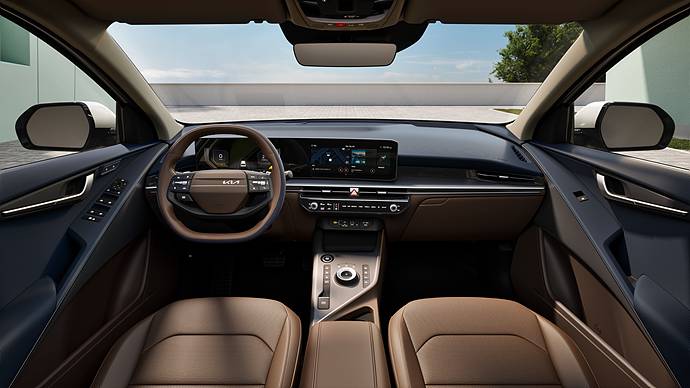
Another objective is to strengthen the Niro's identity as an urban family car. Its lower seat height makes getting in and out easier, and the lower hood reduces forward blind spots. Combined with a roomier cabin feel than the Seltos, Kia emphasizes that the Niro is comfortable and easy to handle in the city.
I personally value the Niro name. But the reality is that it's hard for the Niro brand to continue solely as an eco-specialist indefinitely. Unlike Hyundai's Ioniq, which was reassigned a new mission, repurposing a once-trendy pioneer's name into something familiar for everyday use isn't necessarily a bad outcome.
Of course, the Niro won't command the same spotlight it once did. But sometimes having a longtime companion at your side matters. Niro can remain a living asset for the Kia brand.
Still, the question remains: what will we do when every car becomes electric?
By Na Yoon-seok (automotive columnist)