Wearing black at the West Sea Defense Day memorial, he comforted grieving families with pats on the back
At the all-service commanders’ meeting: “Swiftly restore wartime operational control…ensure top-level readiness”
“A Korean Peninsula free from war and hostility — peace is our food and our livelihoods”…ongoing security push
At the all-service commanders’ meeting: “Swiftly restore wartime operational control…ensure top-level readiness”
“A Korean Peninsula free from war and hostility — peace is our food and our livelihoods”…ongoing security push
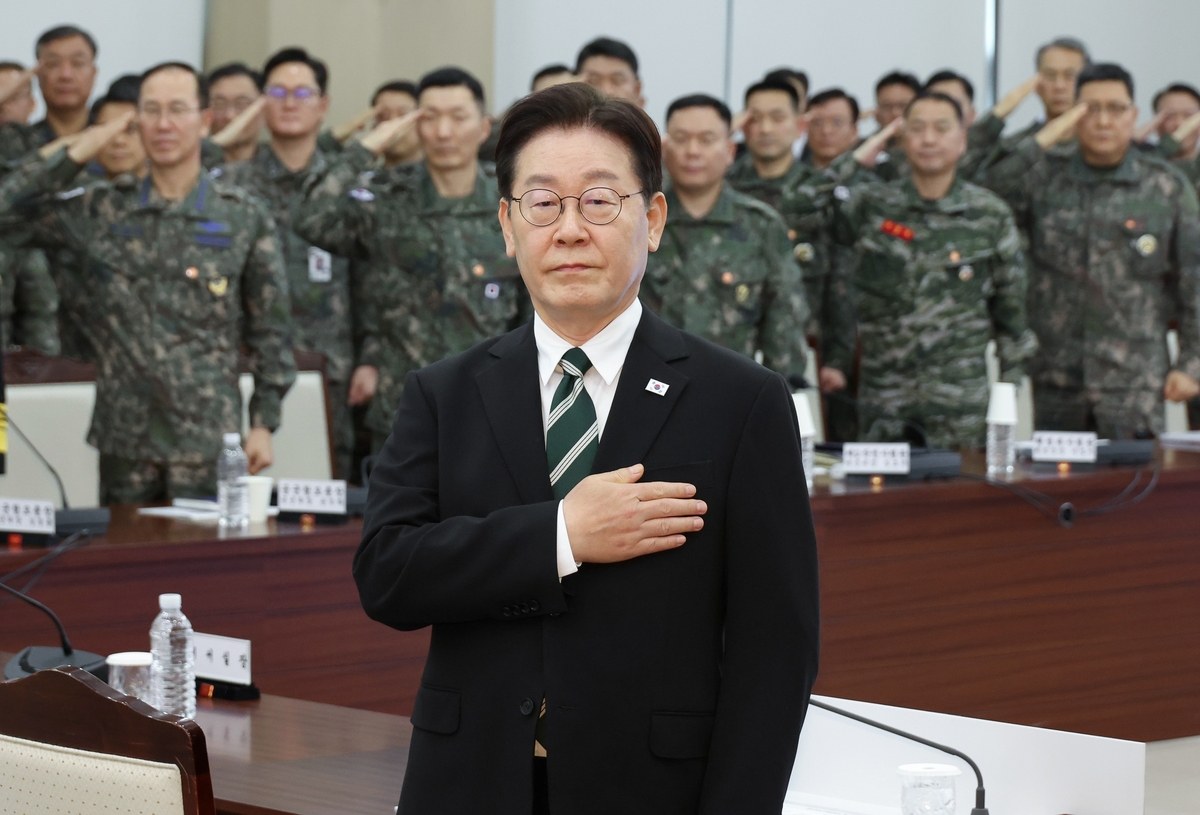
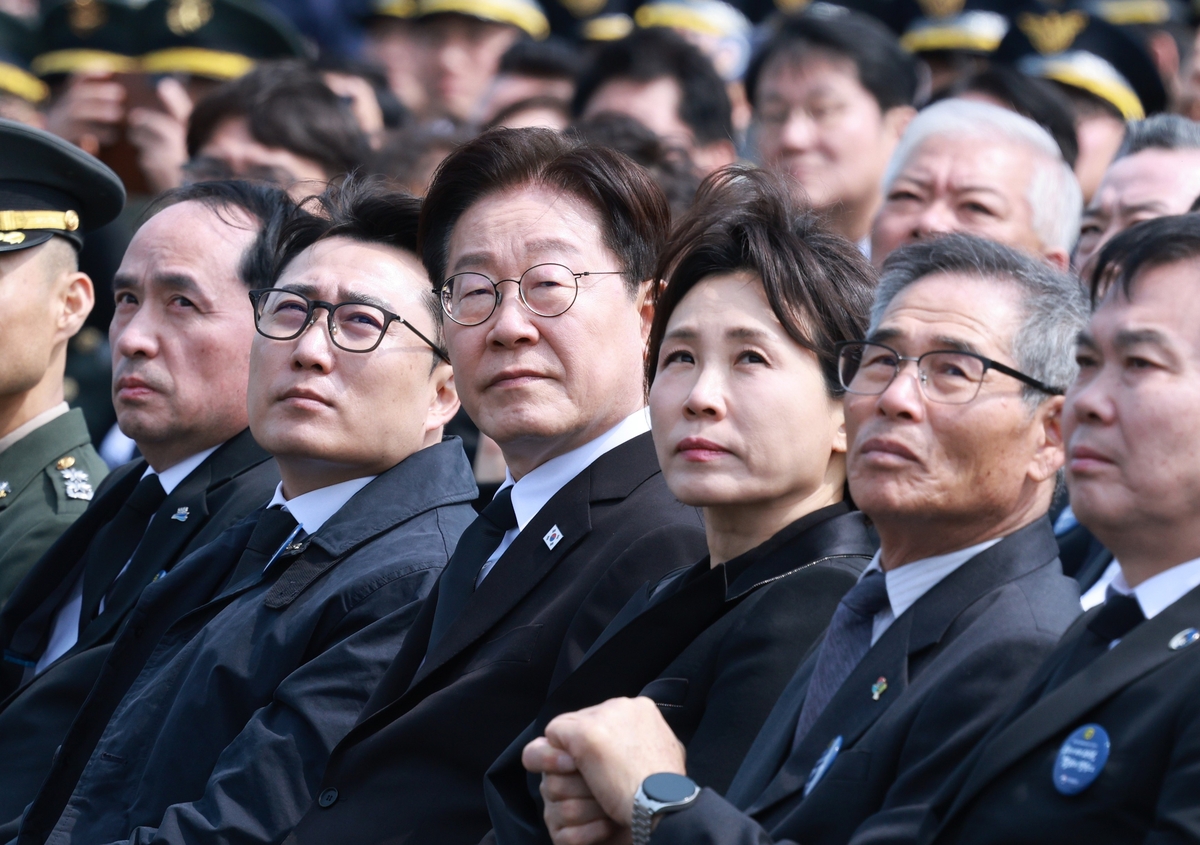
He arrived in a black suit and paid tribute to service members who died defending the West Sea in incidents such as the Second Battle of Yeonpyeong, the sinking of the ROKS Cheonan and the Yeonpyeong Island shelling.
This was his second consecutive year at the memorial; he attended last year as a presidential candidate.
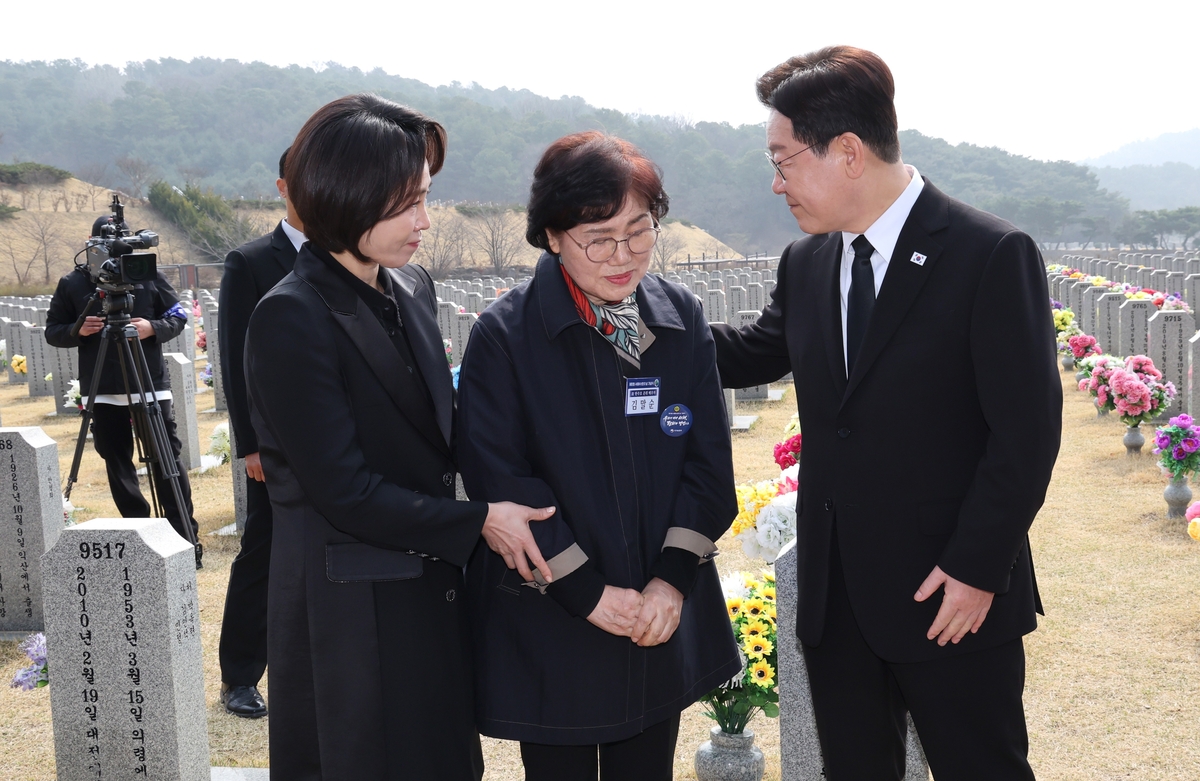
Before the ceremony, he visited the war dead’s graves and spoke with family members of the late Lt. Han Ju-ho, who died searching for missing sailors after the Cheonan sinking. Lee patted the bereaved on the back as he offered condolences.
First Lady Kim Hye-kyung also visited the gravesite and was visibly moved during the event.
When the ceremony began, the president bowed to attendees and then delivered a calm, eight-minute address emphasizing security, peace and veterans’ affairs.
“Peace provides our food, our livelihoods and is the highest form of security,” he added.
Since taking office, Lee has repeatedly framed a robust defense and an airtight posture as prerequisites for peace on the peninsula.
The administration has made building a “smart, elite, strong military” a central objective, pursuing defense-industry growth and increases in the defense budget. Lee has also declared his intent to restore wartime operational control during his term as part of a broader push for self-reliant defense.
In the speech, he pledged to “end the West Sea’s era of confrontation and tension and devote ourselves to a new chapter of shared growth and prosperity.”
The remarks signaled a dual approach: strengthening Korea’s independent defense capabilities while working to manage a stable relationship with North Korea, with the aim of preventing further frontline tragedies and stabilizing regional security.
The ceremony drew leaders from across the political spectrum, including Democratic Party leader Jeong Cheong-rae, People Power Party leader Jang Dong-hyuk and Reform New Party leader Lee Jun-seok. The president shook hands with attendees, including Jeong.
Later that afternoon, Lee convened, for the first time since taking office, a presidentially chaired all-service senior commanders’ meeting. The session was widely read as an effort to stress autonomous defense and reinforce military discipline.
Blue House spokesperson Kang Yoo-jung said the meeting “was convened to share command guidance amid a grave security situation and to rally commitment to autonomous defense.” Kang added that the president emphasized the military’s foremost duty: maintaining a readiness posture capable of responding to any crisis or provocation.
Kang said the agenda included measures to “realize autonomous defense,” “support protection of nationals abroad amid Middle East tensions,” and “strengthen readiness in Korea’s three-axis system to counter North Korean nuclear and missile threats.”
He also reaffirmed that a rock-solid Korea-U.S. alliance remains essential to peninsula stability, but warned against “excessive dependence,” signaling a push to accelerate the transfer of wartime operational control.
In the same vein, Lee called for a transition to a “smart strong military” and asked officials to speed consideration of a selective volunteer recruitment system.
With tensions in the Middle East underscoring global security risks, Lee appears to view the moment as an opportunity to advance priorities such as restoring wartime operational control and broader defense reforms.
Toward the end of the meeting, he checked by video with commanders of overseas-deployed units — including the Dongmyeong, Cheonghae and Arc contingents — to confirm local conditions and the safety of personnel.
The president is maintaining a weeklong schedule of security-related activities.
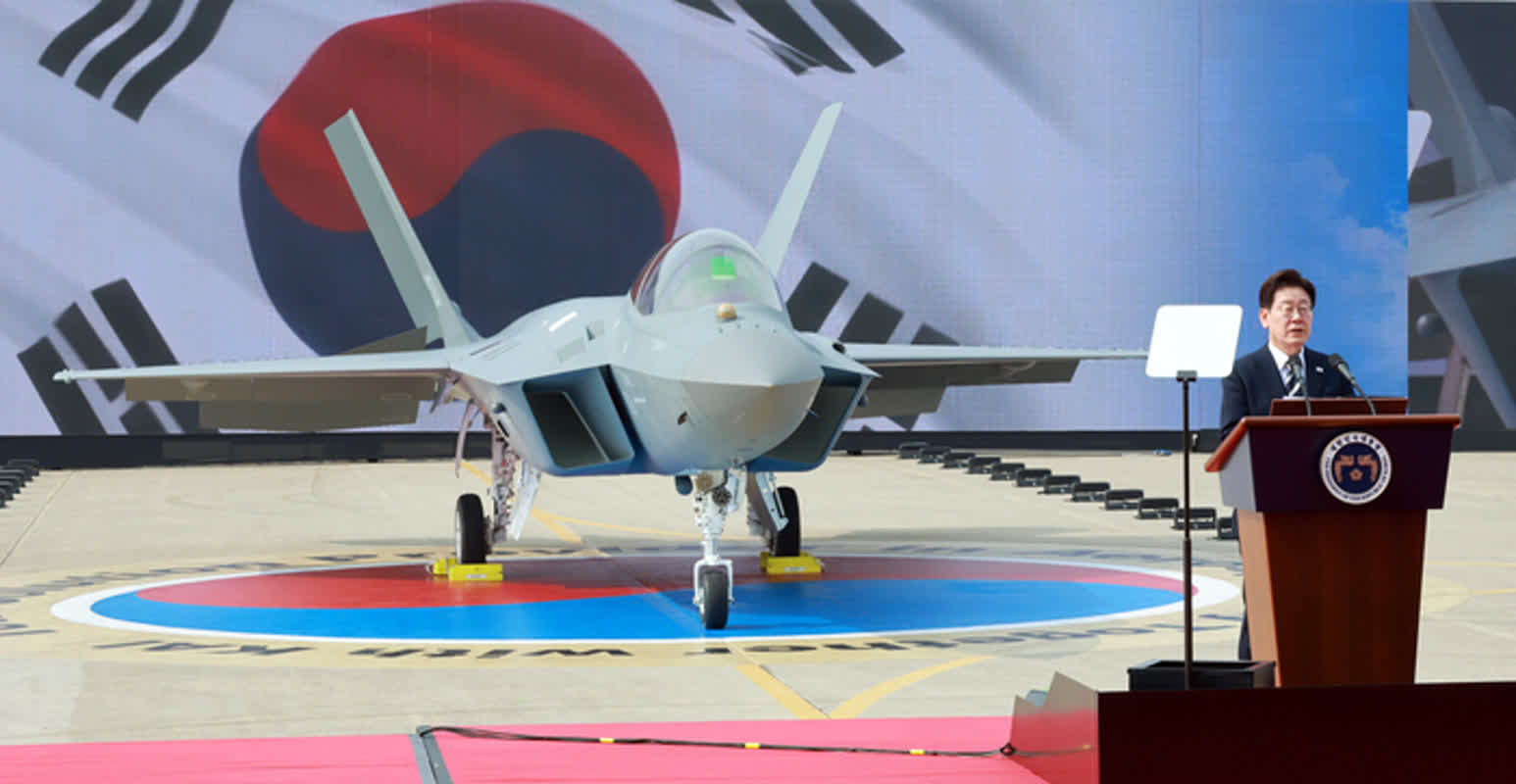
The previous day, he visited the Korea National Oil Corporation’s Seosan storage facility to review energy security. On the 25th, he attended the rollout ceremony for the first mass-produced KF-21 fighter to commend military personnel and development teams.
At Cabinet and emergency economic review meetings, officials assessed the diplomatic, security and economic fallout from conflicts involving the U.S., Israel and Iran.
Analysts say Lee’s steady string of security-focused actions aims to calm domestic concerns and demonstrate resolve to preserve regional stability amid ongoing turmoil stemming from the Middle East.