Chinese subsidies didn’t sway Peru — it picked the K2 and K808
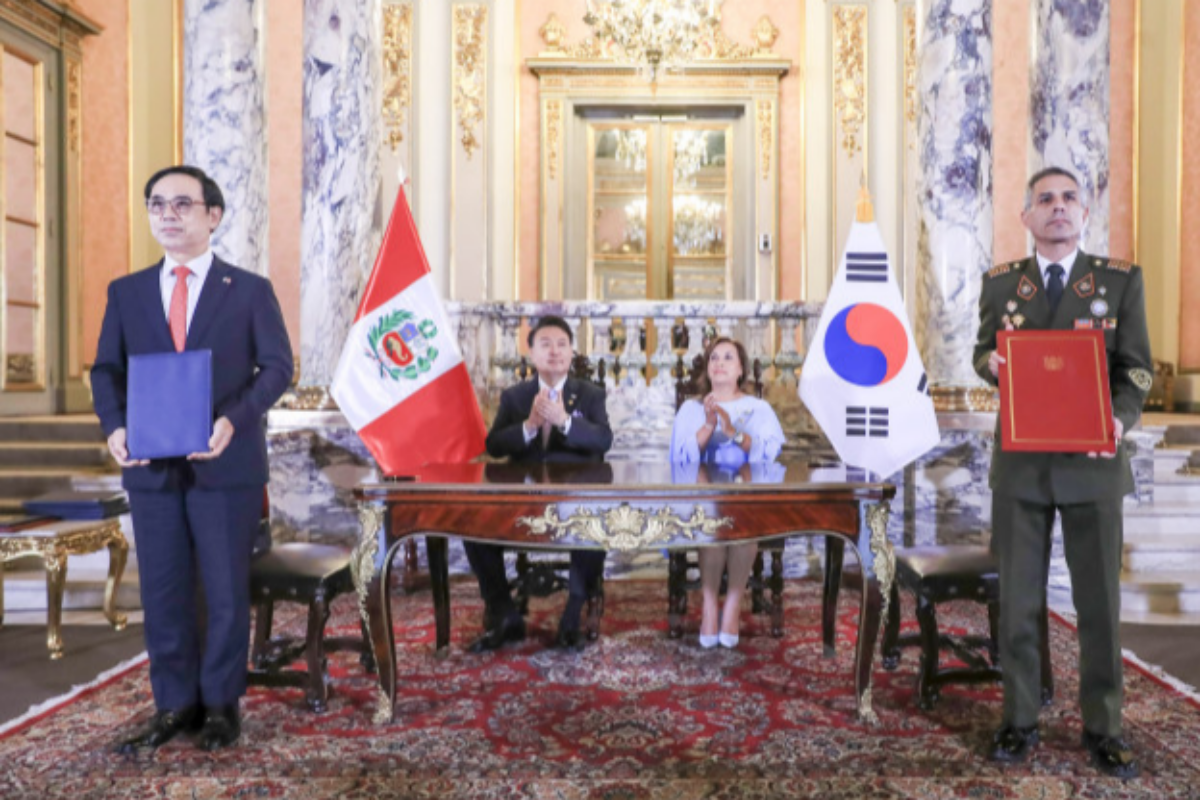
On Dec. 9, 2025, Peru’s Army Headquarters in Lima signed a master agreement to acquire 54 K2 Black Panther tanks and 141 K808 White Tiger armored vehicles — 195 platforms in all. The deal is estimated at 2.7–3.0 trillion KRW (approximately $2.03–$2.25 billion), making it the largest defense export contract in Latin American history. China mounted a low‑price campaign with its VT‑4 and offered government subsidies, but Peru ultimately chose South Korea — a decision with strategic and industrial implications.
Seventeen years of built trust — “We’ll develop our own tech, like Korea did”
Peru’s decision reflects more than a single procurement calculus; it’s the product of more than a decade of growing trust. Korea provided A‑37B attack aircraft to Peru in 2009, and Korean firms later engaged in projects European firms had avoided, including submarine co‑development. In 2024, HD Hyundai Heavy Industries secured a contract to build four ships (roughly 624 billion KRW, approximately $468 million), marking Korea’s entry into Peru’s naval modernization effort. At a forum, the head of Peru’s Army Logistics Command said, “Just as Korea developed the K1 through U.S. technology transfer, we will build independent capability through long‑term R&D and industrial cooperation,” identifying Korea’s defense development model as a blueprint for Peru’s army modernization.
K2 and K808 passed field trials across desert, jungle and the Andes
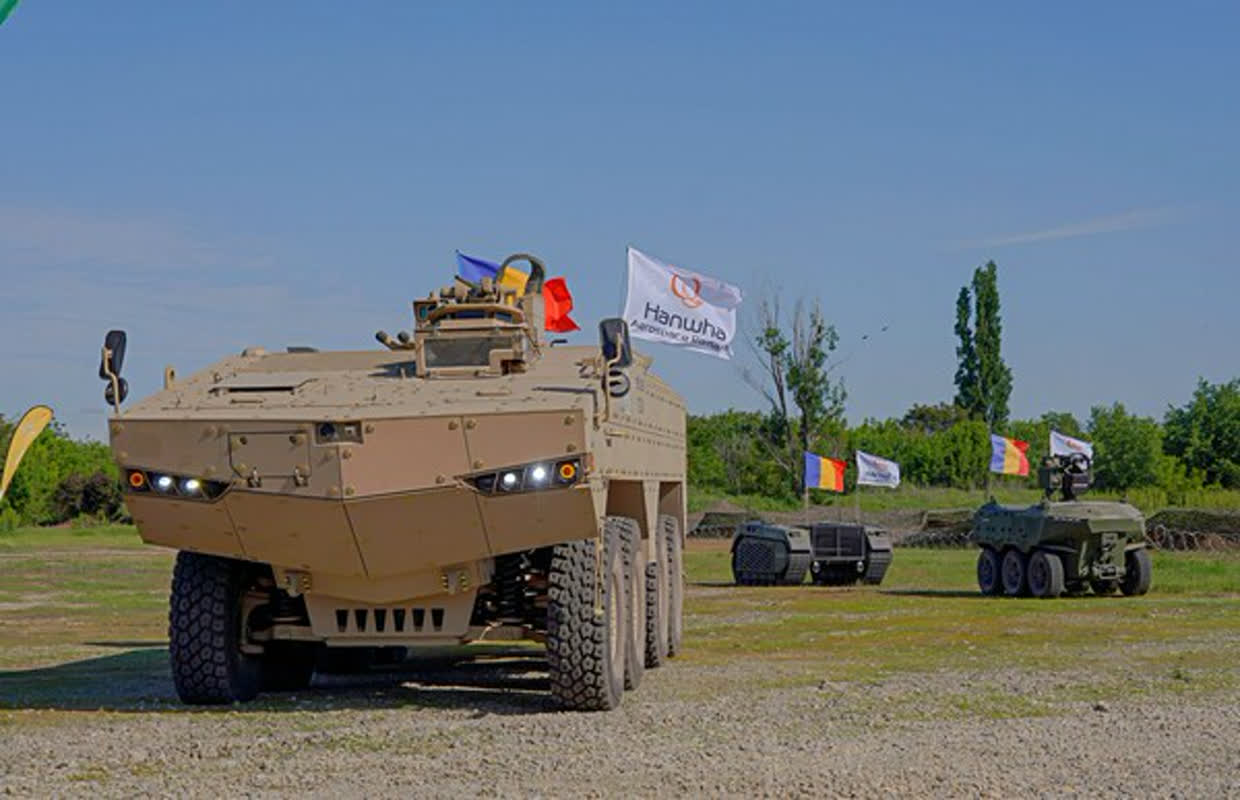
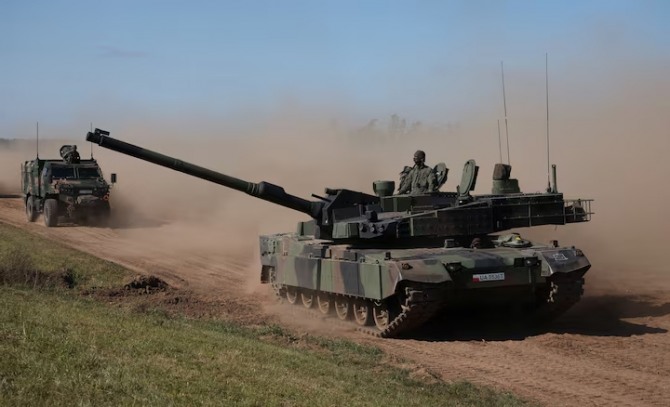
Peru’s operating environment spans coastal desert, Amazon jungle and high Andean terrain. A vehicle that can’t perform across those domains is of limited use. In April 2025, the K2 completed local trials encompassing coastal plains, jungle and mountain environments in Peru, demonstrating all‑weather operational capability. The K808 wheeled vehicle earmarked for delivery has run‑flat tires and an automatic tire‑pressure control system that allow it to continue at speeds above 48 km/h after being struck. Its amphibious capabilities also make it suitable for riverine operations in the Amazon basin.
Price alone didn’t win it — K2’s cost and capability outmatched the VT‑4
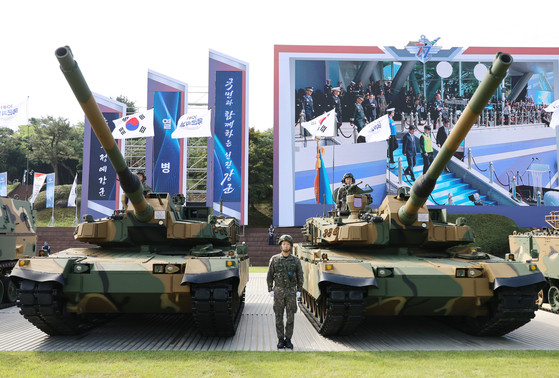
China’s VT‑4 has expanded in Latin America and Southeast Asia on the strength of low sticker prices and subsidies. Peru took a longer view. Based on Poland’s contract, the K2’s export price is about $48 million per unit (around 48.8 billion KRW). It is estimated to be 30–40% cheaper than Germany’s Leopard 2A7+ while delivering roughly 3.5‑generation performance. When factoring in its advanced powerpack, fire control, autoloading turret and networked battlefield systems, Peru judged the K2 to offer superior value over the life cycle, with lower long‑term operating costs and higher capability than a cheaper VT‑4 could provide.
The core is not just the equipment — it’s the co‑production model
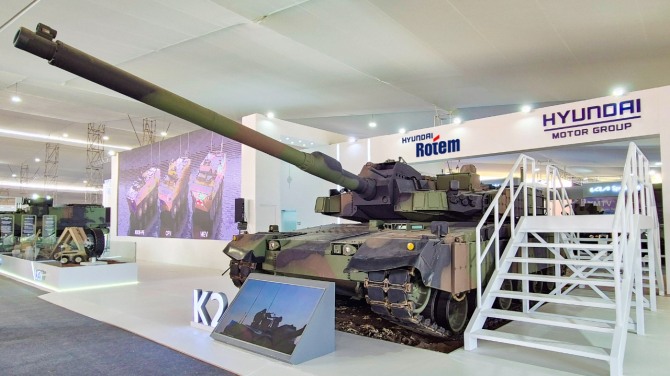
The contract’s strategic value goes beyond vehicle counts. Hyundai Rotem will invest about $270 million (≈380 billion KRW) to establish an assembly and production line in Peru. From 2026–2028, Peru will import 46 K2s and 99 K808s directly from Korea. Between 2029 and 2040, it will license‑produce 104 K2s and 181 K808s locally, yielding a total of 430 vehicles produced and operated over 15 years. The agreement targets sourcing roughly 30% of parts from Peruvian suppliers, explicitly aiming to create jobs, transfer technology and develop a local defense industrial base.
Not just armor — the package includes shipbuilding and naval cooperation
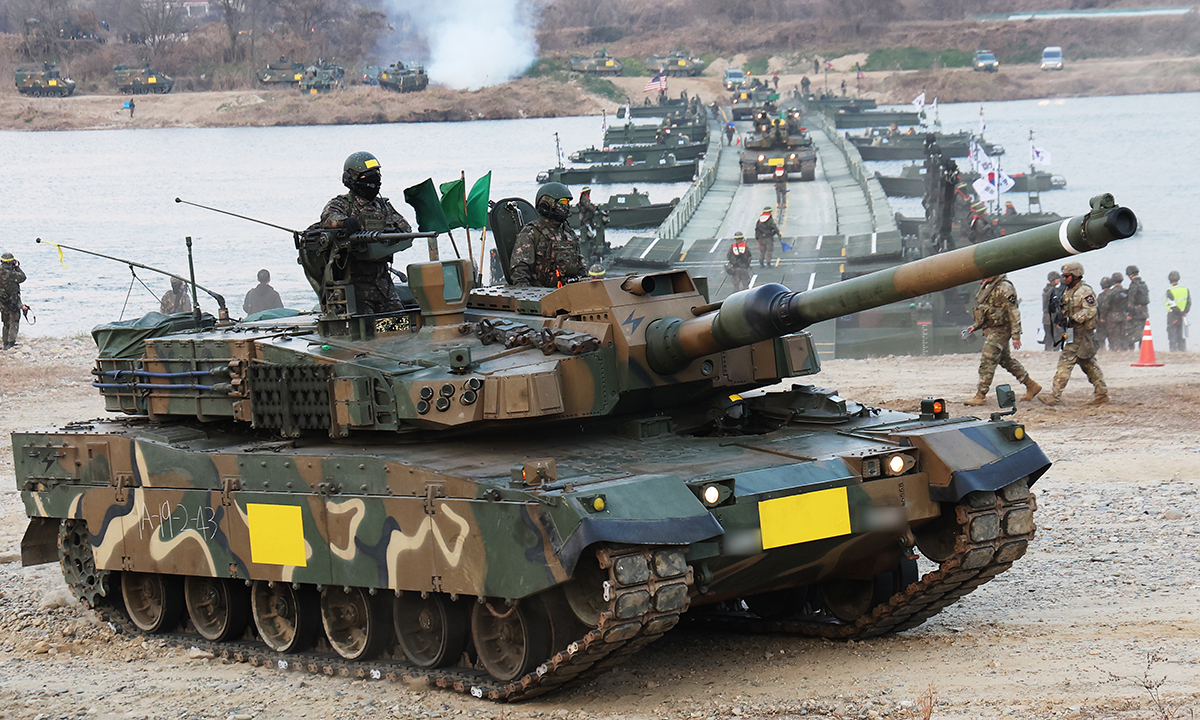
The master agreement covers naval and shipbuilding cooperation as well as land systems. Korea will share ship design, production processes and construction know‑how with Peru’s state defense firms and shipyards, and it has secured priority negotiation status for follow‑on ship projects through 2039. Effectively, Peru designated Korea as a partner for comprehensive military modernization from land to sea. The presidential office characterized the ground equipment export as the largest defense export to Latin America and a turning point that elevates bilateral defense cooperation.
“All our tanks and armored vehicles will be procured through Hyundai Rotem” — exclusive procurement rights
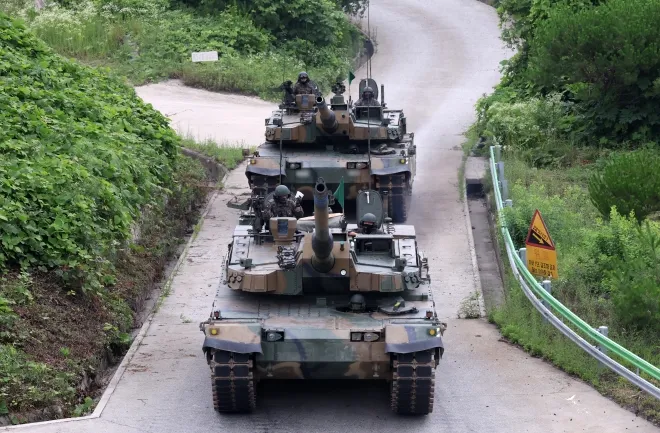
Industry observers highlighted an unusual clause: exclusive procurement rights. Under the 2025 ground‑equipment cooperation master agreement between Hyundai Rotem and Peru’s Army Ordnance Factory (FAME), future Peruvian army imports of tanks and armored vehicles must be processed through Hyundai Rotem. That effectively creates a single entry point for Korea into Peru’s ground weapons market — a rare arrangement given that importers typically select suppliers through competition. Analysts say such a provision reflects a high degree of trust and demonstrated capability.
“2026 marks the start of non‑Poland markets” — the K2’s ripple effect across Latin America
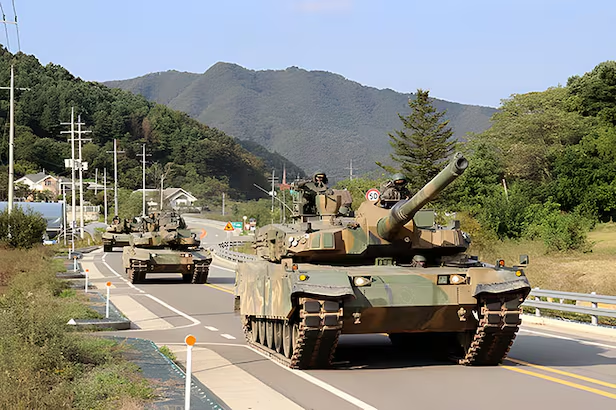
The government and industry regard the Peru deal as the start of K2 expansion beyond Poland and Europe. Defense officials expect negotiations for K2 and K808 sales to countries such as Romania, Iraq and Colombia to accelerate from 2026 onward. If the K2 and K808 prove their worth in the Andes and the Amazon, analysts predict a ripple across Latin America — from Brazil to Chile — of buyers opting for Korea’s K2 over China’s VT‑4. Each country that follows Korea’s lead accelerates K‑defense’s push toward the ranks of the world’s top defense exporters, a trend Peru’s decision has already helped demonstrate.