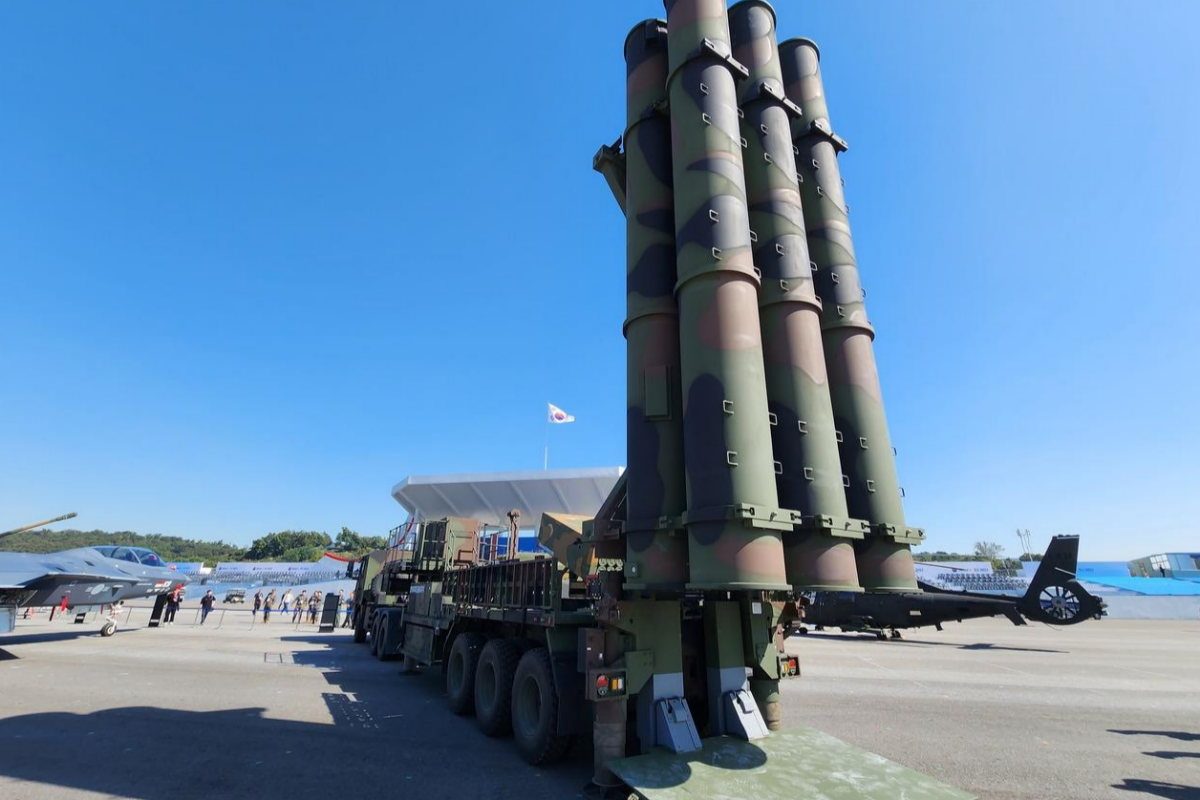
Korea’s three‑ to four‑tier air‑defense network
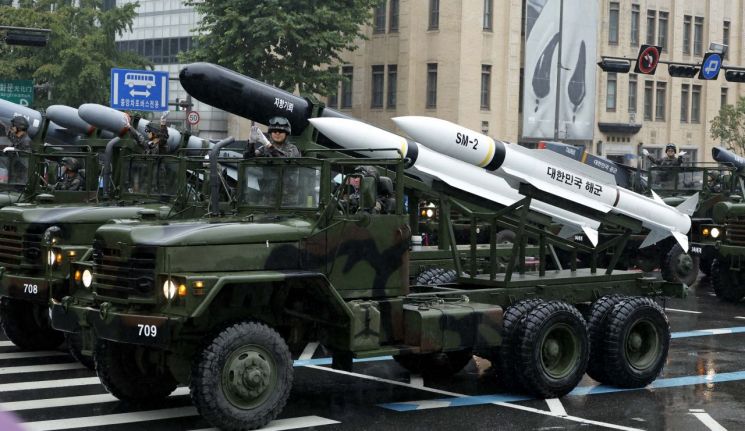
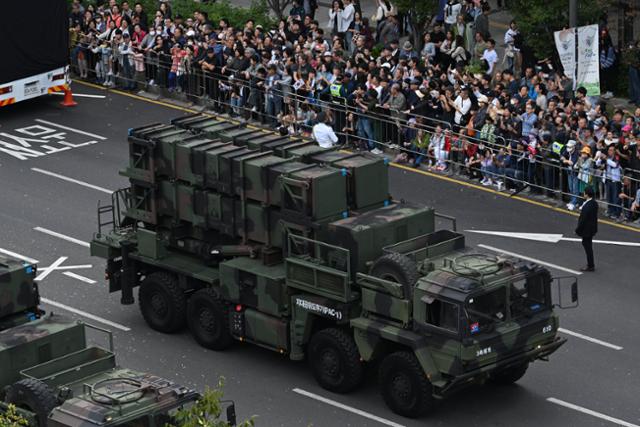
KAMD is a layered air‑defense architecture built around the Patriot (PAC‑3), M‑SAM Cheongung‑II and L‑SAM.
- Below about 40 km (≈ 25 miles): PAC‑3 and Cheongung‑II cover medium‑and low‑altitude ballistic and cruise missiles,
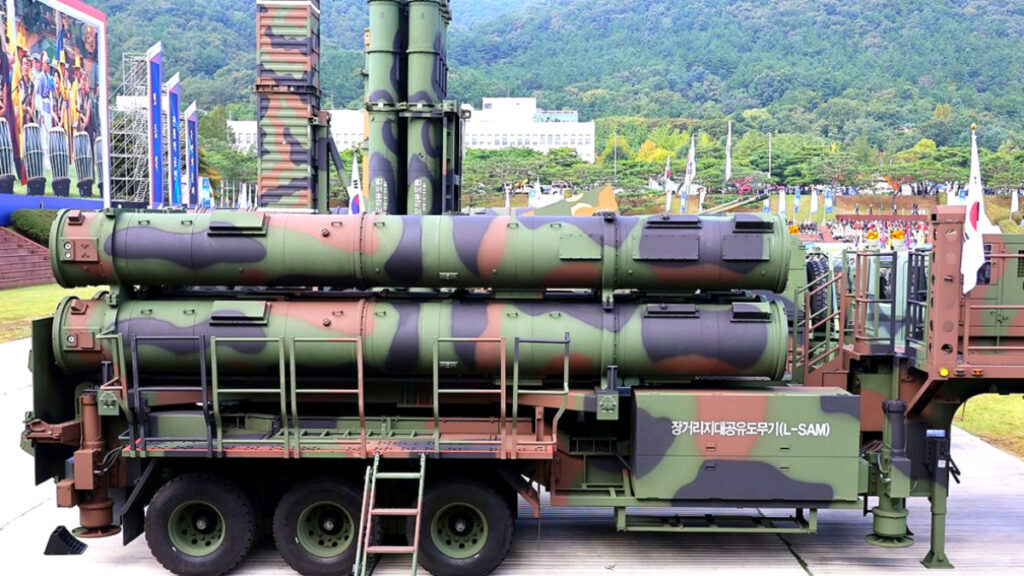
- Around 40–60 km (≈ 25–37 miles): L‑SAM—often described as Korea’s THAAD—engages ballistic warheads during their terminal descent.
Planners intend to add L‑SAM‑II (interception altitudes near 80–100 km [≈ 50–62 miles]), SM‑3 interceptors and a Korean Iron Dome (LAMD) by the mid‑2030s. Together, those layers would give a single incoming ballistic missile at least two or three chances to be intercepted.
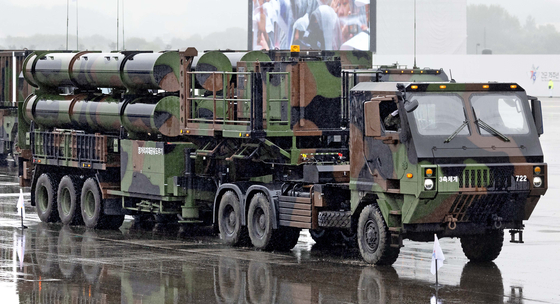
L‑SAM: a hit‑to‑kill interceptor flying at Mach 4.5
L‑SAM functions as KAMD’s upper‑tier shield. It is a hit‑to‑kill vehicle designed to collide with and destroy North Korean ballistic missiles traveling at roughly Mach 4.5 in the 40–60 km (≈ 25–37 miles) band. Tests in 2023–2024 successfully intercepted live ballistic targets, and the system is slated to enter service in the mid‑2026s. In 2024, defense acquisition authorities approved development of L‑SAM‑II, a long‑term effort to roughly double interception altitude to about 80–100 km (≈ 50–62 miles) by 2035. The aim is to ensure even low‑apogee, maneuvering threats can be engaged multiple times from upper and mid layers.
![단독]](https://cdn-union.viewus.co/contents/crawler-dev/image/2026/04/CP-2025-0103/image-bbe37a0c-cc49-4de2-8d26-61e03d82cc19.jpeg)
Mobile Biho complex and the ground‑mobile low‑altitude shield
Where the layered network divides the sky, mobile air‑defense systems such as the Biho complex close gaps on the ground by moving with friendly forces. The Biho complex pairs the K‑30 Biho self‑propelled anti‑aircraft gun with the shoulder‑launched Shingung missile, giving a mobile platform that can employ two 30mm cannons and four guided missiles simultaneously. Vehicle‑mounted radar and electro‑optic sensors (EOTS) automatically detect and track low‑altitude drones, helicopters, cruise missiles and guided rockets. Tied into the air‑defense automation system (C2A), these units can also prosecute targets passed off from other radars. Deployed across mountainous areas, urban zones and forward brigade sectors, they provide mobile coverage for valleys and blind spots that fixed radars miss.
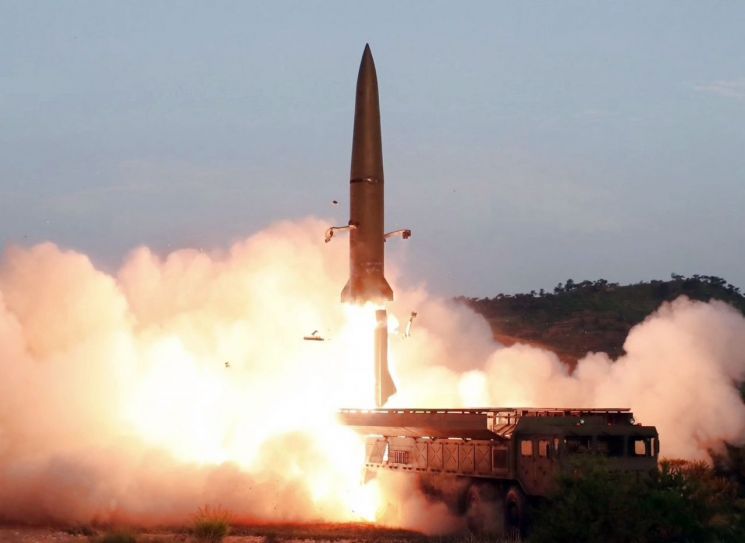
Korea mitigates fixed‑site weaknesses with mobility and dispersion
Russia’s S‑400 and S‑300 families deliver strong intercept performance, but analysts note that reliance on fixed radars and batteries exposed them to surprise drone and cruise‑missile attacks in Ukraine. Korea has taken that lesson into account and designed KAMD as a mix of fixed batteries + mobile batteries + dispersed air‑defense guns. KAMD’s operations center (KAMDOC) and the Central Air‑Defense Control Center (MCRC) will manage the common operating picture, while forward mobile assets—such as the Biho complex, Cheongho and Cheonmu—will tail low‑altitude threats around friendly formations to create a 'moving air‑defense net.'
“2,000 KRW per shot” — laser air defense now fielded
If North Korea uses large numbers of drones, rocket artillery and loitering munitions, interceptor missiles alone would strain budgets and stocks. To address that risk, Korea became the first country to field the Cheonggwang laser air‑defense system operationally.
- It uses a 20 kW fiber laser; a single engagement (dwell) costs roughly 2,000 KRW (about $1.50),
- the system defeats drones by illuminating a target for 10–20 seconds to burn out batteries or engines,
- and in official 2024 tests it recorded a 100% interception success rate.
Cheonggwang deployment began with the Capital Defense Command. As it spreads to forward areas and key facilities, it will operate alongside the Biho complex and LAMD (Korean Iron Dome) as a dedicated low‑altitude, small‑threat shield.
“There’s no 100% defense” — but the system still complicates North Korea’s calculus
Experts describe missile defense against North Korea as a “contest of probabilities.” Maneuvering trajectories, low‑altitude glides and simultaneous volleys of rockets, drones and missiles can defeat any network. Still, Korea is pursuing a layered approach that:
- builds multilayer interception using PAC‑3, Cheongung‑II, L‑SAM stages 1 and 2, and SM‑3,
- employs mobile air‑defense assets like the Biho complex to track low‑altitude and blind‑spot threats,
- and uses low‑cost, high‑volume tools such as the Cheonggwang laser and LAMD to
create a structure that maximizes interception attempts. For North Korea, that forces a requirement to fire multiple rounds on multiple trajectories simultaneously just to achieve partial penetration—making the defense a demanding obstacle.
Tailored Korean air defense is emerging as an export package
With roughly 70% of the peninsula mountainous and engagement ranges short, Korea’s air‑defense approach naturally evolved into a “high‑altitude interception + mountain mobile air defense” model. That combination appeals to countries preparing for threats from Russia—Poland, Norway and Romania among them. Cheongung‑II already has export contracts with the UAE and Saudi Arabia, and the Biho complex is under review in India as a potential replacement for the Pantsir‑S1. The K‑air‑defense suite is increasingly being marketed as an export package.