Between talk of hundreds of billions of KRW in exports (roughly hundreds of millions USD), Japan rolled out a mobile runway
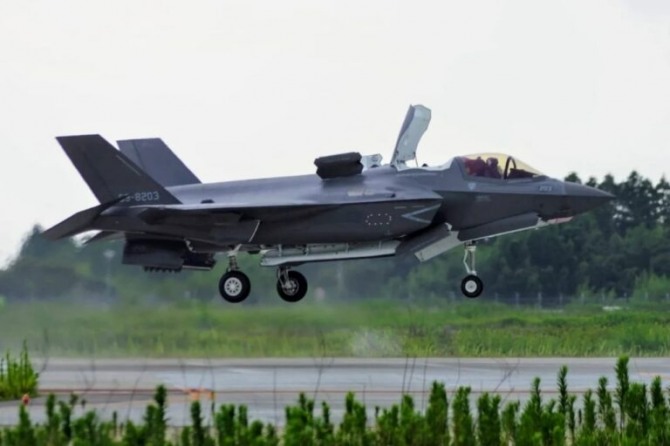
In February 2026, Japan staged a ceremony at Nyutabaru Air Base in Miyazaki Prefecture to declare the F-35B operational and to formally assign the first eight jets to the Japan Air Self-Defense Force’s 1st Tactical Air Wing. Since World War II, Tokyo’s exclusive‑defense policy drew a line against offensive power projection. Fielding vertical‑takeoff stealth fighters, however, effectively restores carrier-capable capability. Located on southern Kyushu, Nyutabaru sits close to the southwest island chain, including the Senkakus, and Japan is positioning the base as a hub for training F-35B pilots and conducting carrier-style air operations.
A 147-jet F-35 force — unmatched stealth air power outside the U.S.
Japan has formalized plans in its defense white paper and budget to acquire 42 F-35B and 105 F-35A jets, bringing the fleet to 147 aircraft. If implemented, that would be more F-35s than any country except the United States and, outside China and Russia, the largest stealth air force in the region. In a contingency over the Senkakus, the East China Sea or the Korean Peninsula, those jets could launch from both mainland bases and carrier decks at sea to contest air superiority. The eight aircraft now at Nyutabaru are only the vanguard of that broader stealth force.
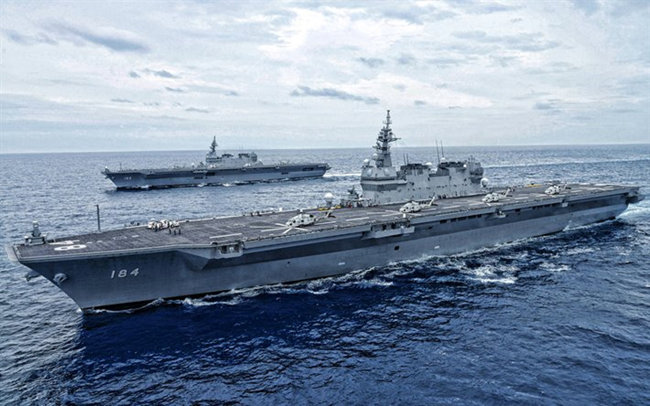
The Izumo and Kaga makeover — two light carriers reshaping the balance
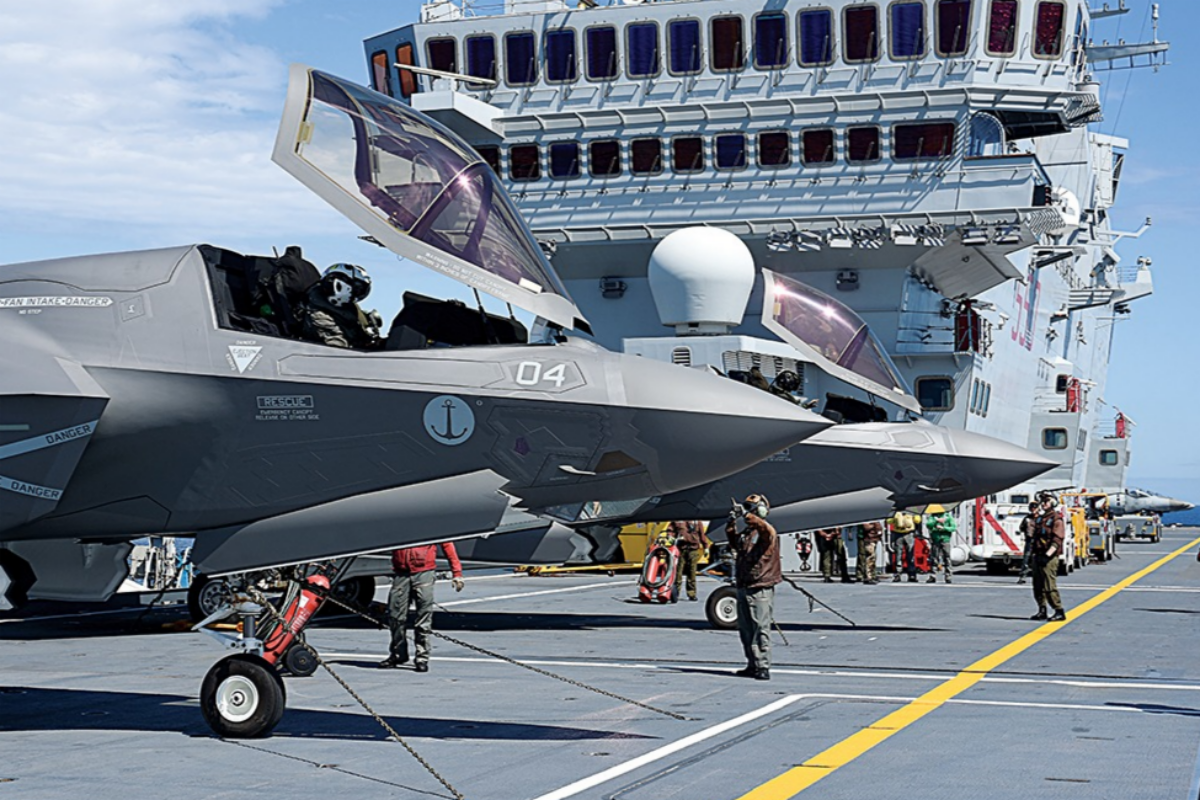
Tokyo’s focus on the F-35B is driven by plans to convert two Izumo-class destroyers into operational light carriers. Izumo and Kaga have completed or are undergoing modifications — heat-resistant flight decks and bow adjustments to add a ski-jump — to support F-35B operations. The Maritime Self-Defense Force aims to operate roughly 10–14 F-35Bs per ship. Under the defense ministry’s plan, the 42 F-35Bs would form two carrier air wings so one ship can remain on patrol while the other cycles through maintenance and training. That two-ship model signals Japan’s intent to project air power beyond territorial defense and seize the initiative in contested waters.
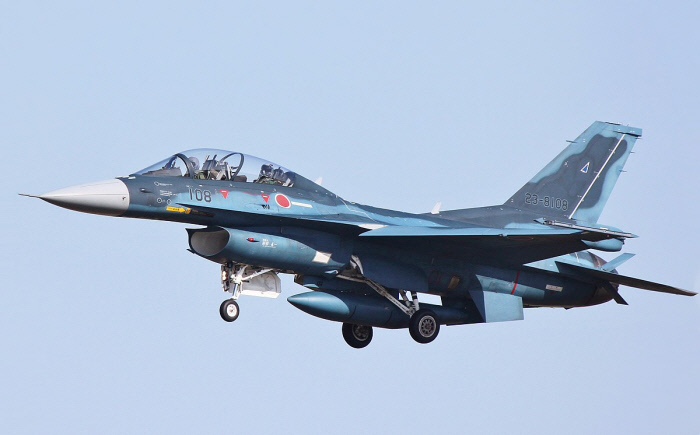
Jets that fly even if runways are knocked out — a tough equation for neighbors
The F-35B is a STOVL (short takeoff and vertical landing) variant that can operate from short or damaged runways. Combined with Izumo and Kaga, Japan gains mobile runways not tied to fixed airfields. That complicates efforts by China, North Korea or Russia to neutralize Japanese air power by striking a handful of bases. U.S. analysts predict Japan’s carrier F-35Bs will be datalinked with U.S. Navy and Marine F-35s, operating across the Indo‑Pacific as a single, integrated sensor‑and‑strike network.
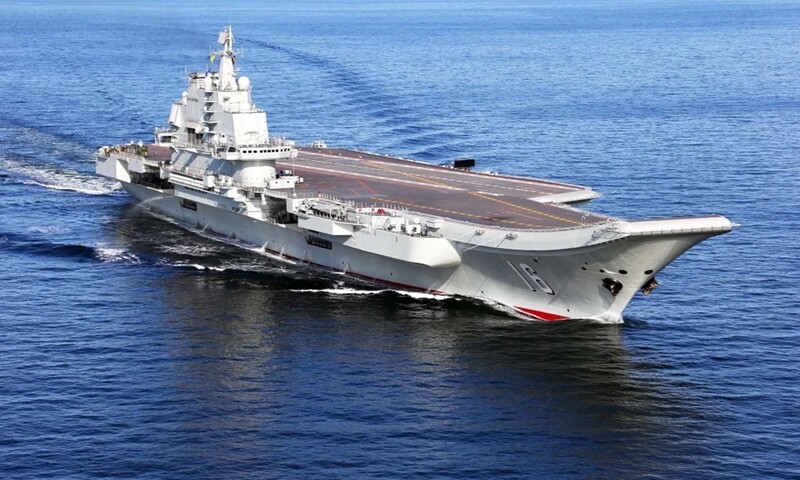
'When the focus was only on China's carriers, Japan's carriers have now joined the game'
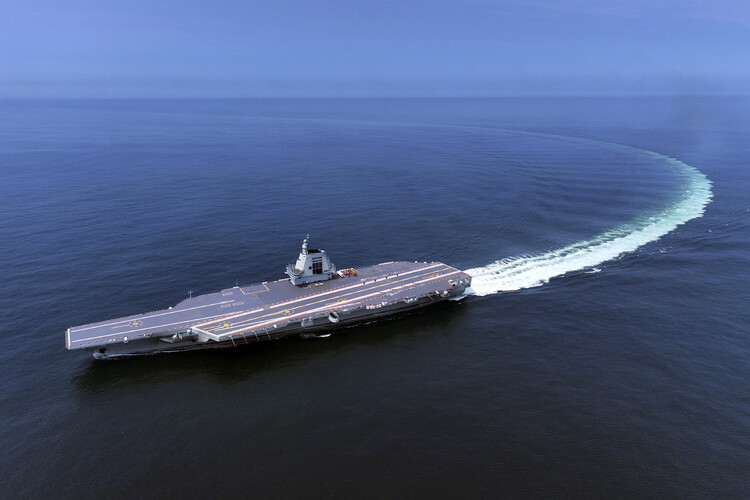
China already fields three carriers — Liaoning, Shandong and Fujian — as it pushes into the western Pacific, and the United States responds by rotating large carrier strike groups through the same waters. Adding two Japanese light carriers entrenches visible carrier competition across the East China Sea, South China Sea and Philippine Sea. Think tanks such as the Sejong Institute note that Japan’s carrier buildup complements U.S. efforts to check China while also expanding Tokyo’s independent military capabilities and strategic autonomy. In short, Japan remains inside the U.S.-Japan alliance but is also broadening its own strategic space.
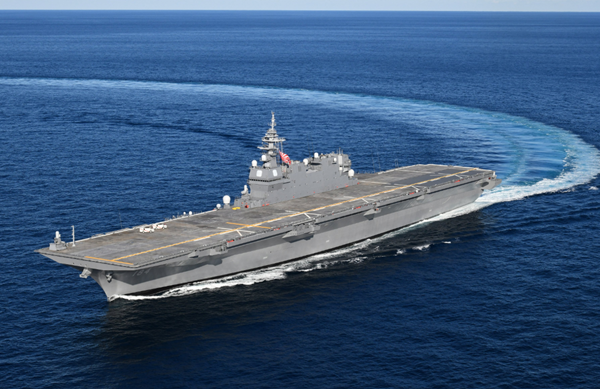
From exclusive defense to counterstrike and carrier operations — Japan accelerates military normalization
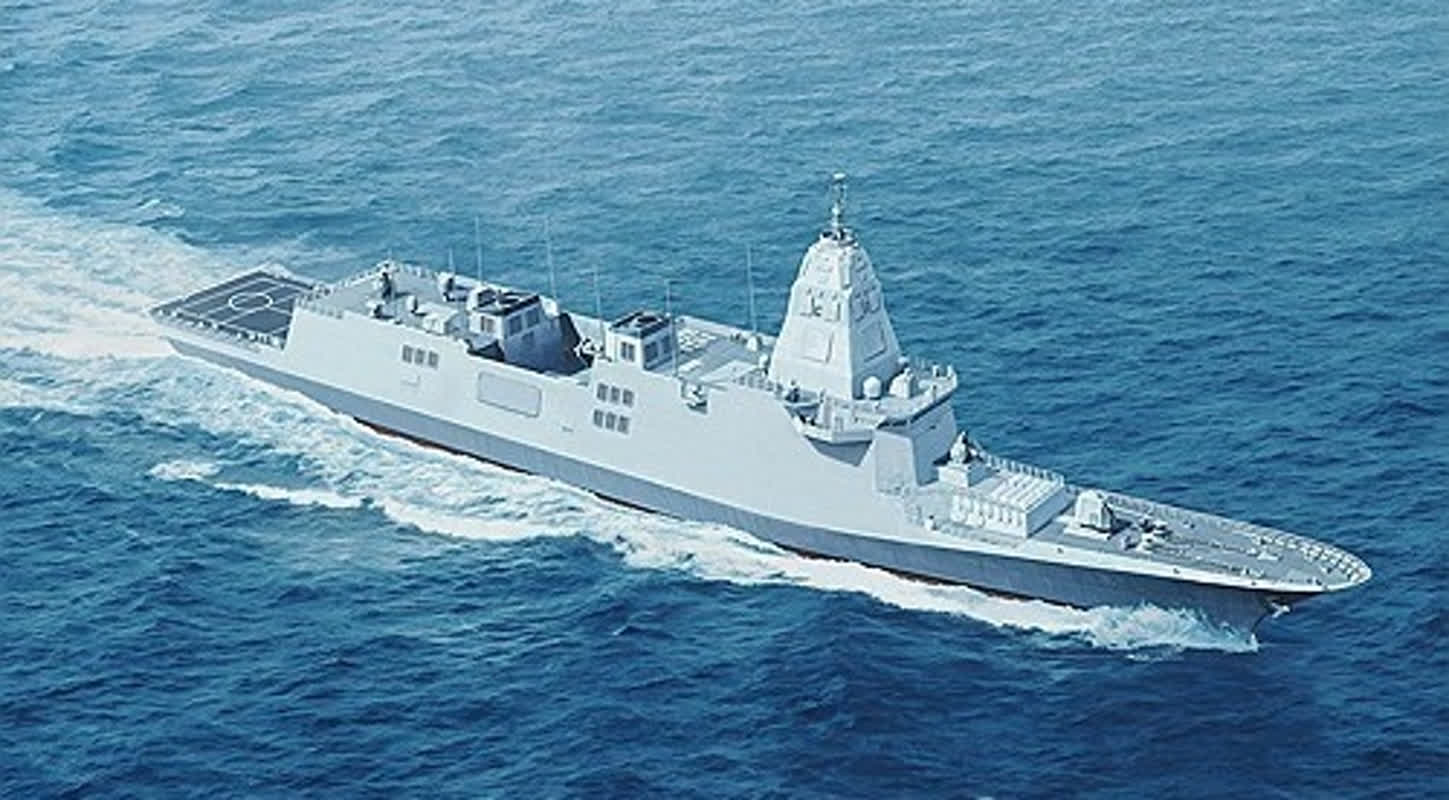
Tokyo has pushed defense spending toward roughly 2% of GDP and has formally pursued a counterstrike capability for long-range strikes. Aegis-equipped surface combatants, joint next-generation fighter development with the U.K. and Italy (GCAP), and the F-35B paired with light carriers all mark steps away from postwar exclusive-defense constraints and toward military normalization. For the United States, Japan becomes a more robust partner to check China. For South Korea, it adds another direct and indirect rival in military capability. Japan’s carrier and core naval buildup underscores why Seoul cannot judge its defense posture by export revenue alone.
What South Korea should watch is not the dollar amount but operational range
South Korea’s defense industry has delivered several trillion KRW a year in exports (approximately several billion USD), highlighting strengths in ground systems and select naval and artillery niches. But during the same period Japan quietly concentrated on carrier conversions, F-35B procurement and long-range operational capability to extend how far it can project force. As the Indo‑Pacific strategic environment shifts, Seoul should prioritize the actual sea and air ranges its navy and air force can control over raw export totals. Japan’s carrier plus F-35B operationalization signals that South Korea needs to revisit long-term plans for strategic platforms such as nuclear submarines, large surface combatants and long-range air power.