As the war passed two weeks, U.S. and Iranian rhetoric has hardened, dimming prospects for a quick end.
On the 14th (local time), President Trump told NBC that "Iran wants to negotiate, but I don't. The terms are not satisfactory." When pressed on what conditions he would demand, he declined to specify. The network said Trump indicated one likely condition would be Iran's complete abandonment of any nuclear ambitions.
Earlier, Reuters, citing three sources familiar with the matter, reported the Trump administration rebuffed efforts by Middle Eastern allies to open diplomatic channels to end the conflict. Oman, which mediated talks before the war, made repeated attempts to reestablish a communication channel, but two sources said the White House clearly showed no interest. A senior White House official told the wire service that Trump rejected those initiatives and is focused on further degrading Iran's military through continued operations. The official quoted the president as saying, "We're not interested at this time and we will continue the mission as before. Maybe someday, but not now."
With U.S. midterm elections looming in November and oil prices surging after Iran's blockade of the Strait of Hormuz, some analysts had interpreted last week's administration comments about end-of-war conditions as a search for an exit strategy. Those expectations now appear to have faded.
Iran's posture has also grown more uncompromising. On the 14th, Reuters, citing two senior Iranian sources, reported that despite mediation attempts by several countries, Tehran refuses any ceasefire until U.S. and Israeli strikes stop. The sources said Iran is demanding a permanent halt to attacks and reparations. Another senior Iranian figure told Reuters that prior diplomatic understandings "no longer matter," and described Iran's position as increasingly hardline. He said the Islamic Revolutionary Guard Corps (IRGC) firmly believes that losing control of the Strait of Hormuz would amount to losing the war, and therefore the IRGC will accept no ceasefire, no ceasefire talks, and no diplomatic efforts.
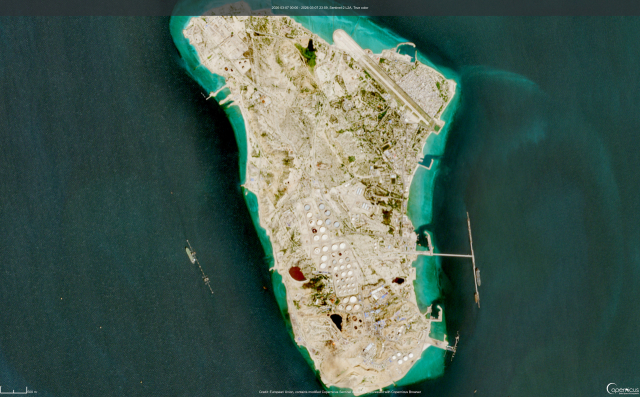
Reuters concluded that both Washington and Tehran appear less willing to engage in talks than they were early in the conflict, suggesting both sides are preparing for a prolonged confrontation. The wire service noted that the U.S. strike on Kharg Island, Iran's primary oil-export terminal, on the 13th signaled President Trump's determination to continue military pressure.
On the 14th, U.S. Central Command said American forces had carried out large-scale precision strikes on Kharg Island the previous day. The command said the strikes hit more than 90 Iranian military targets— including naval mine storage facilities and missile-storage bunkers — while avoiding damage to oil infrastructure.
President Trump warned oil facilities could become targets in the future. On the 13th he posted on social media that, "for moral reasons we did not destroy the oil facilities on the island this time, but if Iran or anyone else interferes with free and safe passage through the Strait of Hormuz, we'll reconsider immediately." On the 14th he told NBC he might "have some fun attacking Kharg Island a few more times," leaving open the possibility of additional strikes.
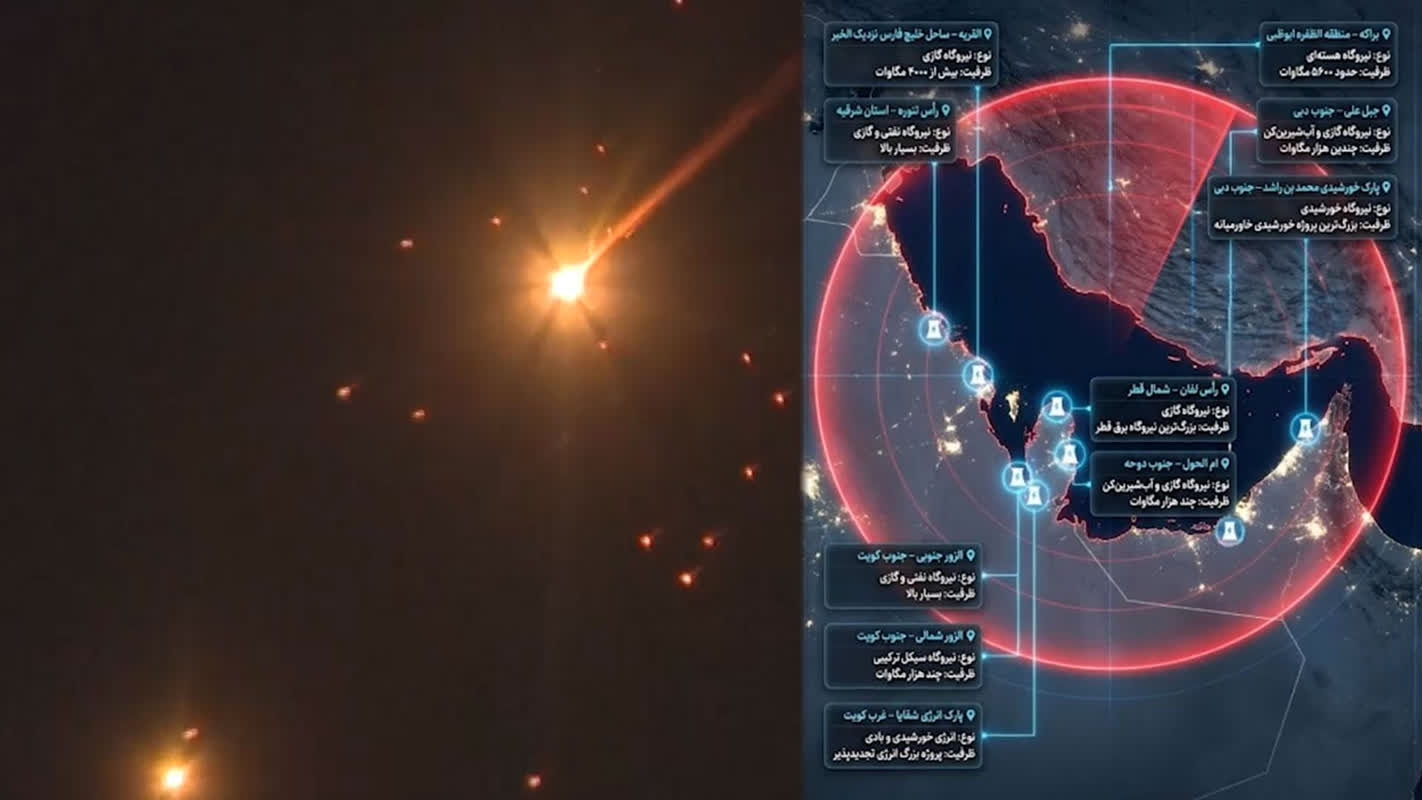
Iran has continued strikes across the region. The Times of Israel reported that Tehran launched six missile strikes after midnight on the 15th. The Guardian said a missile attack was reported in the United Arab Emirates that day, and Saudi Arabia's defense ministry said it intercepted and destroyed 10 drones over Riyadh and the kingdom's eastern region. Bahrain also sounded air-raid alerts.