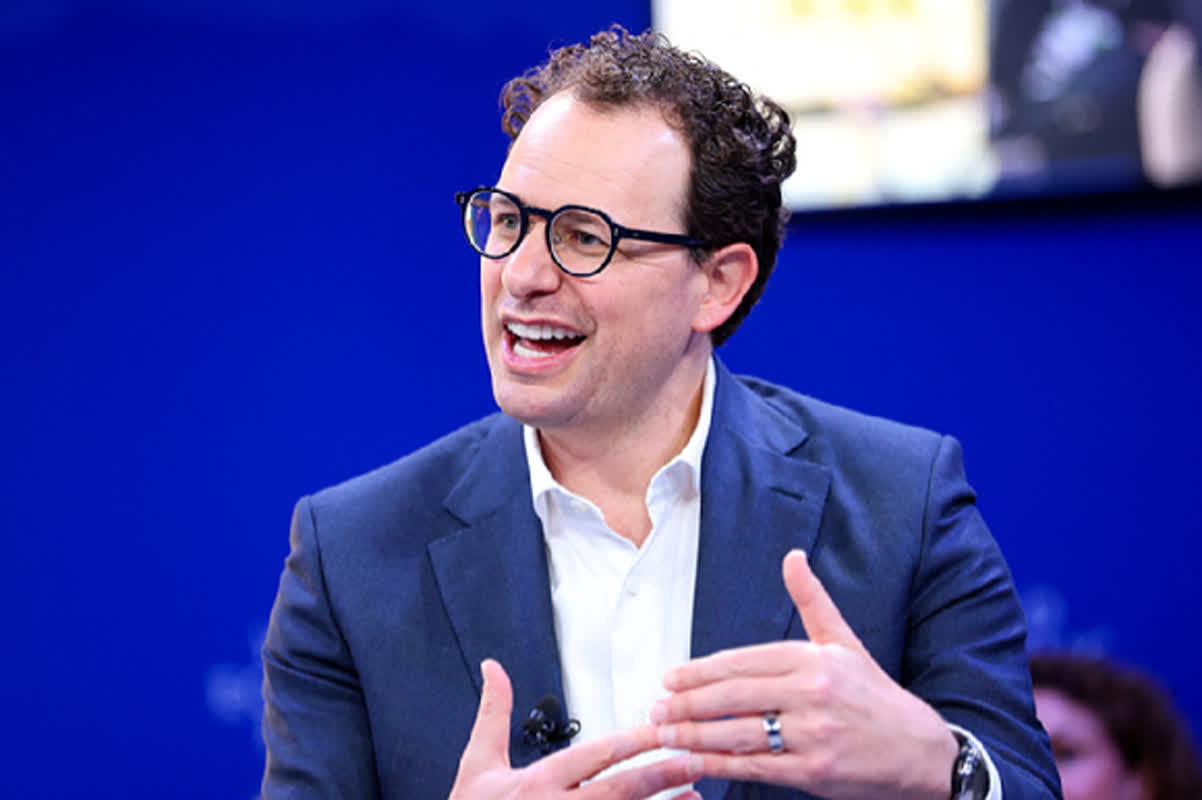
“Anduril was founded to modernize a slow, bureaucratic defense industry. Korea’s defense sector moves faster and looks farther ahead than almost anywhere else, making it an ideal partner,” Brian Schimpf, co‑founder and CEO of Anduril Industries, said at a May 7 press briefing at the Four Seasons Hotel in Seoul’s Jung‑gu district.
Founded in 2017, Anduril has rapidly grown into a U.S. defense‑tech company and a key partner of the Department of Defense by fielding AI‑driven autonomous systems and military drones. The company is currently valued at about 30.5 billion USD (approximately 40 trillion KRW).
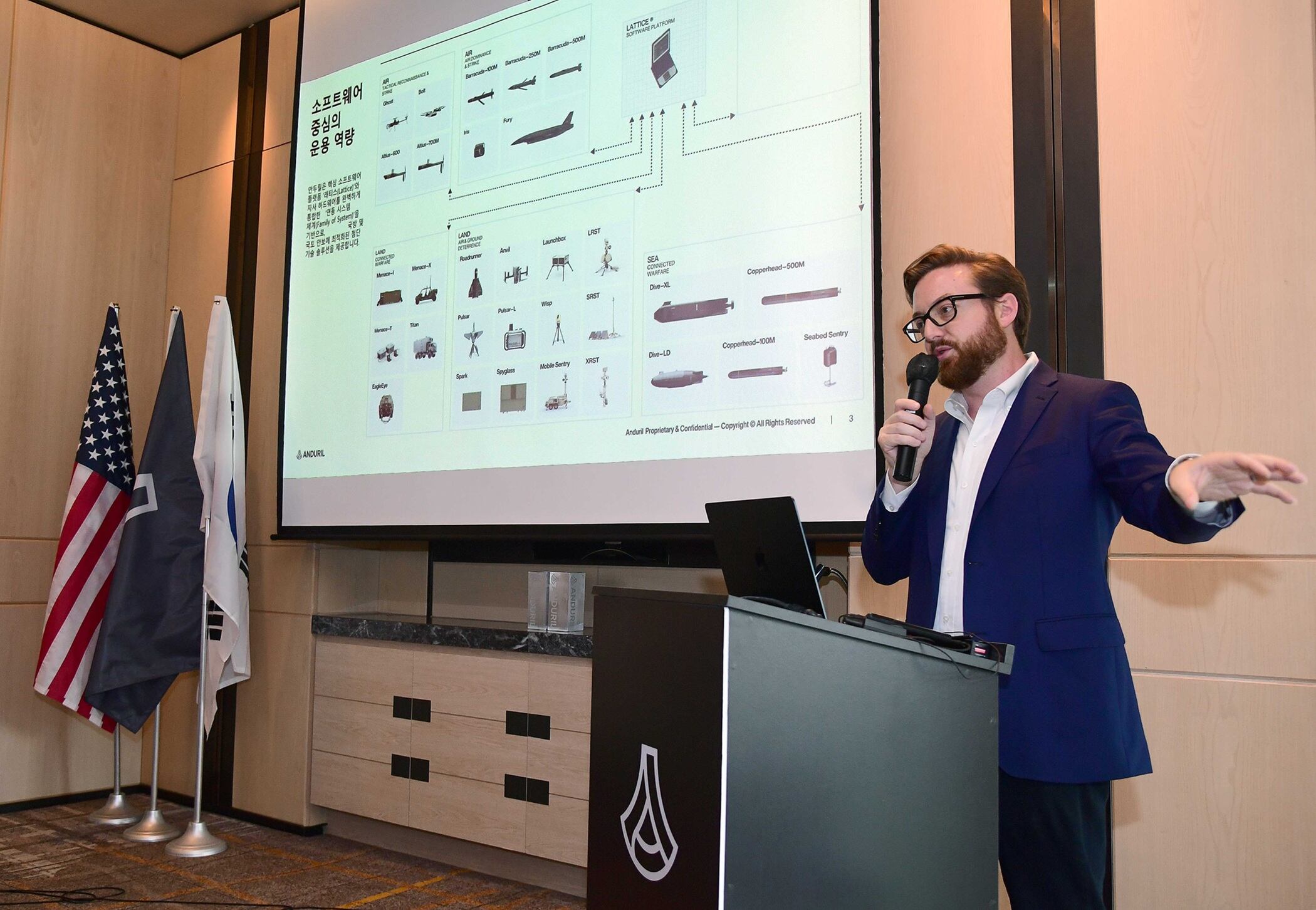
Anduril’s chief advantage is its AI‑driven battlefield operating system, Lattice. Lattice links drones, submarines and surveillance sensors into a single network and acts as an “AI aide,” providing integrated, real‑time control. By aggregating and analyzing thousands of sensors and data streams, it compresses the cycle from situational awareness to decision and execution to seconds and lets commanders direct operations across multiple domains from a single interface.
“The key challenge on today’s battlefield is making fast, accurate decisions amid an overwhelming flood of information,” Schimpf said. “Lattice automates much of the information processing so commanders can focus on the decisions that matter.”
Since opening a Korean office last year, Anduril has expanded partnerships with local firms including HD Hyundai, Korean Air and Hyundai Rotem. On the morning of the briefing, Anduril and Hyundai Rotem signed an MOU to build an AI‑based integrated manned‑unmanned teaming (MUM‑T) command and control system. The plan is to integrate Lattice into Hyundai Rotem’s unmanned platforms and key land systems to provide real‑time situational awareness and autonomous mission execution.
Last month, Anduril demonstrated three Korean Air drones equipped with Lattice. The company also signed an MOU with HD Hyundai last year to develop an unmanned surface vessel (USV) and to design and build a prototype autonomous surface vessel. HD Hyundai Heavy Industries is constructing that prototype at its Ulsan shipyard; Anduril expects to launch the hull as early as October for sea trials off the U.S. coast. John Kim, head of Anduril Korea, said, “Over the past year we’ve delivered tangible results with Korean partners — from starting construction on a prototype autonomous surface vessel to jointly developing autonomous drones. Korea’s hardware expertise combined with Anduril’s software will help build a more precise, efficient, networked defense capability.”
Schimpf praised Korean firms for their technical skill and pace. “Companies move at different speeds,” he said. “Delivering a prototype within a year is unprecedented.” He added that Anduril will broaden cooperation with Korean defense companies and expand its supply‑chain base. “Today we manufacture our products in the U.S. and abroad, but Korea brings fast production and competitive supply chains,” Schimpf said. “We plan to integrate Korean firms into our global supply chain.”
Anduril also plans to pursue global markets alongside its Korean partners. John Kim pointed to the USV developed with HD Hyundai and said, “We see an opportunity for Korea’s defense industry to enter the U.S. defense market. If Anduril wins a U.S. Navy unmanned surface vessel contract, we could scale production next year and create a win‑win outcome.”