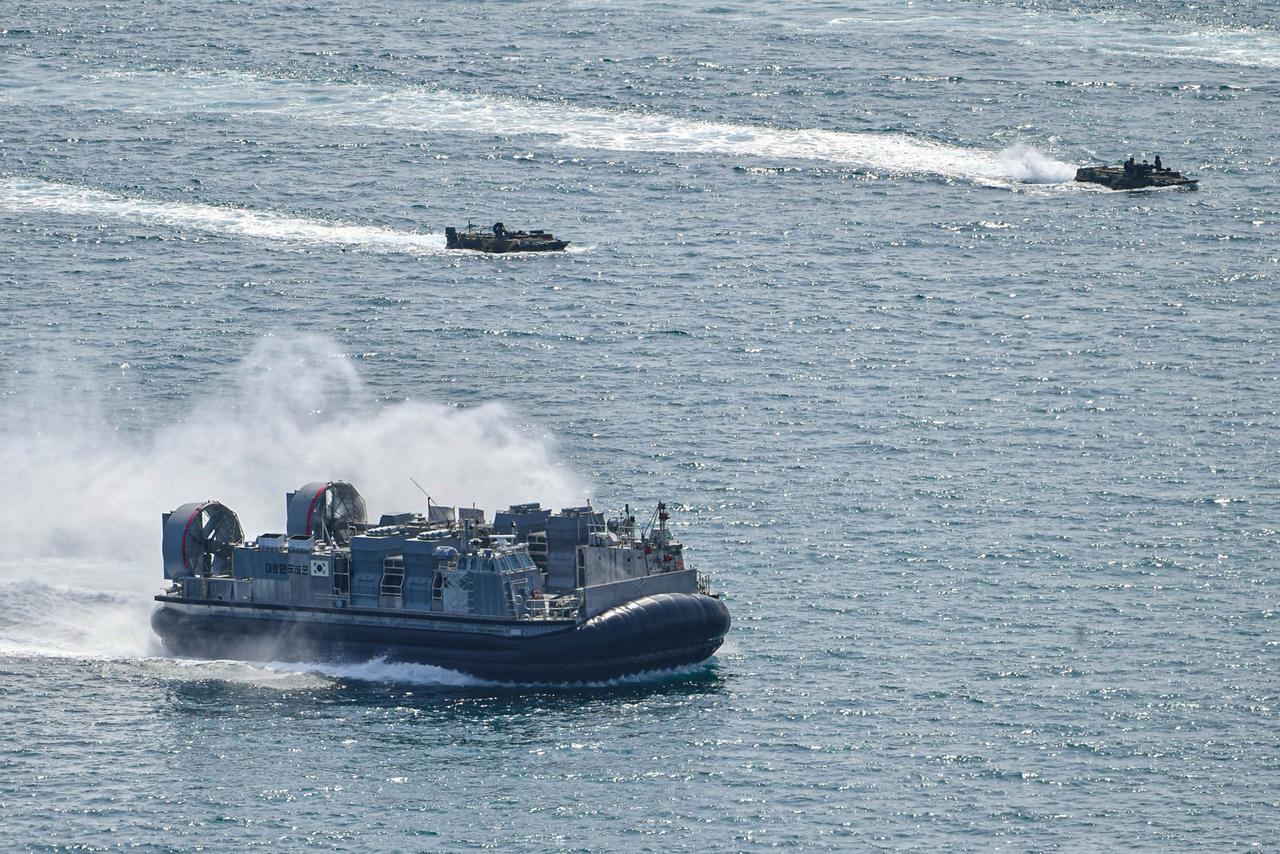
 [Herald Economy reporter Yoon Ho] The Republic of Korea Navy and Marine Corps have been conducting their first-half 2026 joint amphibious landing exercise in the Pohang area of North Gyeongsang Province from April 23 to April 30. On April 27, forces executed the exercise’s highlight — the “decisive action” — off Dokseok-ri beach to sharpen landing-operation capabilities.
The “decisive action” is the pivotal phase of an amphibious assault: landing forces seize a coastal foothold with naval gunfire and air support, then prepare to transition to ground operations.
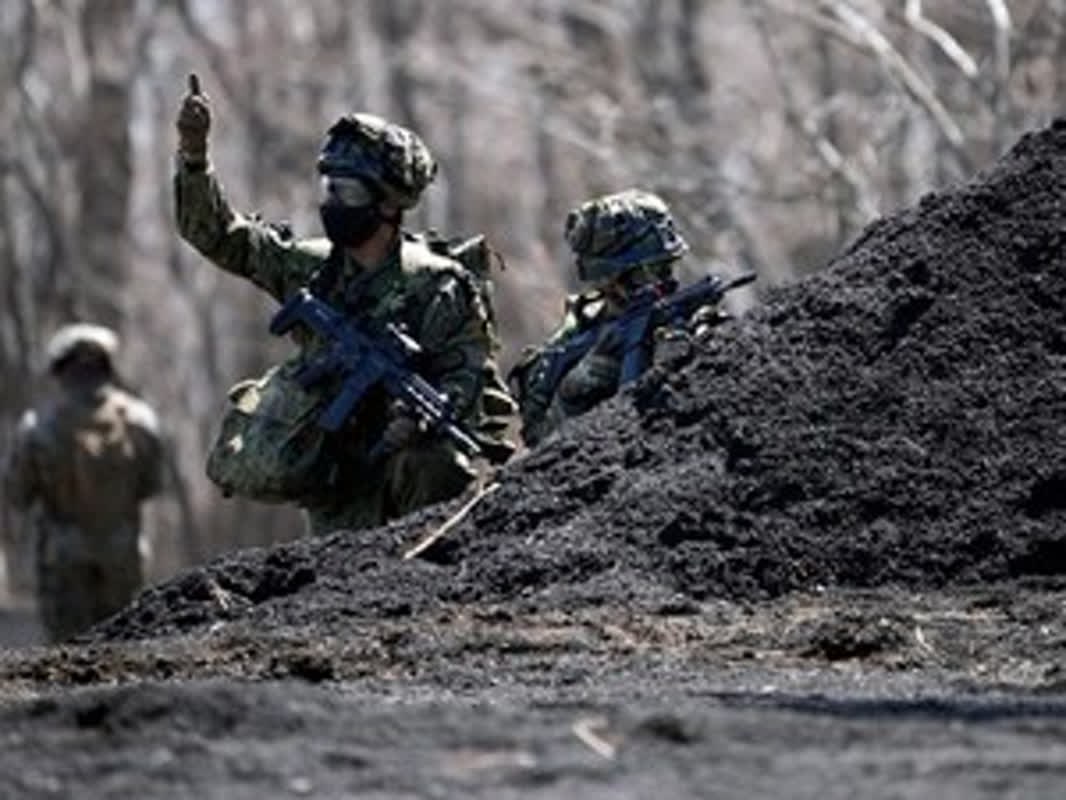
For the first time, a New Zealand Army platoon was attached to a landing battalion and operated alongside South Korean units, conducting sea assaults and subsequent ground operations. New Zealand soldiers trained with their South Korean counterparts for about two weeks ahead of the decisive action, focusing on urban operations, live-fire drills, and embarkation/disembarkation aboard the Korean Amphibious Assault Vehicle (KAAV) to build tactical cohesion.
The brigade-level exercise included roughly 3,200 personnel from ground, naval, air, and marine units. About 20 ships — including the large transport Marado (LPH) — participated, along with KAAVs, MUH-1 landing maneuver helicopters, P-8A maritime patrol aircraft, KF-16 fighter jets, AH-64E attack helicopters, and unmanned systems operated by the Drone Operations Command. The mix of manned and unmanned assets aimed to improve joint operational performance.
The training sequence mirrored realistic amphibious operations: mission planning, loading of forces and equipment, rehearsals to refine procedures, movement to the objective area, and the decisive action — where landing forces assaulted from sea and air.
To maximize training value, commanders integrated diverse joint capabilities and executed sea and air assaults aligned with their operational concept. Scenarios were linked to likely contingencies to prepare forces for a spectrum of future threats.
During the movement phase to the objective, participating units trained under multi-threat conditions, conducting anti-submarine warfare and air-defense drills against submarines and unmanned aerial threats. They also carried out mine-countermeasure operations to detect and clear enemy-laid mines. A team from the U.S. 7th Fleet’s Expeditionary Mine Countermeasures unit (ExMCM) joined the exercise to enhance allied mine-warfare interoperability.
Special operations forces covertly infiltrated the target shore to conduct reconnaissance and obstacle clearance as part of a landing reconnaissance unit mission. For the first time in such an operation, teams used First Person View (FPV) drones to gather real-time intelligence and validate drone employment in littoral reconnaissance roles.
Colonel Hwang Sang-geun, commander of the Landing Mobility Unit, said, “This exercise strengthened the Navy and Marine Corps’ ability to operate as one team and validated the combat readiness of combined manned-unmanned forces using advanced technologies.”
After completing the decisive action, the Navy and Marine Corps will continue training through April 30. Remaining tasks will reinforce unit-level mission capabilities and include emergency resupply and cargo-rig drops, operation of airborne tactical command posts, and mass-casualty care drills tied to the joint landing exercise.