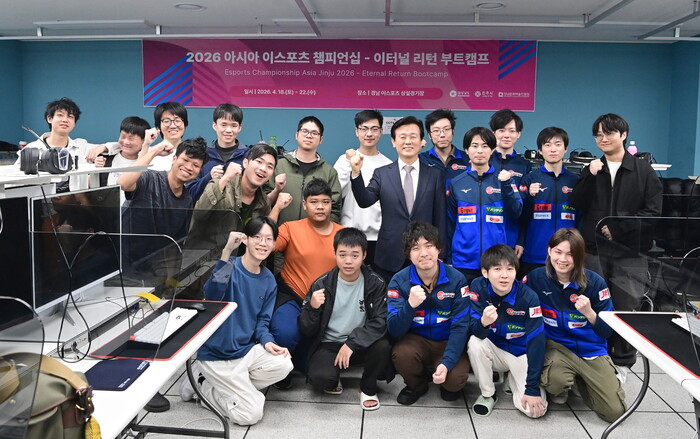
Jinju City said it is hosting an Eternal Return pre-boot camp at the Gyeongnam eSports Permanent Arena as the main competition of the 2026 Asia eSports Games approaches.
In this context, a boot camp refers to a period when competitors live together to undertake concentrated training and scrimmages before an event. Co-hosted by the Korea eSports Association and game developer NimbleNeuron, the camp provides structured national practice matches and individualized training to help teams reach peak performance ahead of the tournament.
The seven-day camp, held from the 17th to the 23rd, features five teams from three leading Asian nations—China, Japan and Thailand—and 21 elite players who are focused on conditioning and sharpening their play.
On the afternoon of the 20th, city officials toured the active training venue to encourage the international teams engaged in intensive sessions and to assess Jinju’s eSports facilities.
Jinju provided the KSPO Sports Value Center in Naedong-myeon as accommodations and supplied a municipal bus to ensure smooth transfers from the airport to the arena. With close administrative support from the city, squads train under a rigorous schedule that typically runs from 11 a.m. until 1 a.m. the following morning.
Officials say the camp serves a strategic purpose beyond training: it facilitates cross-national exchange on eSports strategy and helps raise Jinju’s profile as a regional and global eSports hub.
A city official said, “We’re proud to support the players who will shape the future of Asian eSports. We will marshal all available administrative resources to keep athletes in peak condition so they can perform at their best during the main competition on the 24th.”
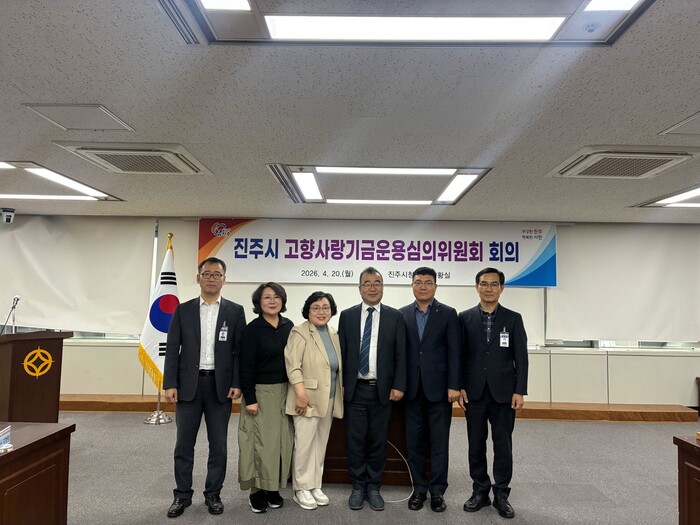
Jinju City Hometown Love Fund Management Committee Meeting
On the 20th, Jinju City convened the Hometown Love Fund Management Committee in the city hall situation room to review measures for effective stewardship and operation of the fund.
The session, chaired by Vice Mayor Park Ildong, reviewed and approved the 2025 fund settlement and performance analysis and considered revisions to the 2026 fund operation plan.
City officials reported that last year the fund supported initiatives including the Hamo Children’s Hospital project and recovery efforts from heavy-rain damage, and they reviewed the appropriateness and current status of fund expenditures.
Plans for this year include continued support for the Hamo Children’s Hospital project; operation of wearable rehabilitation robots for people with mobility impairments; replacement of body-composition analyzers at village health centers; and a public contest to collect private historical records. The city also plans to solicit new donation projects.
Officials discussed expanding donation channels by considering private platforms to make giving more accessible.
Vice Mayor Park said, “We will increase transparency and efficiency in fund management so the Hometown Love Fund tangibly improves citizens’ welfare and addresses local needs. We will continue to identify new projects that resonate with donors and make the fund a catalyst for regional development.”
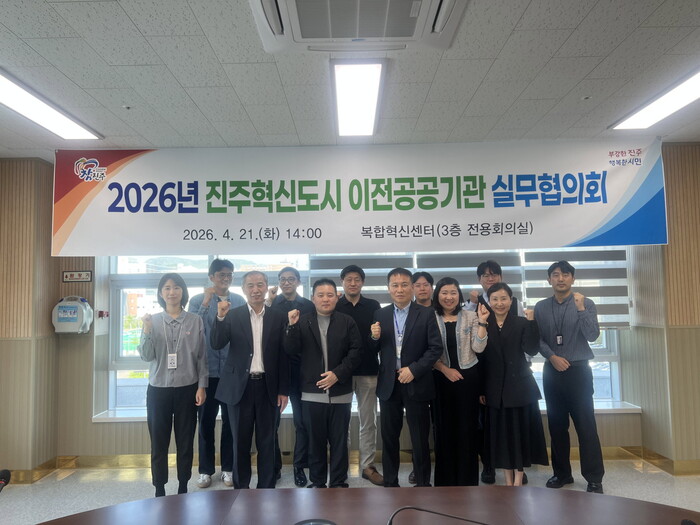
Working Council Holds Meeting on Relocated Public Institutions in Gyeongnam Jinju Innovation City
On the afternoon of the 21st, Jinju City hosted the 2026 working council for public institutions that have relocated to Gyeongnam Jinju Innovation City in the dedicated conference room at the Complex Innovation Center.
Fourteen working-level representatives from 12 relocated public institutions attended, including the Korea Land & Housing Corporation (LH); the Defense Agency for Technology & Quality; the Defense Technology Promotion Research Institute; the National Land Safety Management Institute; the Housing Management Corporation; the Small and Medium Business Corporation; the Central Customs Analysis Center; Korea South-East Power; the Korea Testing Laboratory; the Korea Institute of Ceramic Technology; the Korea Elevator Safety Agency; and the Korea Copyright Commission.
Participants shared recent government developments on a second wave of public institution relocations from the Seoul metropolitan area and agreed to coordinate efforts to attract institutions to established innovation cities with strong living conditions and transportation and industrial infrastructure—an effort aimed at completing the innovation city’s development.
Jinju City invited the relocated institutions to actively support two major events the city will host this year: the 2026 Asia eSports Games and the 25th Nonggae Festival.
The council also discussed ways to boost the Innovation City Day event scheduled for the second half of the year, shared key municipal issues, and requested active participation and cooperation from the public institutions.
Attendees raised operational challenges and suggestions related to settling into the region, and officials used the session to explore practical solutions collaboratively.
An official said, “We ask for the full cooperation of relocated institutions so Gyeongnam Jinju Innovation City can become a national model for shared growth. This year’s Asia eSports Games and Nonggae Festival will be important opportunities for the community and public agencies to come together.”
Jinju City holds the working council quarterly to strengthen collaboration with relocated institutions and will continue to focus administrative resources so the innovation city can serve as a hub for balanced regional development.
'2026 Disaster Response Safety Korea Exercise' Expert Consulting
On the 21st, Jinju City conducted a first-round private expert consultation at the city civil defense shelter to prepare for the 2026 Disaster Response Safety Korea Exercise.
The session, designed to ensure a systematic and effective drill scheduled for May 20, was co-hosted by the National Land Safety Management Institute and included representatives from 13 collaborative teams, related agencies and civic groups—about 30 participants in total.
Participants consulted with private experts on training objectives, scope, and disaster response guidelines, and conducted an on-site workshop to identify risk factors. They offered a range of recommendations to make the exercise as realistic and operationally useful as possible.
The joint exercise—led by Jinju City and the National Land Safety Management Institute—will simulate a large-scale disaster scenario in which landslides triggered by heavy rainfall cause partial collapse of public buildings. Because Jinju was designated a special disaster area after the heavy rains in the summer of 2025, the city selected hydrometeorological disasters as the exercise’s focus.
The drill will test initial response procedures, activate actual disaster response organizations following situation-assessment meetings, and strengthen real-world response capabilities. It will integrate tabletop and field exercises in real time and use the PS-LTE disaster safety communication network to reinforce coordination between Jinju and related agencies, with the goal of improving readiness for actual disasters.