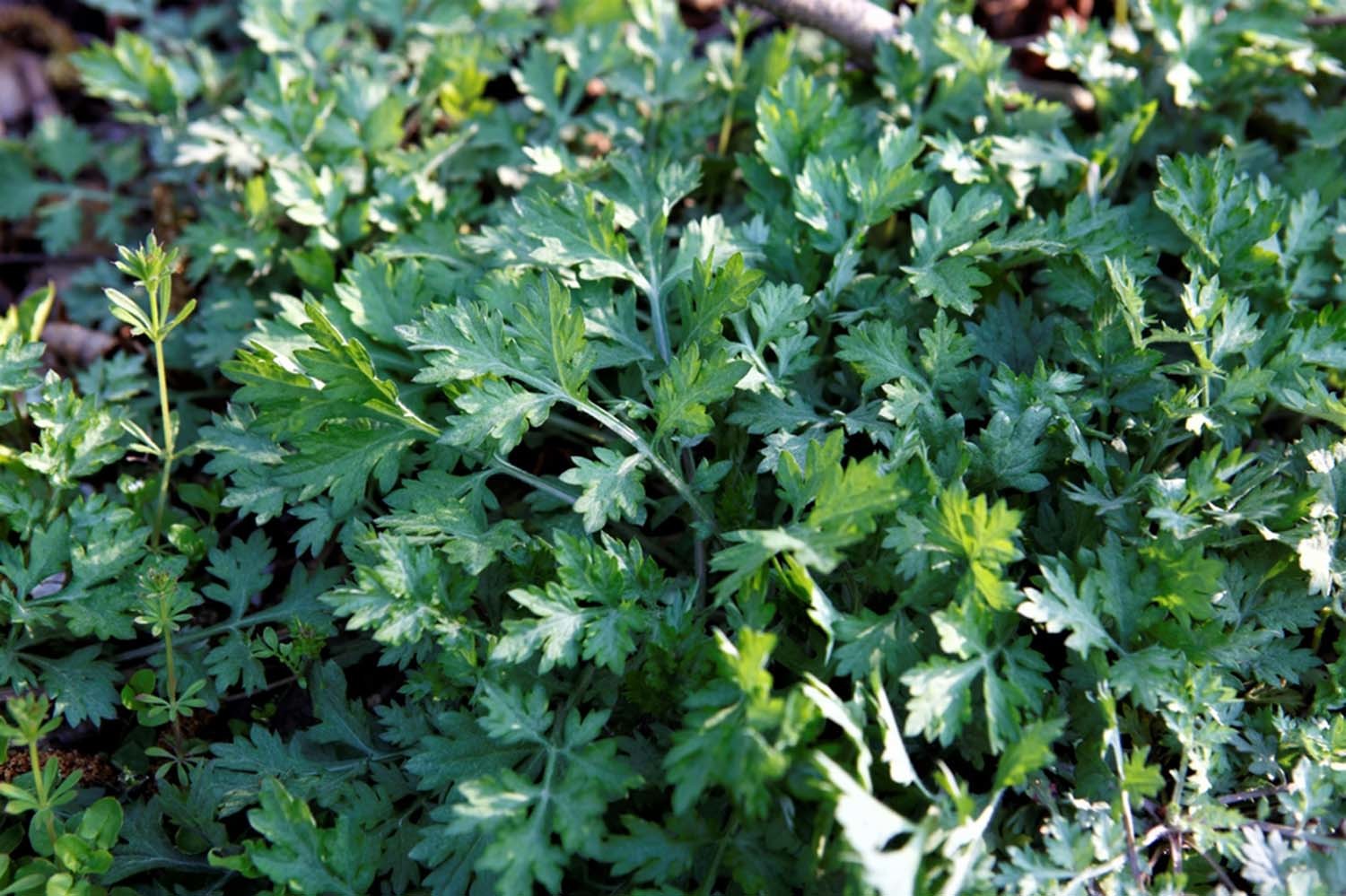
You catch the scent before you even step inside the old market. The wind still has a chill, but bundles of fresh mugwort on the stalls are shouting that spring is here. March and April are mugwort season — miss this tiny window and you’ll be waiting a whole year. So don’t wait. Now’s the moment to make ssuk-beomuri, the mugwort-coated rice cake.
Also called ssuk-teolteori or ssuk-beombuk, ssuk-beomuri is simply mugwort mixed with rice flour and steamed. Each name hints at slightly different technique, texture, or look: you might mix, dust, or tumble the ingredients together. Tteok (rice cake) can sound intimidating, but honestly, there’s nothing easier than ssuk-beomuri.
You only need four basics: mugwort, rice flour, a pinch of salt, and a little sugar. Use store-bought non-glutinous rice flour and you can skip the mill entirely. Prep the ingredients, toss them together, steam, and you’re done — it’s more assembly than cooking.
Start by trimming the mugwort: pull off the roots and any yellowed leaves, then rinse the greens several times. A quick soak in water with a splash of vinegar helps strip away impurities. Drain the mugwort in a colander — it doesn’t have to be bone dry. A touch of lingering moisture helps the rice flour cling to the leaves.
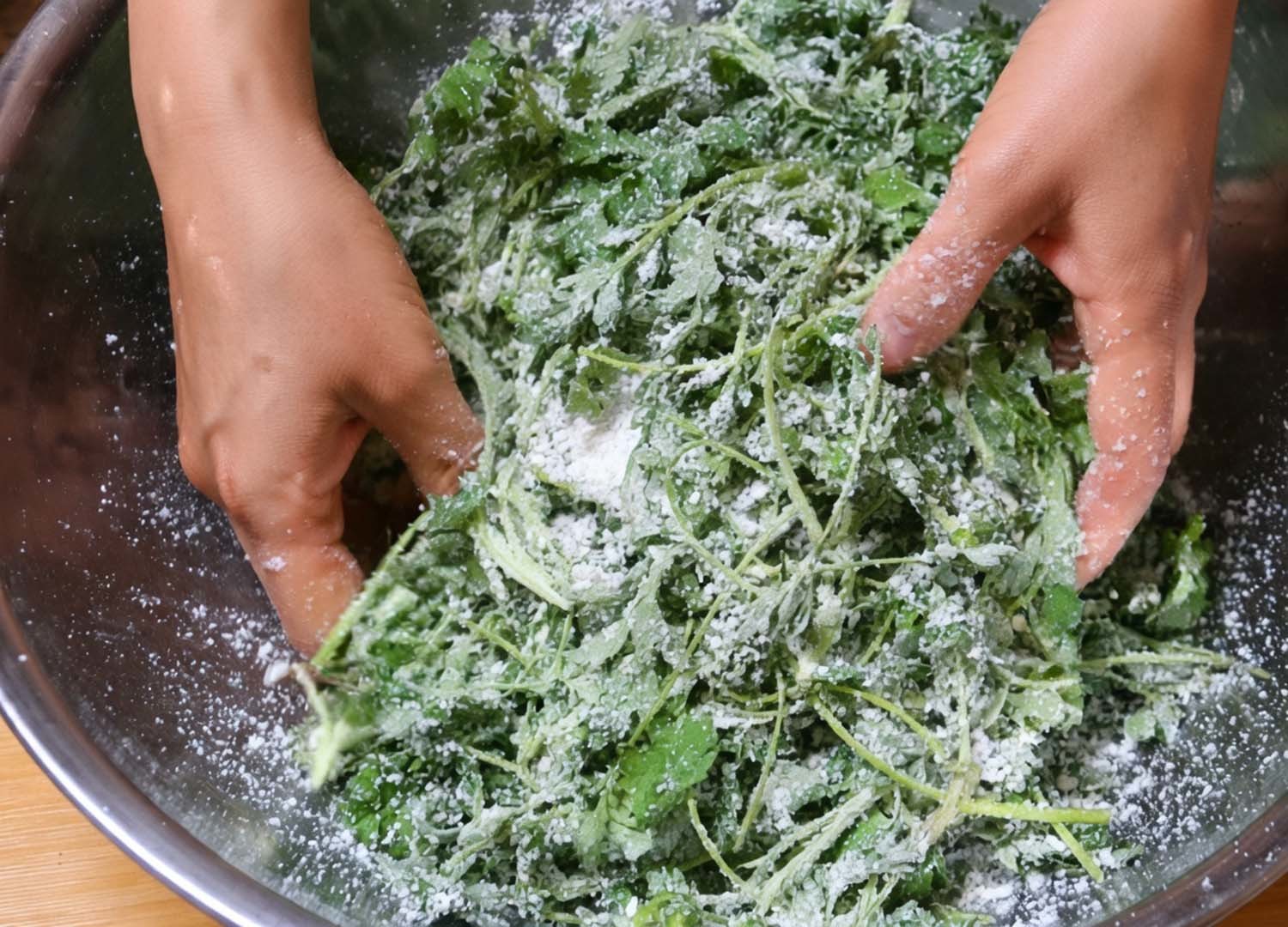
Combine the rice flour with 1 teaspoon of salt and 2 tablespoons of sugar, mixing well. Add the mugwort, shake off excess water, and gently coat the leaves with the flour like you’re giving them a light dusting. The goal is to avoid a soggy mess: you don’t want free water, but you also don’t want the flour completely dry. Aim for each grain to feel slightly moist without sticking to your hands. If your rice flour is very dry, add water a spoonful at a time until the texture is right.
Line your steamer with cheesecloth or a steaming sheet and spread the coated mugwort on top. Don’t press it down — even a lofty pile needs pockets of air so the steam can circulate and cook everything through. The mix will naturally compact as it steams. Sprinkle any leftover rice flour on top like a light dusting. Set the steamer over boiling water and steam on high for 15–20 minutes. Wrap the underside of the lid with cloth so condensation doesn’t drip back onto the cake, and let it rest for 5 minutes after steaming. The whole house will fill with that fresh mugwort scent.

If you want to take it up a notch, add extra ingredients. Dice kabocha (sweet pumpkin) and toss it with the mugwort and rice flour for a sunny color and natural sweetness. A handful of dried cranberries adds a tart-sweet pop. You can layer beans or red beans underneath, top with jujubes, or fold in chopped dried persimmon — all are popular choices. The beauty is that the base recipe stays the same; you’re just adding mix-ins. To prevent sticking, sprinkle a handful of rice flour on the steamer floor before you start.
No chopsticks needed — tearing it apart by hand is part of the fun. It doesn’t have to look perfect; the rustic, homespun vibe is exactly the point. Eat it warm straight from the steamer for best results. Store leftovers in a zip-top bag in the freezer and reheat in the microwave when you want a quick fix — it still tastes great.
Spring is short. Mugwort season is short. When you’re out shopping, grab one bundle of mugwort — the rest is probably already in your pantry as rice flour.
Your daily personal horoscope report! How will your day go?