There’s a side dish that greets you with a satisfying crunch the moment it hits your mouth. It’s less about tenderness and more about texture — this is gungchae, a delightfully crunchy stem vegetable. Once you try it, you’ll keep reaching for more, which is why it’s become a trending homemade side dish. Marinated in soy sauce as jangajji, gungchae keeps well and easily earns its reputation as a true “rice thief.”
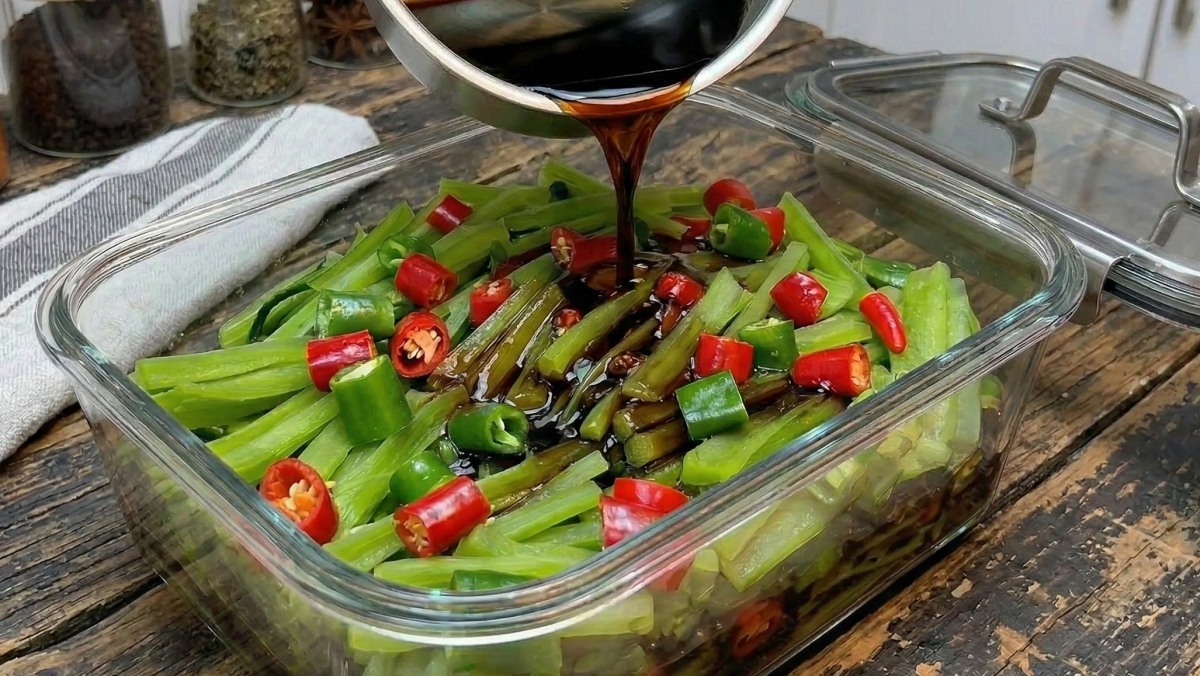
Gungchae jangajji is surprisingly simple to make. Start with dried gungchae and rinse it thoroughly under running water to remove any lingering odor and keep the flavor clean. Then soak it in water for about an hour — the once-hard stems will plump up and become pleasantly tender.
Lay the soaked gungchae neatly on a cutting board and start prepping. Trim off any tough or fibrous stem ends, then cut the rest into bite-sized pieces. This makes them easier to eat and helps the seasoning soak in evenly.
Next, prep the accompanying ingredients. Slice cheongyang chilies and red chilies to size, and thinly julienne about half an onion. These add heat, sweetness, and color — a perfect match for gungchae. Combine the prepared gungchae and vegetables in a large bowl and toss together.
The soy sauce mixture that seasons the jangajji is key. In a pot, combine 3 paper-cup measures of dark soy sauce, 2/3 cup of water, and 1 cup of sugar, then simmer over medium heat. Once the sugar dissolves and the mixture comes to a boil, turn off the heat and pour the hot seasoning directly over the gungchae and vegetables.
After pouring the seasoning, let it cool slightly, then add 1/2 cup of plum extract and 1/2 cup of vinegar. Mix everything well, transfer to an airtight container, and refrigerate for about a day to let the flavors meld. It’ll taste great after just 24 hours, and the flavor deepens the longer it rests.
![[Infographic] Infographic image generated by AI based on the article.](https://contents-cdn.viewus.co.kr/image/2026/03/CP-2022-0028/image-9845bbcd-b957-4a12-a4a0-fc9c6ed94a49.jpeg)
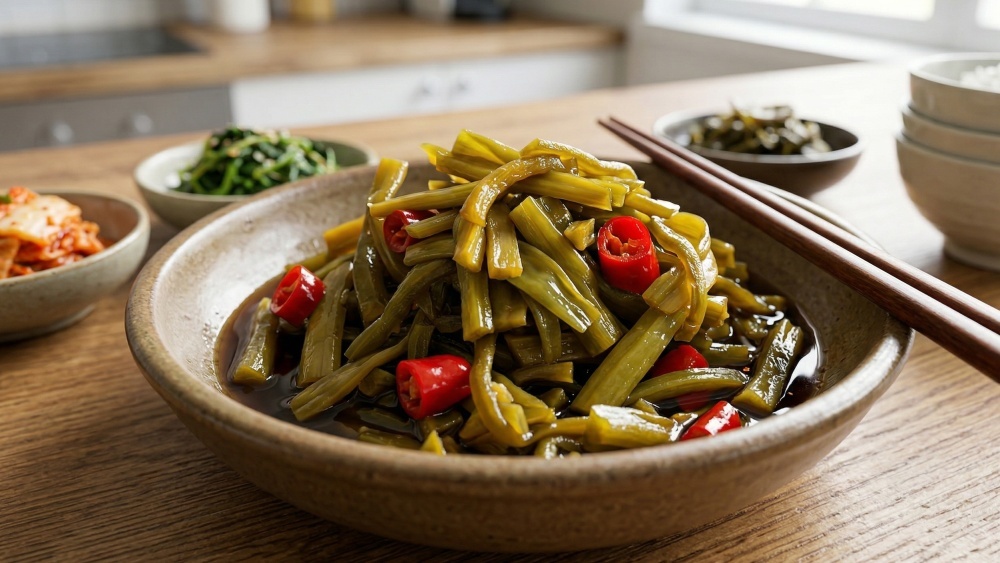
The biggest appeal of gungchae jangajji is its texture. Each bite snaps with a distinctive crunch, offering a playful contrast to other pickles. Paired with rice, one spoonful can quickly turn into two — it’s delightfully addictive.
Gungchae is said to have been a stem vegetable enjoyed in the Chinese imperial court. Often called “stem lettuce,” it’s commonly sold dried. Its crisp texture makes it versatile in many dishes.
Gungchae is also high in dietary fiber, which helps you feel full, and it’s low in calories, so it’s a light, satisfying option.
Once you make a batch of gungchae jangajji, it becomes a reliable fridge staple. Its crunch holds up over time, so you’ll keep coming back for more. If you’re bored with the same old sides, try gungchae for a fun, textural twist at the table.
Your daily personal horoscope report! How will your day go?