KBS Symphony Orchestra concert-opera Carmen
April 18 at 7 p.m., Jamsil Lotte Concert Hall
After seeing the concert-opera Carmen and the Seoul City Opera’s Nabucco
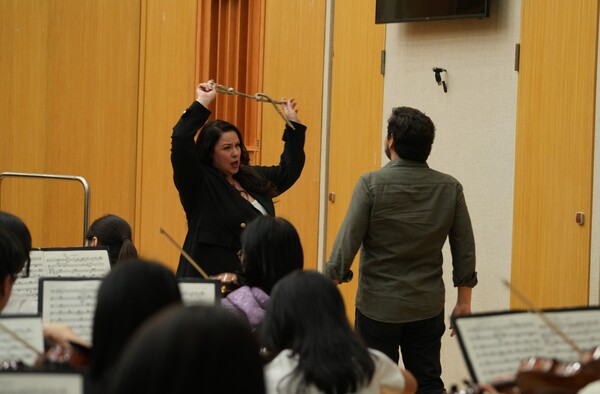
Mastery in any field ultimately depends on accumulated stage time. That simple truth was on full display across Seoul’s opera stages in April.
Though the KBS Symphony Orchestra and the Seoul City Opera have traveled different paths, both converge on a single point: the value of sustained presence onstage. The question is how often—and how consistently—they perform.
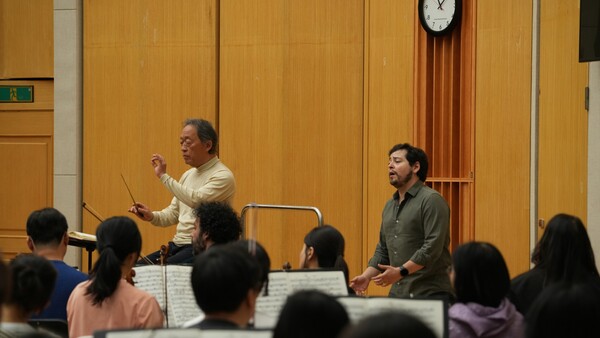
The KBS Symphony Orchestra remains a relative newcomer to concert-opera. Since Yoel Levi led Tosca in 2017, the orchestra staged La bohème in 2019 and a concertante Carmen in 2022; this recent presentation is another important initiative under Myung‑Whun Chung. By contrast, the Seoul Philharmonic under Jaap van Zweden has consistently pursued large-scale projects—Wagner’s Ring cycle among them—and regular concert-opera collaborations, revealing a clear gap in activity.
Still, this Carmen proved the KBS Symphony Orchestra has real potential in the concert-opera arena. In the second half the orchestra, singers and dramatic momentum fused naturally, producing a density approaching a fully staged opera. That suggests a foundation for developing a distinctive repertoire beyond one-off events.
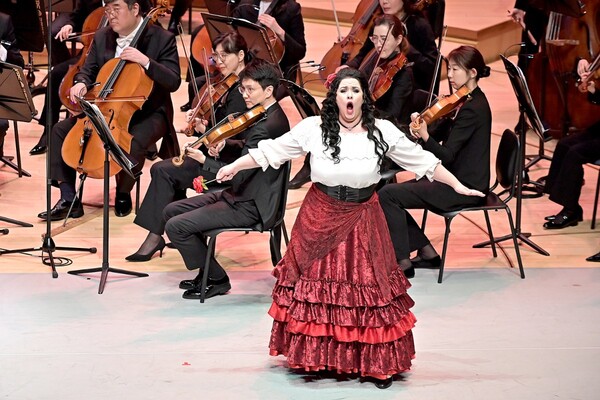
The principals left clear impressions. Kolosova carried the work with commanding vocal power and stage presence, convincingly portraying Carmen as a woman who chooses her fate. Galeano Salas matched her with secure technique and concentrated intensity, his warm tone balancing the overall performance.
Arias such as the Habanera and the Toreador Song are already familiar to many listeners, so execution and interpretive choices determine a performance’s success. This staging showed that the KBS Symphony Orchestra can expand concert opera into a sustainable part of its programming.
Seoul City Opera’s Nabucco revealed a different strength. The production felt grand, and the company demonstrated the production capacity required for a work of this scale—most visibly in the Chorus of the Hebrew Slaves. Still, a clear question remains: why aren’t productions like this happening more often?
In practice, Seoul City Opera mounts fewer productions annually than the National Opera. In 2023 its season essentially included The Magic Flute, Turandot and a gala concert; by contrast, the National Opera ran multiple productions including Macbeth, Il trovatore, La traviata and Nabucco. That gulf has not significantly narrowed.
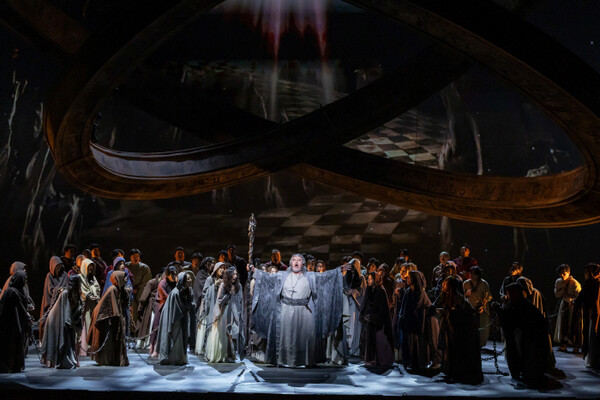
The problem is not capability but operational strategy. If the Sejong Center has the infrastructure and production talent yet limits the number of staged works, that is a structural choice. If Seoul City Opera calls itself the city’s company, it should present far more productions on an ongoing basis.
Turning back to the KBS Symphony Orchestra, the direction is relatively clear. Myung‑Whun Chung has already established a strong interpretive voice in sacred repertoire through Verdi’s Requiem and the Stabat Mater. That repertoire forms an important pillar for the orchestra.
The key question now is whether concert opera can join that pillar. If sacred music offers audiences spiritual and emotional experiences, concert opera can broaden both dramatic narrative and musical density. The market for concert-opera programming is not yet saturated, which makes repetition and accumulation all the more important.
The takeaway is straightforward. The KBS Symphony Orchestra should increase its concert-opera appearances, and Seoul City Opera must expand its production slate. April’s two productions exposed both the current realities of Korea’s opera scene and the work that remains. What’s needed now is not direction but decisive action.
By: Yeo Hong‑il
Edited by: Joo Jin‑no