58th Hyundai Motor shareholders' meeting: U.S. HEV production expansion… considering new plants in India, Saudi Arabia and Vietnam; advancing autonomous driving with partners like NVIDIA… entering the rental car business
Hyundai Motor will ramp up local production and roll out region-specific models this year while accelerating its transformation into a technology company centered on artificial intelligence (AI).
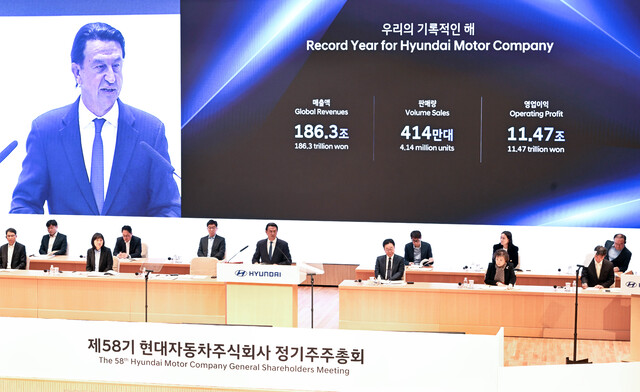
On the 26th, Hyundai held its 58th annual shareholders' meeting at the Grand Hall of its Seocho headquarters in Seoul and outlined its management direction and key strategies for the year. The company identified three priorities: strengthen localization, expand region-specific products and accelerate its shift to a technology company. Hyundai also said it will step up investments to support its localization push.
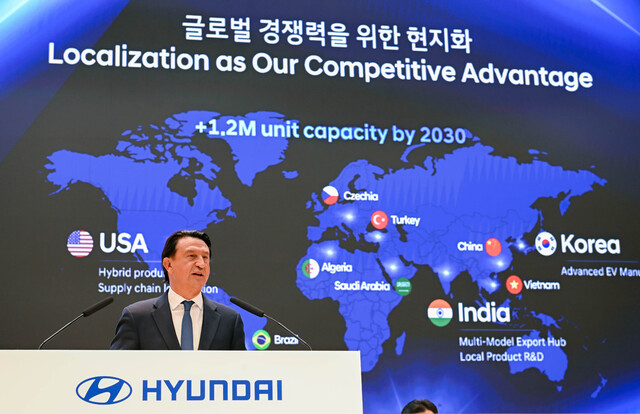
Hyundai said it will first expand production of hybrid-electric vehicles (HEVs) in the U.S. and evaluate new manufacturing sites in India, Saudi Arabia and Vietnam. The company aims to lift the group's total global production capacity to more than 1.2 million units a year by 2030 to better weather international uncertainty.
Hyundai will also strengthen region-specific strategies. It plans to launch tailored new models not only in emerging markets such as China and India but also in established markets including Korea, the U.S. and Europe. In China, the company intends to introduce 20 new models over the next five years to raise annual sales to 500,000 units. After unveiling the China-only electric Ilexio SUV last year, Hyundai plans to introduce a new electric sedan this year as a strategic push in that market.
In India, Hyundai will debut an electric SUV designed and developed locally in 2027 and invest $5 billion to expand the Pune plant's capacity to 250,000 units by 2030. Over the next decade it will roll out 26 new models and is even considering bringing its premium Genesis brand to the market.
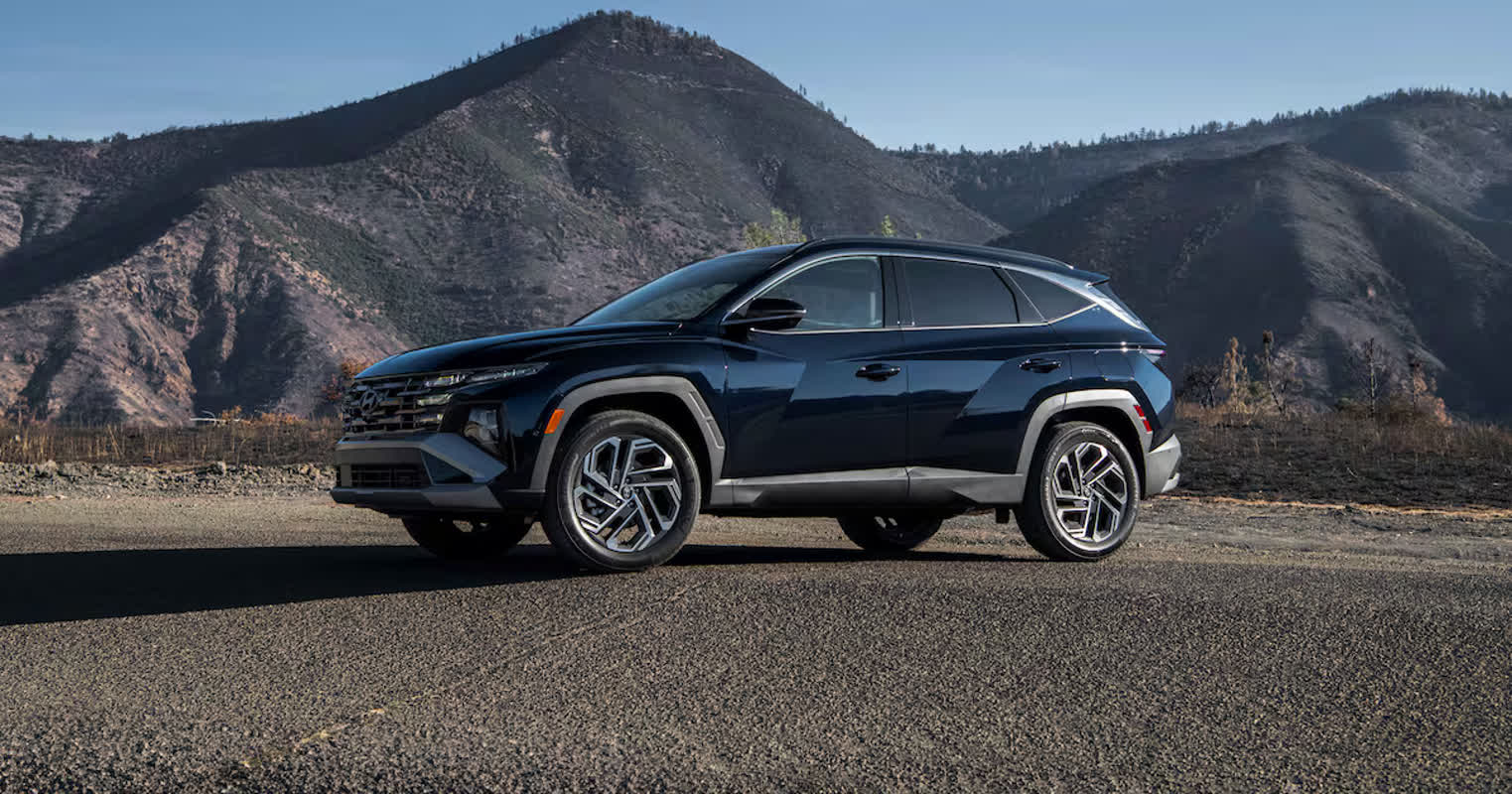
In the profitable North American market, Hyundai will introduce new Tucson and Elantra models (the Elantra is sold as the Avante in Korea). The company plans to offer range-extended electric vehicles (EREVs) starting in 2027 and aims to launch a mid-size pickup before 2030.
In Europe, Hyundai will unveil the Ioniq 3 at Milan Design Week next month, launch five new models over 18 months and target eco-friendly variants across its entire lineup by 2027.
In the domestic market, following last year's strong performance from the Palisade, Ioniq 9 and Ioniq 6, Hyundai will roll out all-new Tucson and Elantra (sold as the Avante in Korea) models this year.
Genesis, Hyundai's premium brand, will sharpen its competitiveness with the high-performance GV60 Magma and by competing in events such as the 24 Hours of Le Mans and the World Endurance Championship (WEC). The company also disclosed plans to launch a flagship electric SUV by year-end, effectively signaling a GV90 introduction.
At the meeting, Hyundai emphasized its transformation into a technology company and named strengthening autonomous driving capabilities a core task. President José Muñoz said, “Collaborations with NVIDIA, investments in 42dot and Motional, a partnership with Waymo, and the construction of an AI data center in Korea are all central to securing our technological competitiveness.”
In robotics, Hyundai is preparing to deploy its Atlas robots on production lines and aims to establish a production system capable of manufacturing 30,000 robots per year by 2028.
The shareholders also approved an amendment to the articles of incorporation to add “vehicle rental business,” clearing the way for Hyundai's full-scale entry into the rental car market. Until now, Hyundai handled vehicle planning and operations while outsourcing vehicle management to partner firms. By following Kia into the rental market, Hyundai will build a mobility distribution system that spans manufacturing through used-car sales and rentals.
Hyundai also outlined a shareholder return policy. Last year's annual dividend was set at 10,000 KRW (approximately $7.5) per share, down 2,000 KRW (approximately $1.5) from the previous year. President José Muñoz said, “We will continue to pursue shareholder return policies and activities that enhance corporate value. We decided on an annual dividend of 10,000 KRW (approximately $7.5) per share last year, and we will maintain transparent and clear shareholder return policies going forward.”
Sang-wook Kim kswpp@viva100.com