She left a steady corporate job, launched her own company, and her first commercial film immediately crossed the 10 million admissions mark. This is the story of Im Eun-jeong, CEO of Onda Works and producer of The Man Who Lives with the King (director Jang Hang-jun; hereafter The Man). The film, which moved audiences with the tragic tale of King Danjong and the village headman who tended to his final days, Eom Heung-do, has prompted conversations ranging from its origins and casting to recent plagiarism allegations.
On March 11, I met Im Eun-jeong at a café in Samcheong-dong, Seoul. The Man follows the deposed King Danjong and village headman Eom Heung-do during Danjong’s exile in Yeongwol. The film surpassed 10 million admissions on March 6 and had reached 11.88 million admissions through the 10th.
Becoming the producer of a 10-million hit, Im said, left her grateful. “I feel nothing but gratitude. The audience is what I’m most thankful for,” she told me. “Now that we’ve executed our planned schedule and hit 10 million, the faces of everyone who helped keep showing up in my mind. I’m thankful to every colleague who worked so hard.”

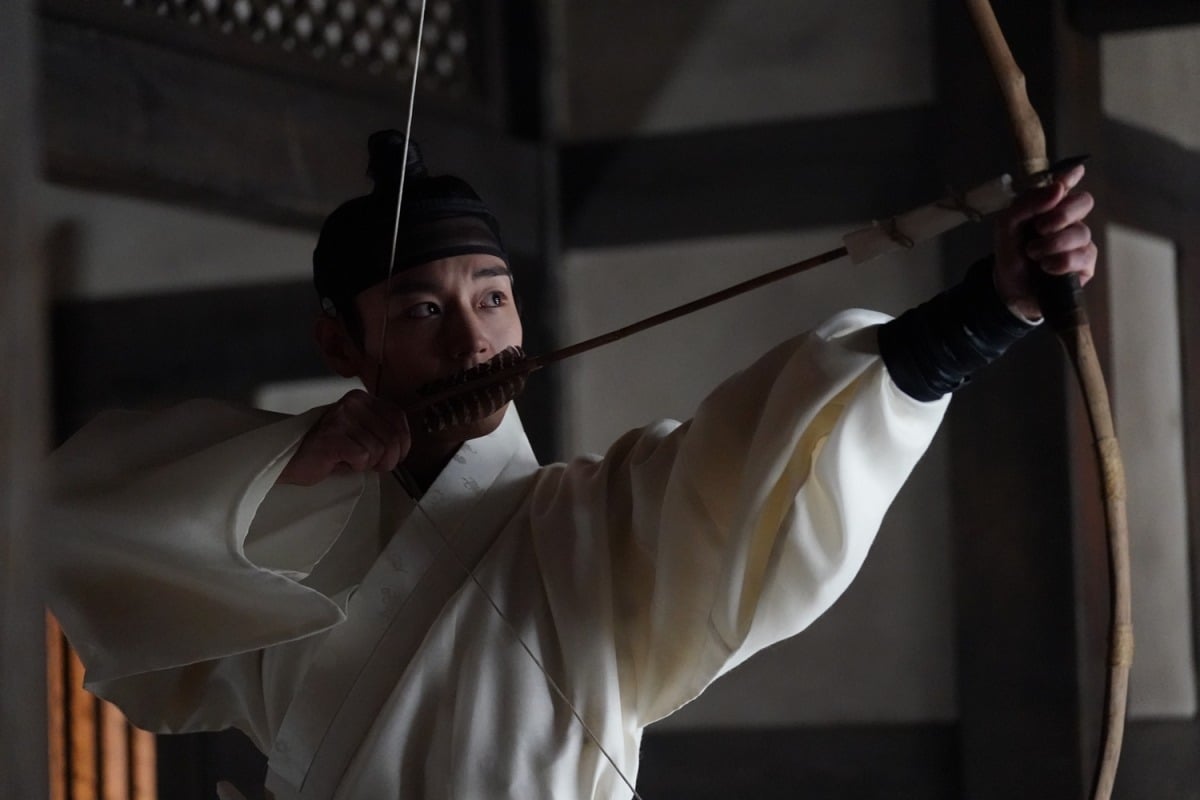
As the first 10-million film in two years, The Man has spawned many theories about why it connected. I asked Im what she saw as the film’s key strengths. “I kept it simple,” she said. “People clearly missed going to theaters.” She added that the film’s cross-generational appeal was crucial: “The main characters cover a wide age range, so viewers from their teens through their 50s and 60s — and even viewers in their 90s — can find something to relate to.”
“The subject matter invites conversation across generations,” she continued. “Because characters come from diverse age groups, it’s easier for audiences to empathize. Those elements combined into a strong synergy.” Im emphasized the film’s versatility as a theatrical experience: “It works as a family outing, a date movie, a friends’ night out, or even as a solo visit for someone who wants to sink into Danjong’s story. It reminded people of the many simple joys of going to the movies.”
Audiences have been returning for repeat viewings and visiting Yeongwol’s historic sites. On why the film became a broader cultural phenomenon, Im said, “It wasn’t just a well-written script; it was how casting and everything else came together. We didn’t expect a craze of this magnitude, but we did all believe Park Ji-hoon’s portrayal of Danjong would make an impact.”

The Man has also been hit with sudden plagiarism claims. The heirs of a late stage actor, a descendant of Eom Heung-do identified as A, allege the film bears substantial similarity to a drama script A wrote in life titled Eom Heung-do and are asserting plagiarism.
Im said she first learned of the claims through news reports and has issued a formal statement. “We haven’t received a certified letter,” she said. “Nothing in the situation has changed. Our stance has been firm and sincere, and we have no further updates.” When asked whether the team referenced any prior works, she responded, “Not at all.” She explained that the project began from an original concept: “I didn’t pick up an existing script — we developed it from the original idea. We started when there wasn’t a single line of dialogue. Writers worked on the treatment and drafts with us. We have contracts, meeting notes, and records of the adaptation process. We even held a retreat to work on the script. Those records should make our position clear.”
One of the film’s most criticized elements has been the tiger CGI. Viewers and critics noted the CGI looked underdeveloped compared with the film’s overall production values, and it earned the mocking nickname “bamti tiger,” slang implying it appeared ugly and tacky. Im admitted, with a laugh, that as a producer she found it embarrassing. “My face actually turned a bit red,” she said. “If we get the chance, I’d like to revise and improve it.”
The compromised CGI was a pragmatic choice to meet the release schedule. “We had to decide, within a fixed timeline, where to put our focus to finish the film,” Im explained. “We couldn’t do everything. With a release two weeks before the Lunar New Year, we needed a word-of-mouth strategy driven by large advance screenings. Sacrificing that plan to improve CGI quality wasn’t the right move for the film.”
Fortunately, the team has decided to revisit the tiger CGI. Im expressed appreciation for audiences who transformed the flaw into a lighthearted meme: “I think viewers prioritized the film’s message and chose to enjoy the movie despite the hiccup. I was moved by their generosity in turning it into a joke.”
Director Jang Hang-jun had jokingly promised to change his name, undergo plastic surgery, or naturalize if the film reached 10 million admissions, later swapping those pledges for a simpler “coffee event.” Im recalled, smiling, “When he was on the radio, I was watching on YouTube and thought about teleporting in to drag him off the air.” She added that she tried, for about a week, to nudge him toward a modest eyelid procedure as a joke; he declined, framing his comments as a comedian’s quip, and they let it pass as humor.

Im worked as a producer in CJ ENM’s film investment and production teams from 2011 to 2023. She was involved in planning Believer (2017), and managed investments in Ode to My Father (2014), Veteran (2015), and Exit (2019). She also served as a producer on Love Minus (2021). After leaving CJ ENM, she founded Onda Works in 2023.
She described her previous role as evaluating outside scripts to enable production and running internal pitch sessions to secure funding. “That naturally led me toward actually making films,” she said. “I developed projects I wanted to make and found writers and directors to collaborate with. I wanted to finish the projects I started and keep my promises to the creators I work with.”
Im is now the producer of a 10-million hit. The Man’s reported production budget was 15 billion KRW (about US$11.25 million). With the box office milestone, the film is expected to generate significant profit: the Korean integrated box office system recorded cumulative theater gross of roughly 114.6 billion KRW (about US$85.95 million) through the 10th.
Asked what she’d do if the film turns a profit, she laughed, “I won’t take it all — the returns are distributed.” She said the primary benefit would be stabilizing other projects the company is preparing. “It felt like King Danjong or some cinematic guardian was looking after us,” she said.
Now that the film has exceeded expectations, Im is thinking about rewarding the team. “I’m discussing options with co-producer Jang Won-seok, CEO of B.A. Entertainment,” she said. “I’m still thinking in broad terms, but whatever we do, I want it to benefit Korean cinema.” On the idea of a reward vacation, she said, “We’ve discussed it, but it might be difficult in practice. Film staff often work across multiple projects, so some people could go while others couldn’t.” She added that the team will receive incentives in some form.
Ji-won Kim, TenAsia reporter bella@tenasia.co.kr