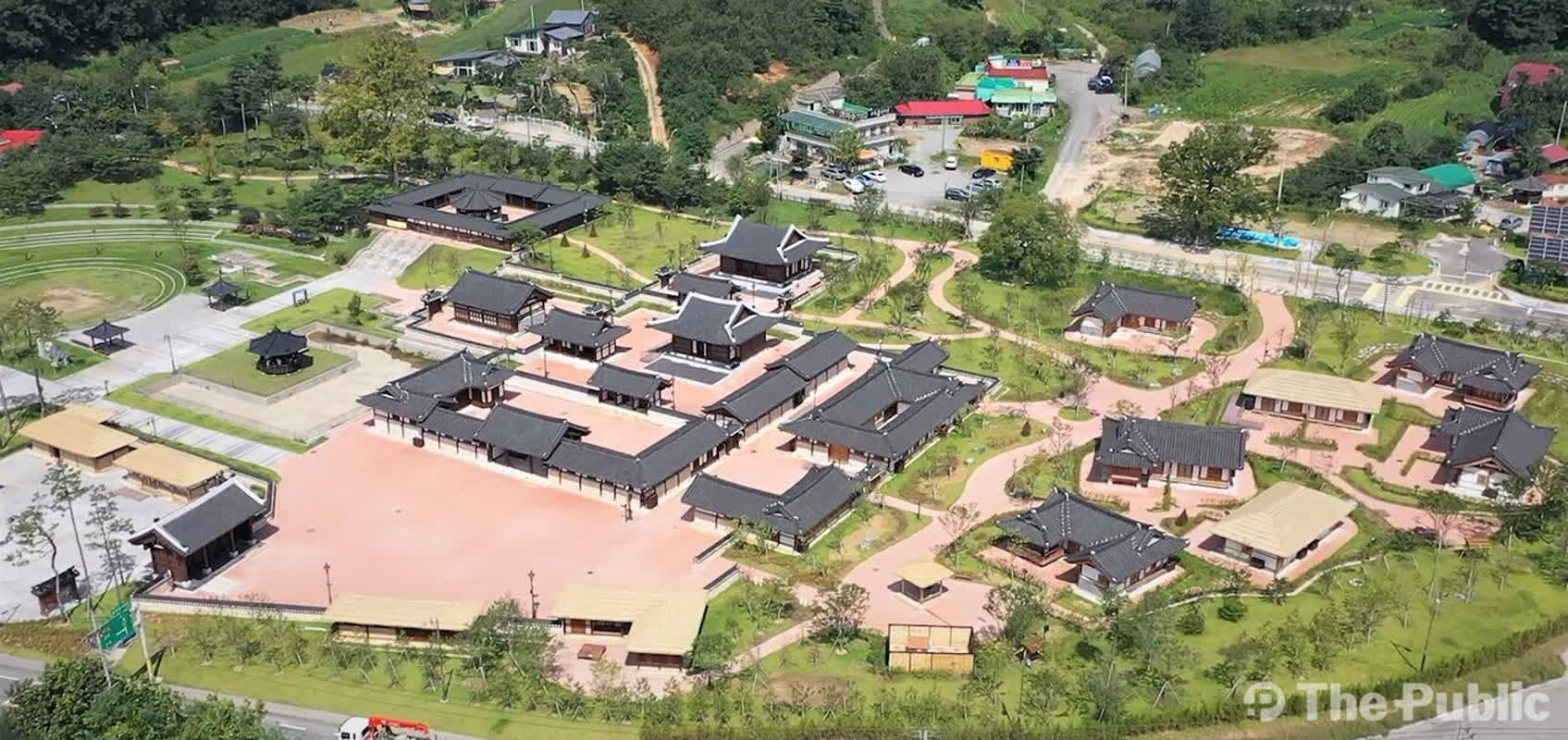
▲Danyang Gukyeong Market, chosen for the second cohort of the 'K-Tourism Market' following the inaugural round. Photo: Danyang County
It's becoming commonplace to see foreign visitors chatting in Korean with clerks at Olive Young, or to spot Millennial and Gen Z fans worldwide clipping K-pop idol photos to their bag keyrings. After posting a record number of foreign visitors last year, South Korea expects to surpass 20 million this year and is aiming for 30 million foreign arrivals by 2030. Over four installments, we explore how the government, public agencies, and private industry are mobilizing to hit the K‑Tourism 30 million milestone. (Editor's note)
Night markets across Southeast Asia—especially in Thailand, Vietnam, and the Philippines—are famous global draws. With neon-lit streets behind them and an authentic, lively vibe up front, these markets attract visitors from around the world eager to soak up local flavor. South Korea also has roughly 1,500 traditional markets nationwide, and dozens of them have histories stretching beyond a century. For revitalizing regional tourism—an essential piece of the 30 million goal—traditional markets are one of the most valuable assets.
The Korea Tourism Organization is running the K‑Tourism Market program again this year after launching it last year. Designed to develop traditional markets into international tourist destinations, the program recently completed its selection process, evaluating each market’s appeal and global growth potential before picking 11 markets across 10 regions.
The selected markets are: Gyeongdong and Mangwon Markets (Seoul); Haeundae Market (Busan); Seomun Market (Daegu); Sinpo International Market (Incheon); Suwon Nammun Market (Gyeonggi); Sokcho Tourism & Fisheries Market (Gangwon); Danyang Gukyeong Market (Chungbuk); Jeonju Nambu Market (Jeonbuk); the Andong Market Alliance (Gyeongbuk); and Dongmun Traditional Market (Jeju).
Jang Mijin, deputy director of the Regional Tourism Development Team, said, \"After launching the first K‑Tourism Market program last year, we learned from trial and error. We doubled down on what worked and addressed weak points as we prepared the second cohort. Building on cohort one’s experience, we’ve reinforced the foundation so traditional markets can truly take root as tourist destinations.\"
\"In year one, we focused on the educational side—raising merchants’ awareness, rolling out easy payment systems, and training staff to serve foreign visitors—so the program could function as intended. We put systems in place to make markets enjoyable for both international and domestic visitors. Choosing merchants rather than celebrities as ambassadors also boosted hands-on participation,\" she said.
This year, support will be more tailored: market-specific branding strategies, stronger overseas marketing, richer market experience programs, and the development of stay-focused tourism packages. Campaigns to promote courteous, clean market cultures will expand, while fixed-price policies and multilingual information services will be improved. Visitor convenience will be greatly enhanced with services like international-friendly packaging and luggage storage.
Moreover, the KTO plans to build a cooperative framework among the Korea Tourism Organization, local governments, and merchant associations to roll out a \"global tourism–style traditional market\" model nationwide.
\"We’ll expand food festivals, night-tourism offerings, and other programming so visitors spend more time at markets and in the region, which will stimulate local spending. Traditional markets are the easiest places to experience the vibrant, everyday life of a community, and we’ll actively support them so they can become must-see Korean destinations—just like Southeast Asian night markets,\" she said.
Solmi Baek, Reporter bsm@ekn.kr