|
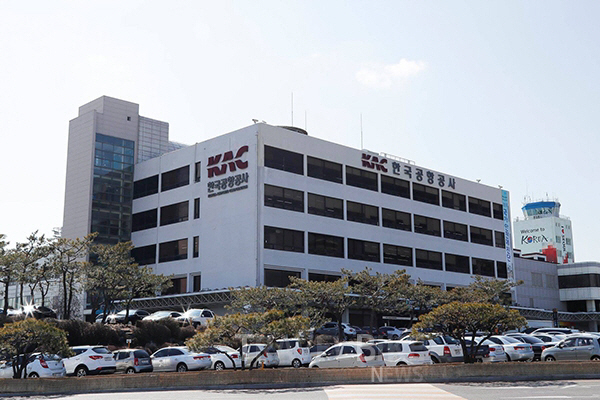
On March 17, the Korea Airports Corporation union issued a statement outlining its position on the government’s efficiency measures, including proposed consolidations of public institutions.
The government has made balanced national development and public institution reform central policy goals, and officials are discussing merging three airport operators — Korea Airports Corporation, Incheon International Airport Corporation, and the Gadeokdo New Airport Construction Authority. Last week, the Ministry of Economy and Finance collected expert opinions on the proposed consolidation and asked the relevant ministries to review them; sources say the compiled draft will be submitted to the Blue House near the end of the month.
In its statement, the union said Incheon International Airport — separated in 1999 to distinguish roles with regional airports and pursue a hub strategy — has grown faster than any other airport under the government’s single-hub policy. The union warned that this policy imbalance has deepened structural problems at other airports.
The union said revenues from international airports such as Gimpo, Gimhae and Jeju have subsidized regional airports across the country. For more than 20 years, Korea Airports Corporation froze airport usage and facility fees to support Incheon’s hub strategy without imposing costs on the national economy. Now, however, it says it has reached its limits.
The union criticized proposals from Incheon International Airport Corporation and local politicians as effectively diverting revenues generated by all airport users to benefit Incheon alone. It called for an immediate policy shift toward balanced regional development and a stronger public-interest orientation to address the risk of regional decline.
Although the Ministry of Land, Infrastructure and Transport has pledged to revitalize regional airports, the union says most policy support — from facility investment to the concentration of international routes — has been funneled to Incheon. That pattern, the union argues, has accelerated the decline of regional airports through reduced budgets, staff cuts and exclusion from the benefits of air-transport growth.
To ensure any consolidation genuinely improves efficiency, the union laid out three demands: adopt a nationwide, citizen-centered policy that balances regional airport development and creates cooperative measures; enhance air-transport convenience by optimizing international routes to stimulate local tourism; and strengthen airports’ global competitiveness by eliminating redundant functions and unnecessary competition.
Earlier, the Incheon Airport Joint Committee to Stop Hasty Integration released a statement on March 16 saying the government’s plan would shift the costs of failed regional airport policies and new airport financing onto Incheon Airport. The committee warned it would not rule out a general strike if the government forces the merger.