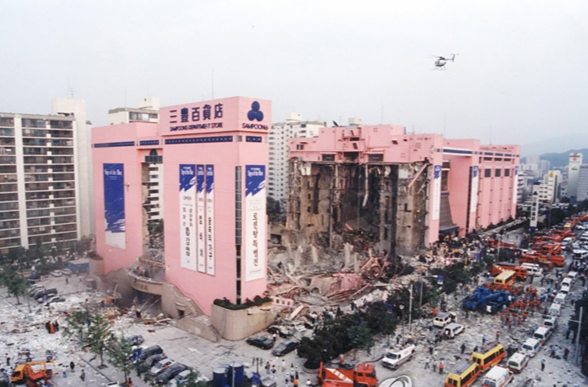
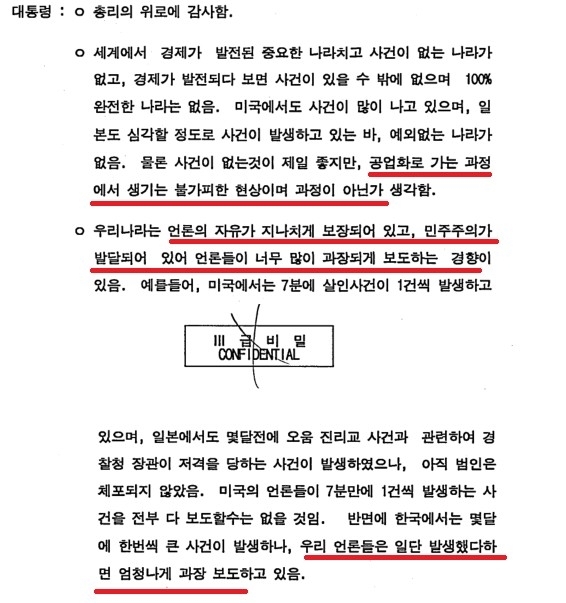
According to Foreign Ministry files declassified on the 31st, Kim met with Vanuatu Prime Minister Maxime Carlot Korman at the Blue House at 10 a.m. on June 30, 1995, the day after the collapse. The record says Kim thanked Korman for his condolence letter and made the remark.
Kim is recorded as saying, “There is no advanced country without incidents. As an economy develops, incidents inevitably occur, and no country is 100 percent perfect. The United States has many such incidents, and Japan has them to an alarming degree — there are no exceptions.”
He also criticized the media for sensationalizing the disaster. Kim told Korman, “Our country guarantees too much press freedom and has a developed democracy, so the press tends to exaggerate. Once an incident occurs, our media sensationalize it enormously.”
Given that Korman was on an official visit to study Korea’s economic development, some observers say Kim may have sought to minimize the disaster’s impact to protect the country’s image.
The day after meeting Korman, on July 1, 1995, Kim visited the collapse site and ordered officials to do their utmost to rescue survivors.
The released files also state that on July 25 of that year Kim told U.S. Secretary of State Warren Christopher, “Perhaps because of Confucian customs, we have a mistaken habit of attributing responsibility for natural disasters like floods and droughts to the president. I am relieved this tendency appears to be changing.”
The Foreign Ministry reviewed and released roughly 370,000 pages of diplomatic documents produced more than 30 years ago. The public can view the released records at the Diplomatic Archives in Seocho-dong or request them online.