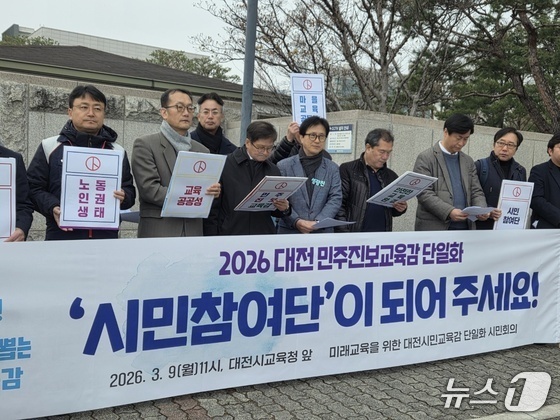
A citizens’ group working to unify progressive superintendent candidates in Daejeon has opened participation to teenagers aged 13 and older and begun recruiting a civic participation panel, prompting questions about whether young people will ultimately engage in voting-like participation.
Education officials say they will not directly interfere with the group’s activities, but will increase guidance and on-site monitoring to ensure student involvement does not violate the law.
On March 10, the Daejeon Metropolitan Office of Education said it does not consider the citizens’ committee’s unification primary and civic-panel recruitment to be partisan activity, and that it will monitor the effort through its democratic civic-education unit.
Because the activities are independently organized by a civic group, the education authorities said they will not intervene unless student participation raises legal concerns.
With the superintendent election scheduled for later this year, the office plans to strengthen school-based instruction aimed at preserving political neutrality among students and staff. In particular, it will provide election-law briefings to teachers responsible for student guidance so that student activities do not run afoul of election regulations.
The office also intends to maintain ongoing guidance and monitoring at schools to ensure students can participate without running into legal or disciplinary problems.
Meanwhile, the unification committee opened youth participation for those 13 and older the day before and has begun recruiting its civic participation panel. Applicants can join regardless of voter registration status, and recruitment is open through the 22nd.
The committee says that if it organizes the panel as a membership-based group rather than as an electoral body, teenagers could effectively take part in a voting-like process. Ordinary citizens must pay a participation fee of 1,000 KRW (about $0.75) or more to join as members; participants under 18 are exempt from the fee.