As I conclude this series, I want to address its most serious question: Is Taiwan part of China? That may be the single most important—and most contentious—question for understanding Taiwan, and it is surprisingly difficult to answer.
Cross-strait relations are far more complex than relations between North and South Korea. There was a time when they seemed very simple to me. As a child, I equated the Chinese Communist side (the People’s Republic of China) and Free China (the Republic of China, now commonly called Taiwan) with the North-South divide on the Korean Peninsula. It was a simplistic, one-dimensional understanding.
A civil war split the country into communist and noncommunist camps, producing the division we see today. I assumed the only difference was that Korea split into two similarly sized states, while in China the communists controlled most of the territory and the noncommunists retreated to a small island. Textbooks and the press reinforced that view for a young student: just as North Korea was framed as absolute evil, so was the Chinese Communist Party, and Free China was our ally. That was the prevailing narrative.
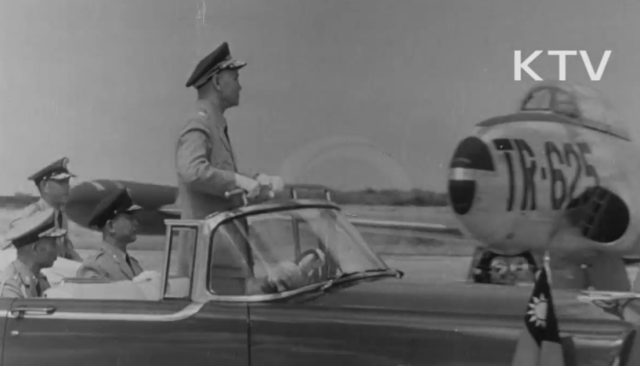
As I grew older, that black-and-white view changed. I reacted against excessive anti-communism, and against the social costs of rapid industrialization and Americanization. I began to attribute many of South Korea’s social problems to capitalism, Westernization, the United States, and its ally Japan. My illusions about our ally, Free China, faded. I sometimes disparaged those who had fled the mainland to the island as people who failed to win popular support on the continent and had retreated.
Even as my perspective shifted, I still assumed Taiwan was part of China. It seemed historically natural: Taiwan had entered Chinese history, become part of successive Chinese states, been taken by Japan, and then returned. I knew nothing of the island’s pre-Qing history. In my mind, Taiwan belonged to China the way Jeju or Ganghwa belong to Korea.
That view began to change roughly a decade ago, when I started examining Taiwan’s history closely. The roughly 400-year story of this small island proved far more complex than I had thought. Taiwan’s incorporation into the Chinese sphere was a process of late discovery and migration—similar in some ways to how the United States became a British colony. The key difference: unlike the United States, which was large and distant enough from Britain to secure independence, Taiwan is close to the mainland and relatively small, so it could not follow the same path to independence.
Contemporary Taiwanese attitudes toward China resemble Americans’ attitudes toward Britain more than they resemble the Korean case of a shared, millennia-long national identity. Taiwan’s rulers changed—Qing, imperial Japan, then the Kuomintang government that crossed from the continent—but Taiwanese people never truly had a sovereign state that emerged organically from their own long political continuity. For most, China is simply the ancestral homeland, not an identity they claim—much as Americans view Europe as ancestral rather than national. Seen through this history and identity lens, Taiwan appears as a country of migrants rooted in Chinese culture rather than as an unambiguous extension of China.
Living in Taiwan and observing its society up close altered my view again. Taiwan’s survival and development have been shaped significantly by broader Chinese-language communities, but not solely by the People’s Republic of China. I mean a wider sense of China that includes the Kuomintang government that relocated to Taiwan after the civil war and the overseas Chinese communities—ethnic Chinese living outside the PRC—who share cultural ties. Taiwan’s identity as the Republic of China served as a focal point for the global Chinese-speaking community and helped the island achieve economic growth China could not ignore. The Chinese-speaking diaspora worldwide numbers roughly 60–70 million—larger than South Korea’s population—so Taiwan functioned as a center for that community while the PRC was more isolated in earlier decades. In short, Taiwan owes a significant part of its development to its role within the broader Chinese-speaking world, which complicates any simple claim that Taiwan is only Taiwanese and that China is wholly alien.
What do Taiwanese themselves think? Taiwan’s population is complex, but it can be divided broadly into native islanders (benshengren, 本省人) whose families have lived on the island for generations, and mainlander descendants (waishengren, 外省人) who arrived with Chiang Kai-shek’s Kuomintang in the 1940s and make up roughly 10% of the population. Under nearly 40 years of KMT martial law, Taiwan functioned as the temporary government of the Republic of China. The KMT used education and institutions to promote the national goal of retaking the mainland, so a distinct Taiwanese identity could not openly develop. Over time, however, the division persisted and generational change shifted public opinion.
The most widely cited source is the Election Study Center at National Chengchi University. In 1992, about 25% of respondents identified solely as Chinese, roughly 45% said they were both Chinese and Taiwanese, and only about 17% identified solely as Taiwanese. In other words, many then felt part of China. Thirty years later, public identity looks very different. A 2024 survey finds roughly 60–65% identify as Taiwanese, fewer than 5% identify solely as Chinese, and about 25–30% identify as both Taiwanese and Chinese.
That change is hardly surprising. China and Taiwan have become very different polities. Most Taiwanese I’ve met think of their country as separate from China. The same dynamic appears in Korea: generations raised under division lose a strong sense of shared nationhood. Young people, less invested in grand narratives or communal identity, view reunification as a costly and uncertain change.
Still, a generation that retains a Chinese identity remains. In 2024, about 30–35% of people in Taiwan identify as either Chinese or both Chinese and Taiwanese. Those people are more likely to see Taiwan as part of China, but they are mostly middle-aged or older and their share is declining. Within that group, some may be sympathetic to the PRC’s growing ambitions—the so-called Chinese Dream—while others remain staunchly anti-communist and anti-PRC. In short, Taiwanese who identify as Chinese do not form a monolithic political group.
Viewed historically and through public opinion, cross-strait relations are extraordinarily complex. You cannot neatly divide the issue into Taiwan is part of China or Taiwan is an independent country. Historically, claims that Taiwan belongs to China carry some weight. At the same time, an increasing number of Taiwanese want to remain a distinct nation.
But history and public sentiment do not determine everything. The modern world often rewrites borders through power, not principle. Practical strength—military, diplomatic, and economic—matters as much as legitimacy or aspiration. On that practical level, the forces pushing Taiwan toward China and the forces resisting that outcome are in tension.
On raw power, the balance tilts decisively toward the People’s Republic of China. No matter how successful Taiwan’s TSMC is, Taiwan’s overall economy cannot match China’s. The main constraint on China’s expansion is the United States, which is unwilling to tolerate a regional hegemon with global, ocean-going military reach. Nearby, Japan’s alignment with U.S. interests also matters. Given that reality, an immediate, forceful takeover of Taiwan by China appears unlikely. Despite heated rhetoric and periodic escalation, both sides face strong practical incentives to preserve a complex, ambiguous status quo. A PRC annexation of Taiwan or a formal Taiwanese declaration of independence is unlikely in the near term.
Tracing how one person’s views on China and Taiwan evolved shows how complicated the issue is. Both sides have plausible claims and legitimate objections. If someone insists on a simple, one-sided answer, they are probably taking a position or failing to understand the other side.
Theory may sometimes point to a clear answer, but reality often lacks one. I cannot give a definitive verdict on whether Taiwan is part of China, but I will make three clear points. First, it is incorrect to declare Taiwan obviously part of China without understanding Taiwan’s distinct history. Second, it is also wrong to separate Taiwan from China solely on the basis of anti-China sentiment. Third, when we evaluate cross-strait relations, we must place South Korea’s national interest at the center of our analysis.
Taiwan is closer to us than we often realize. Cross-strait dynamics will inevitably affect South Korea’s security and economy. We cannot predict how future changes will influence our interests. Now is the time to adopt a balanced, dispassionate view of China–Taiwan relations. I hope that effort broadens our perspective on the world. With that, I conclude this series. (End)