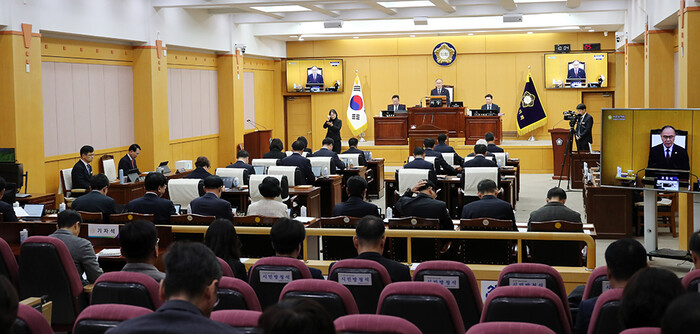
Seosan City Council opened its 312th extraordinary session to review 42 agenda items, including this year’s first supplementary budget, ordinances and consent measures.
The council said it will sit for four days, from the 10th through the 13th, beginning with the first plenary on the 10th. On the agenda are the 2026 first supplementary budget, a fund operation revision plan, 22 ordinances, five consent items and one approval item.
During the session, the Administrative, Culture and Welfare Committee will consider a living wage ordinance; a partial amendment to the municipal tax-relief ordinance; an ordinance to require and support liability insurance for people with developmental disabilities engaged in social activities; and an ordinance guaranteeing access for assistance dogs for people with disabilities.
The Industry and Construction Committee will review an ordinance to support reduced paper use; a partial amendment to promote and support the beekeeping industry; an ordinance to foster the bioindustry; and an ordinance to subsidize liability insurance for small restaurants.
The plenary also included five-minute public remarks on local issues.
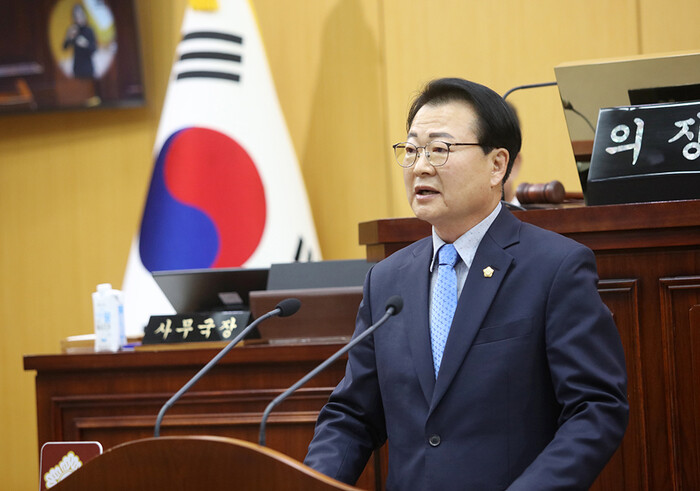
Councilor Kim Yong-gyeong described the proposed administrative integration of Chungnam and Daejeon as “the last chance,” urging swift passage of special legislation to build a super-regional economic zone and advance balanced national development. He said Seosan must secure clear roles in transportation, industry and tourism during the integration process.
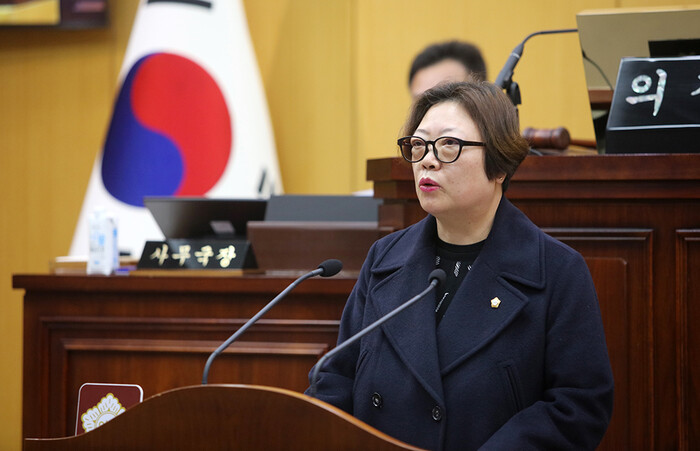
Councilor Ga Seon-suk called attention to the need to revise solar-panel setback rules under the amended Renewable Energy Act. She urged that upcoming ordinance revisions include measures to secure local acceptance, prevent scattershot development and ensure benefits are returned to the community.
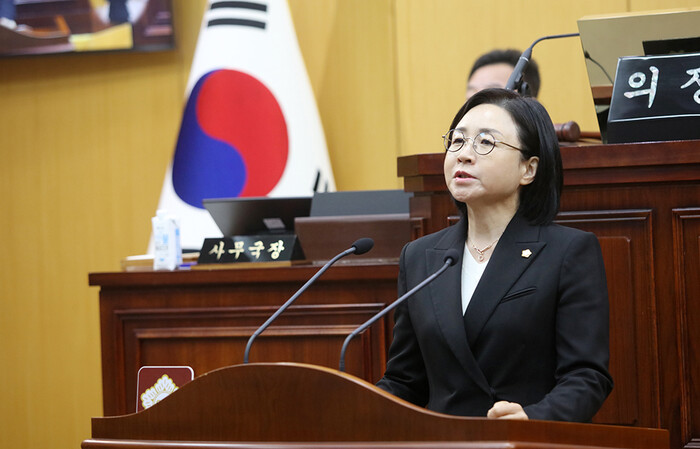
Councilor Han Seok-hwa argued that improving farm waste-management systems is the starting point for wildfire prevention, citing a recent fire in Daesan-eup. He warned that illegal burning accounted for more than half of wildfires over the past three years and called for incentives to encourage voluntary rural waste collection, expanded centralized separation-and-disposal sites, and more personnel for collection and shredding.
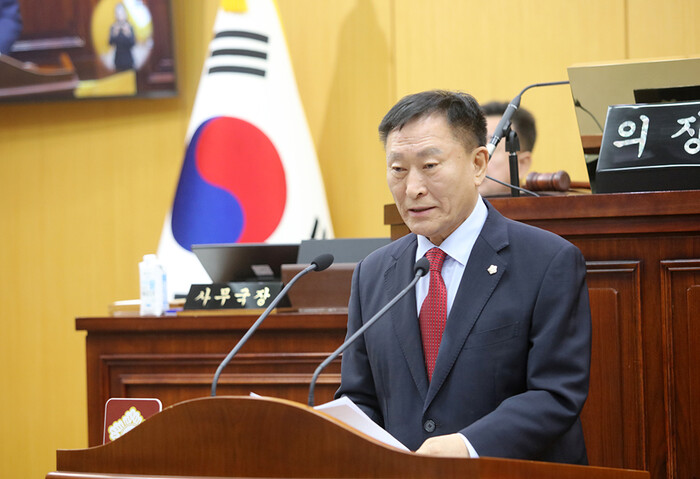
Councilor Kang Mun-su criticized delays in land compensation and administrative procedures for the northern-area and Daesan park-golf project. He said that responsible administration and rebuilding public trust should take precedence over presenting unrealistic timelines.
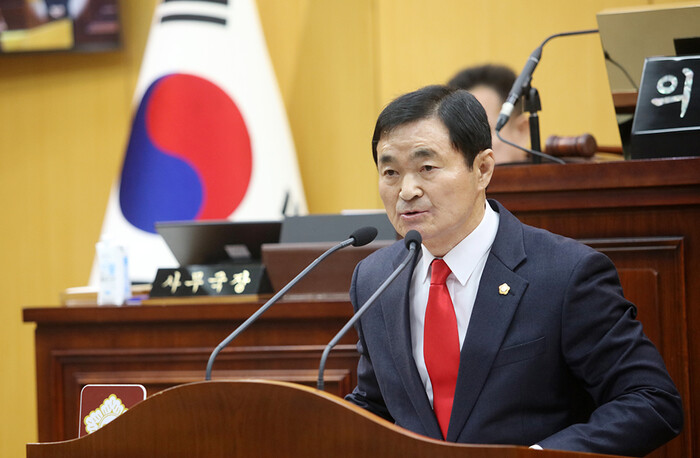
Councilor An Won-gi urged the council to expedite an ordinance, funding plan and pilot project to support restroom installations on farms. He said revisions to the Farmland Act open the door to on-farm convenience facilities and that these steps are needed to protect the health and dignity of farmers—especially women and older workers.
The council also adopted and submitted a series of proposals. First, it passed a motion led by Councilor Moon Su-gi urging revisions to the Waste Management Act.
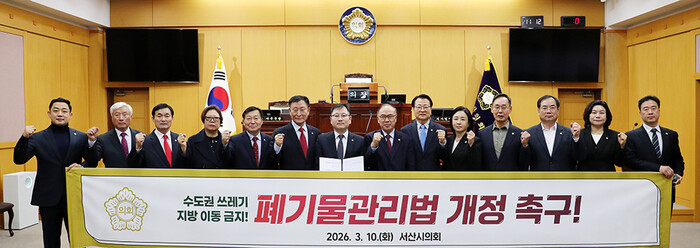
Prompted by cases in which metropolitan household waste was brought into Seosan under contracts with private recycling firms, the motion asks lawmakers to enshrine in law the principle that household waste should be treated where it is generated, allowing transfers to other regions only as exceptions.
It also calls for a pre-approval system for intermunicipal import-and-treatment contracts; stronger on-site verification and measures to prevent false entries in the Olbaro system; safeguards to protect local environmental rights; and increased national funding for areas that lack treatment facilities.
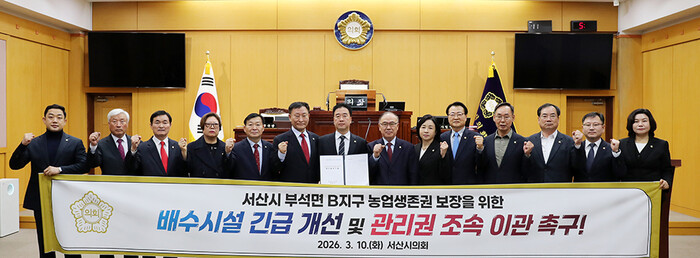
The plenary also approved, by eight votes in favor and six abstentions, a motion to change the agenda so it could consider Councilor Choi Dong-muk’s proposal calling for urgent drainage improvements and the rapid transfer of management authority to protect agricultural livelihoods in Bu-seok-myeon District B, Seosan.
The proposal states that the reclaimed land in Bu-seok-myeon District B has suffered repeated flooding and that outdated drainage infrastructure is harming farmers. It urges authorities to expand drainage stations and upgrade facilities immediately as a national disaster-prevention measure, separate from negotiations over management transfer.
It also called on the Ministry of Agriculture, Food and Rural Affairs to re-evaluate support measures and prioritize funding, and it urged a prompt agreement between Hyundai Engineering & Construction and the Korea Rural Community Corporation to establish a public management system.
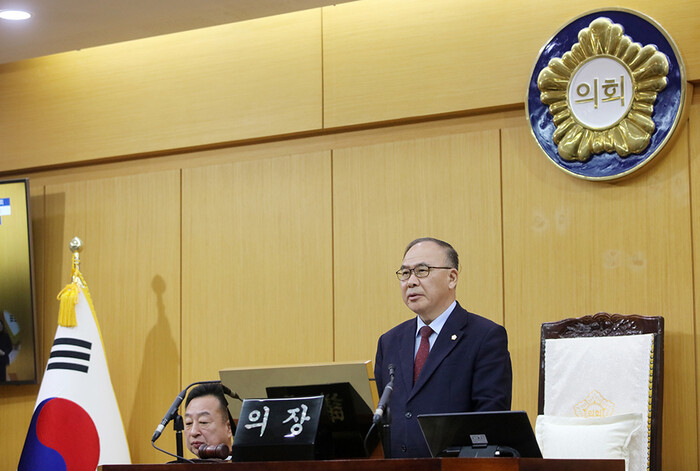
Chairman Jo Dong-sik opened the session by saying, “Seosan’s greatest strength lies in its citizens,” and added that the city’s true resilience has been shown through participation and dedication, especially in difficult times.
He asked residents to support the council and the executive branch—sometimes with sharp criticism, sometimes with warm encouragement—so they can move in the right direction to overcome crises.