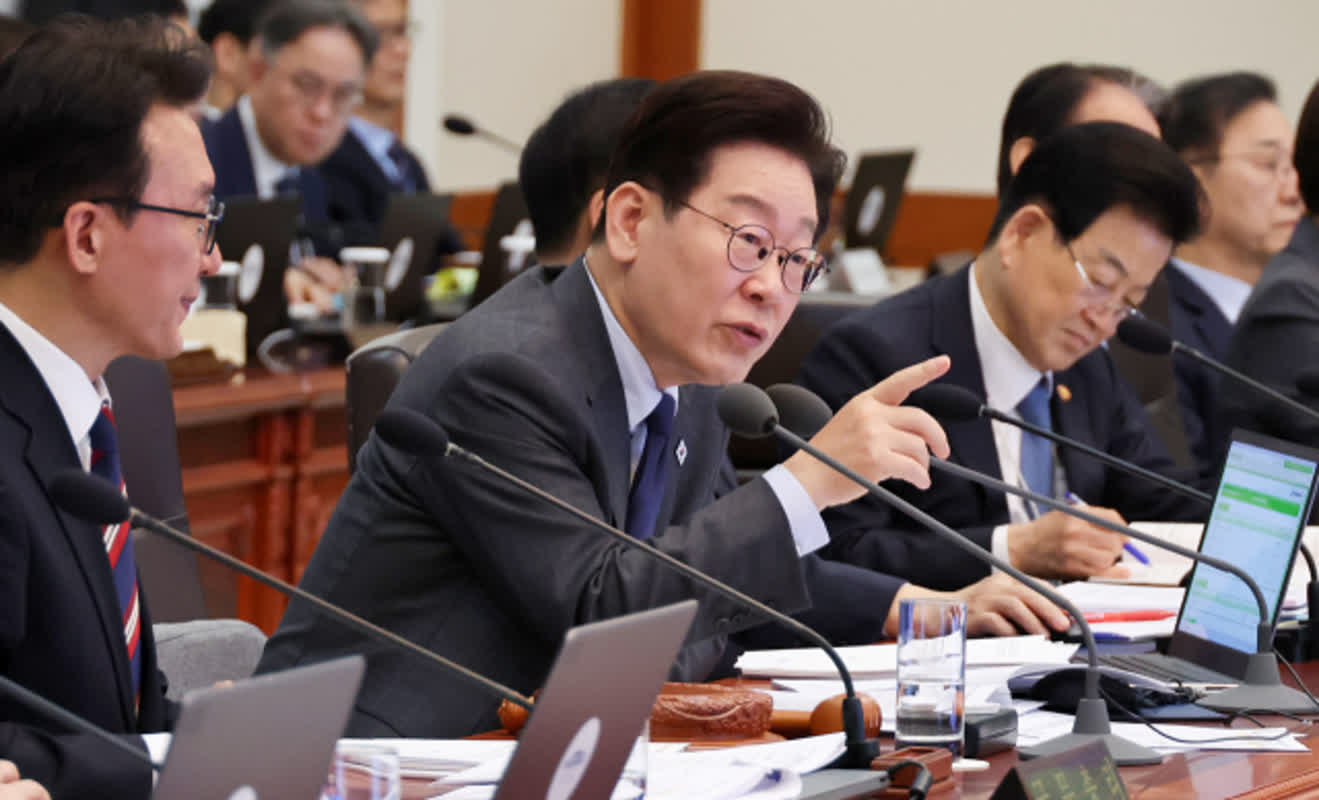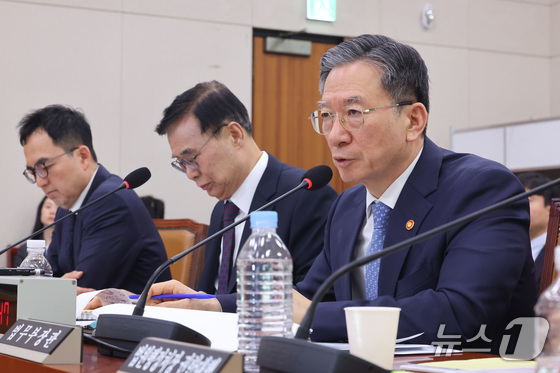
Justice Minister Jeong Seong-ho told lawmakers on April 3 that he will take measures beyond a parliamentary probe to eradicate what he described as alleged prosecutorial fabrication in the Ssangbangwool North Korea remittance case.
At 8:15 p.m., during the resumed agency briefing for the special parliamentary committee investigating alleged politically motivated, fabricated indictments under the Yoon Suk Yeol administration, Jeong said he questioned whether the prosecution can effectively police itself.
After the briefing, Jeong said he had been reflecting while observing the parliamentary inquiry and felt conflicted. He added that the proceedings had underscored, once again, how the prosecution lost public trust.
Jeong said the prosecution needs rigorous self-reflection and contrition to regain public confidence, and he urged that it redouble its efforts.
Acting Prosecutor General Koo Ja-hyun said he had spent the day “with a very heavy heart” and pledged to ensure objectivity as related investigations and trials proceed.
The agency briefing began at 10 a.m. and concluded around 11:15 p.m. Officials from the Ministry of Justice, the Supreme Prosecutors' Office, the National Intelligence Service, the Financial Supervisory Service, the Court Administration, the Seoul Central District Prosecutors' Office and the Suwon District Prosecutors' Office attended.
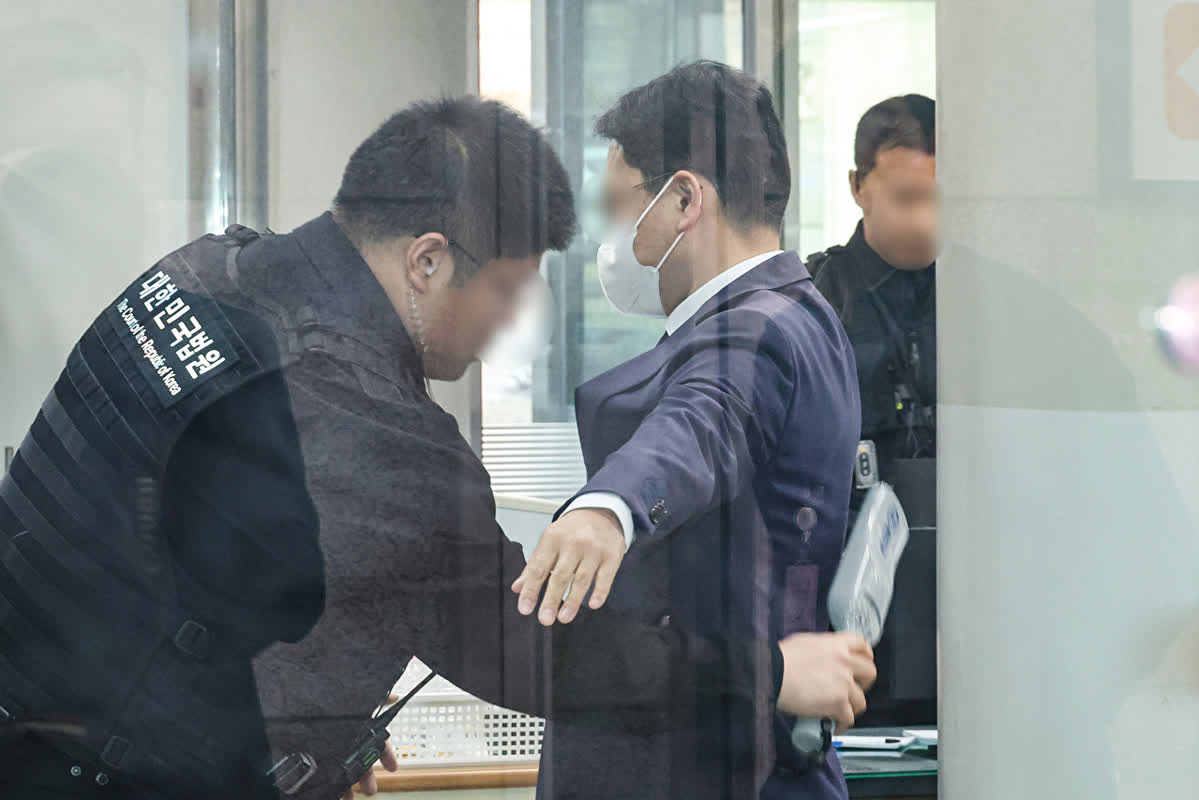
Park Sang-yong, deputy chief prosecutor at the Incheon District Prosecutors' Office who led the Ssangbangwool remittance probe handled by the Suwon office, appeared as a witness in the afternoon but abruptly refused to take the oath and left after 38 minutes.
The People Power Party said Park had the right to refuse to testify and that his explanation should be heard; they then left the hearing.
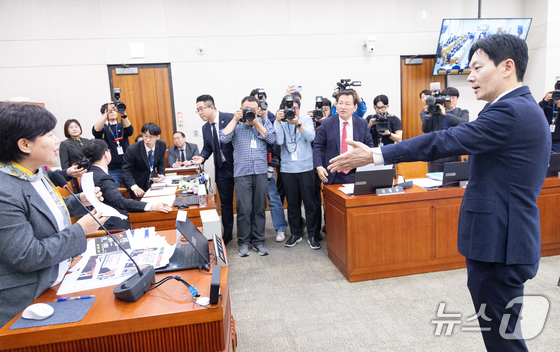
Jeong called Park's refusal to take the oath and his departure “highly inappropriate,” saying he should not have done that. Even if Park believed he acted correctly, leaving was unacceptable, and the minister said he felt “appalled.”
Koo echoed the sentiment, saying he too was “appalled” and that Park's conduct should not have occurred.
Responding to ruling-party calls to investigate the line prosecutors who worked with Park, Koo said he would consult the Seoul High Prosecutors' Office Human Rights Violation Inspection Task Force (TF). The TF, operating under the Justice Ministry's directive, is reviewing allegations that Park tried to influence testimony and the so‑called “salmon-and-alcohol” party incident.
After leaving, Park posted on Facebook that he refused the oath because he could not cooperate with what he described as an unconstitutional and illegal parliamentary probe aimed at creating a path to drop charges against defendant Lee Jae-myung.
He argued the probe amounted to a clear illegal effort to influence prosecutions in ongoing trials or investigations.
Park also claimed that if he testified, the Democratic Party would accuse him of perjury and demand a special prosecutor. He added that such a special prosecutor would be appointed by the country’s highest authority and would effectively assist that leader in nullifying alleged wrongdoing by seeking dismissal of charges.
The Democratic Party said Park failed to fulfill his duty as a witness and should face prosecution. It also criticized his recent Facebook posts as violating the political neutrality expected of public servants.
Koo said authorities would review all of Park’s posts for potential violations of political neutrality and examine them thoroughly.
The second special prosecutor team, led by Special Prosecutor Kwon Chang-young, requested that the Supreme Prosecutors' Office transfer the case involving alleged attempts to influence testimony that the Seoul High Prosecutors' Office TF is investigating. Once the TF hands over the investigative records and evidence, the special prosecutor’s team will open a formal probe.