SisaWeek reporter Jeon Du-seong Last week, the National Assembly passed bills to establish a Public Prosecution Office and a Serious Crimes Investigation Office, effectively bringing the Democratic Party of Korea’s judicial and prosecutorial reforms to a close. With those reform measures finalized, the party has shifted its emphasis to economic and everyday concerns. It has accelerated work on a supplementary budget to address developments in the Middle East and increased on-the-ground outreach. Analysts say the moves appear aimed at courting centrist voters with roughly 70 days remaining before the June 3 local elections.
◇ Fast-tracking the supplementary budget and expanding field visits
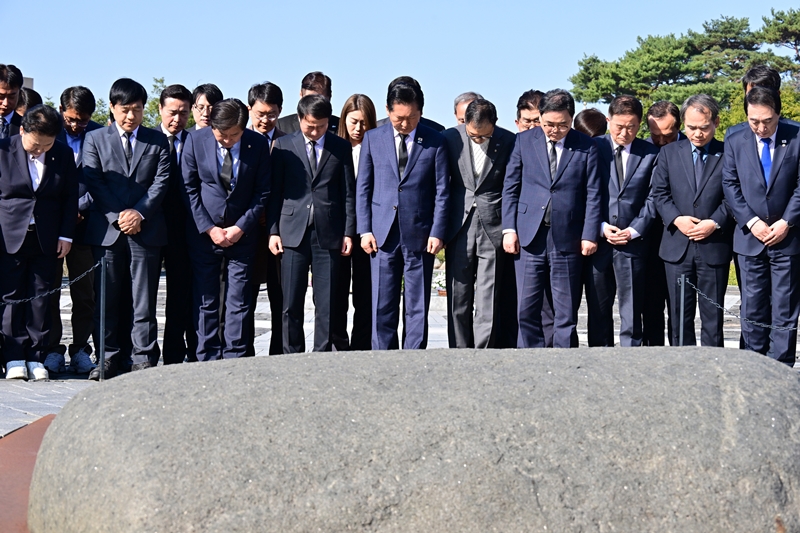
On the 20th and 21st, the Assembly approved the Public Prosecution Office Act and the Serious Crimes Investigation Office Act, both advanced by the Democratic Party. On the 23rd, party leader Jeong Cheong-rae and other senior officials visited the gravesite of the late President Roh Moo-hyun in Bongha Village, Gimhae, and declared that prosecutorial reform had been completed.
After paying his respects, Jeong wrote in the guestbook: “Nojang, I only realized it was spring after the flowers fell. Before I knew it, more Roh Moo-hyuns have bloomed.” At a field supreme council meeting in Bongha Village, Jeong told attendees, “I report to the President: the prosecution agency has been abolished,” adding, “The prosecution agency has now disappeared into history.”
With legislative steps on judicial and prosecutorial reform effectively concluded, the Democratic Party is foregrounding livelihood issues. First, it plans to expedite a supplementary budget to respond to the Middle East situation. At a high-level party-government meeting on the 22nd, participants agreed to prepare a roughly 25 trillion KRW (18.75 billion USD) supplementary budget—financed through surplus tax revenue rather than new government bonds—with the aim of passing it at the April 10 plenary session.
At the council meeting, Jeong said, “Timing is critical for both reform and livelihood policies; the supplementary budget is no different,” and pledged, “As soon as the government submits its proposal to the National Assembly, we will move with unprecedented speed.”
The party also disclosed details of government-party consultations on Middle East contingencies. At a National Assembly press briefing, the Democratic Party’s Middle East Economic Response Task Force noted the conflict had entered its 24th day and said the government and ruling party were taking the situation’s seriousness seriously, reviewing domestic energy and commodity supply conditions and the status of planned countermeasures.
To mitigate the impact of high oil prices, the task force decided to convert part of naphtha export volumes to domestic use. It said refiners currently export roughly 40% of their petroleum products and that exports would be adjusted in stages, reflecting market conditions, to redirect some supply to the domestic market. The move is intended to ease short-term supply disruptions and bolster the stability of domestic energy prices.
The party also committed to accelerating the energy transition toward renewables. Specifically, it will seek expanded supplementary budget support for agrivoltaics, offshore wind, and the expansion of distributed power grids. In addition, party leadership decided to recommend a vehicle-usage rotation—effectively a five-day vehicle rationing system—for party lawmakers to encourage energy conservation.
As the Democratic Party mobilizes around Middle East contingencies, Jeong has intensified field activities. After the field supreme council meeting, he visited the southern market in Yangsan, South Gyeongsang, to increase direct contact with voters. Kim Kyung-soo, the party candidate for South Gyeongsang governor and former chair of the Local Era Committee, joined the visit. Jeong also plans to hold all of this week’s supreme council meetings in the field.
Observers interpret the party’s emphasis on livelihood policies as a deliberate strategy to appeal to centrist voters ahead of the local elections now that reform legislation has been completed.
◇ Signs of heated primaries amid fast-tracked nominations
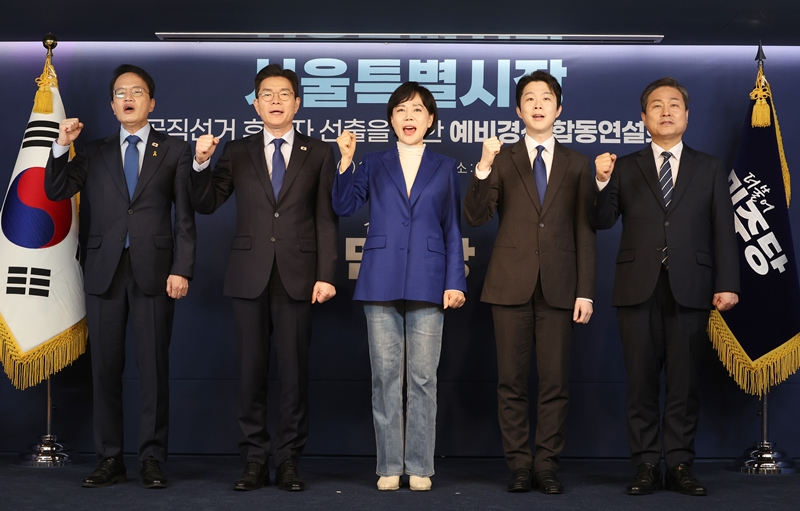
Meanwhile, the party is moving quickly on nominations. It has finalized candidates for four metropolitan executive posts—mayors of Incheon and Ulsan and governors of South Gyeongsang and Gangwon—and narrowed the fields for Gyeonggi governor and the unified Jeonnam–Gwangju mayor race to three and five contenders, respectively.
The party has confirmed nominations for Incheon mayor (Rep. Park Chan-dae), Ulsan mayor (Rep. Kim Sang-wook), Gangwon governor (former Blue House political secretary Woo Sang-ho), and South Gyeongsang governor (former Local Era Committee chair Kim Kyung-soo).
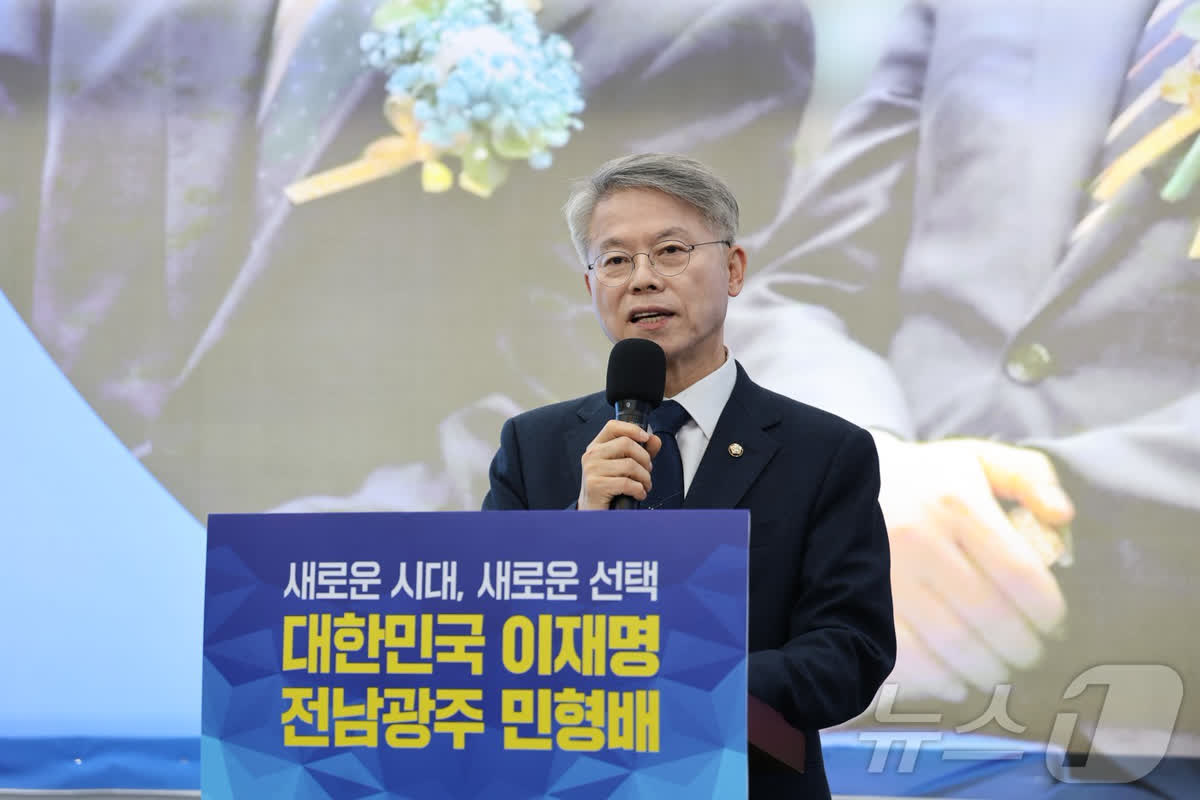
In the Gyeonggi governor primary, the race has been narrowed to a three-way contest among incumbent Governor Kim Dong-yeon and lawmakers Chu Mi-ae and Han Jun-ho. The Jeonnam–Gwangju unified mayoral contest has become a five-way race involving current Gwangju Mayor Kang Ki-jung, incumbent Jeonnam Governor Kim Young-rok, and lawmakers Min Hyung-bae, Shin Jeong-hoon, and Joo Cheol-hyun.
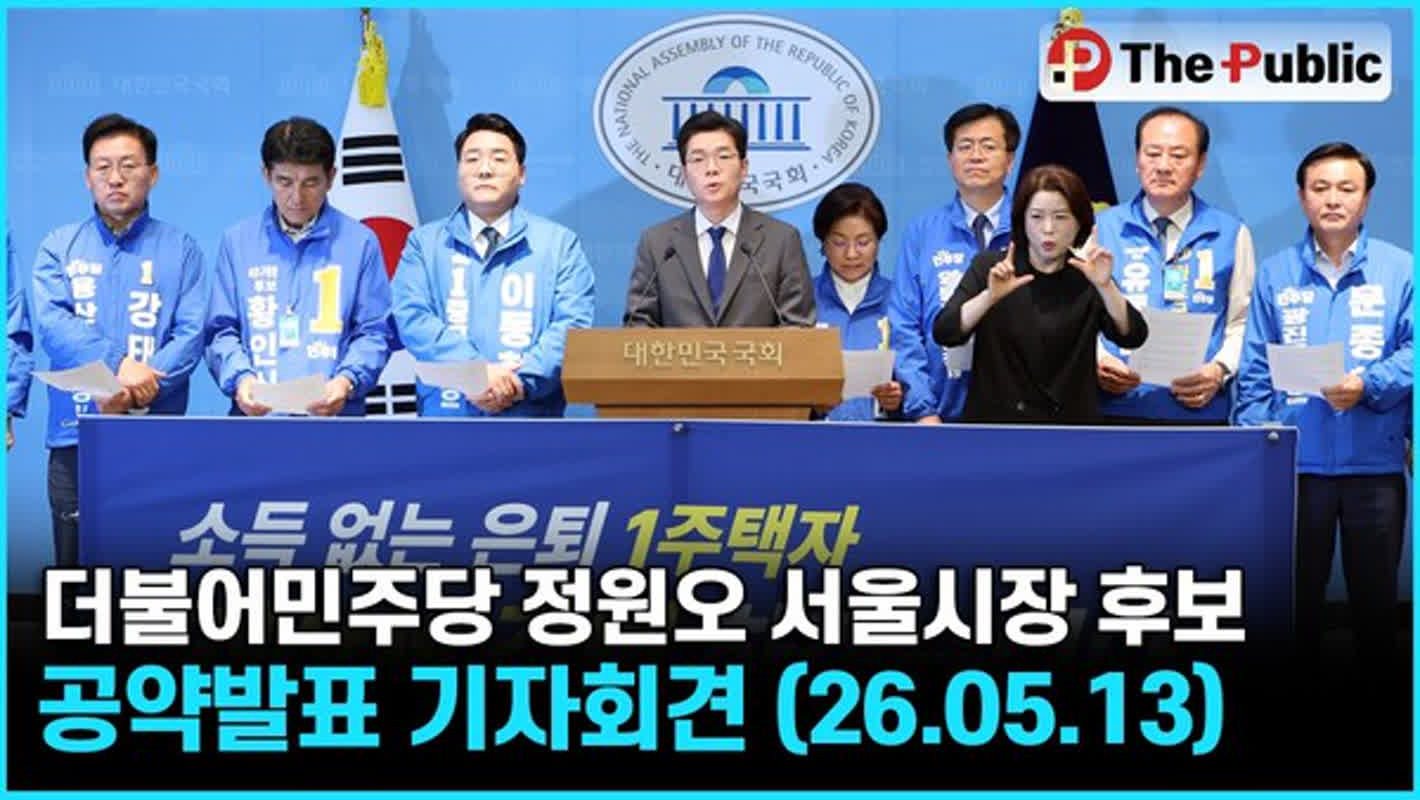
After the field supreme council meeting, Jeong told reporters the winner of the Seoul mayoral primary is scheduled to be announced on the 19th of next month and said he expects the nomination process to conclude around April 20.
However, some primaries have become contentious. In the Seoul mayoral primary, rivals have targeted former Seongdong District Mayor Jeong Won-oh, prompting pushback from his camp and escalating tensions.
Rep. Park Joo-min, a Seoul mayoral primary candidate, held a press conference on the 22nd to criticize Jeong over alleged sponsorship ties between Deutsche Motors and Seongdong District events. Park sharply accused Jeong of “shaking hands with dirty hands” for attending a golf tournament sponsored by Deutsche Motors, a company implicated in stock-manipulation allegations linked to Kim Keon-hee. Rep. Jeon Hyun-hee, also running for Seoul mayor, held her own press conference the same day and attacked Jeong’s flagship Seongdong-style public bus (the “Seong-gong bus”), calling it little different from Oh Se-hoon’s Han River bus—a wasteful use of taxpayer money and an example of performative governance.
Jeong’s campaign spokesperson Park Kyung-mi hit back, accusing Rep. Park of cynically dragging a Deutsche Motors sponsorship allegation into an intraparty contest—a déjà vu of the People Power Party’s attempts to link President Lee Jae-myung to Seongnam FC sponsorship. Park also urged Rep. Jeon to compete on the strength of her own distinct vision and policies rather than trying to tarnish other candidates’ records to gain reflected benefits.