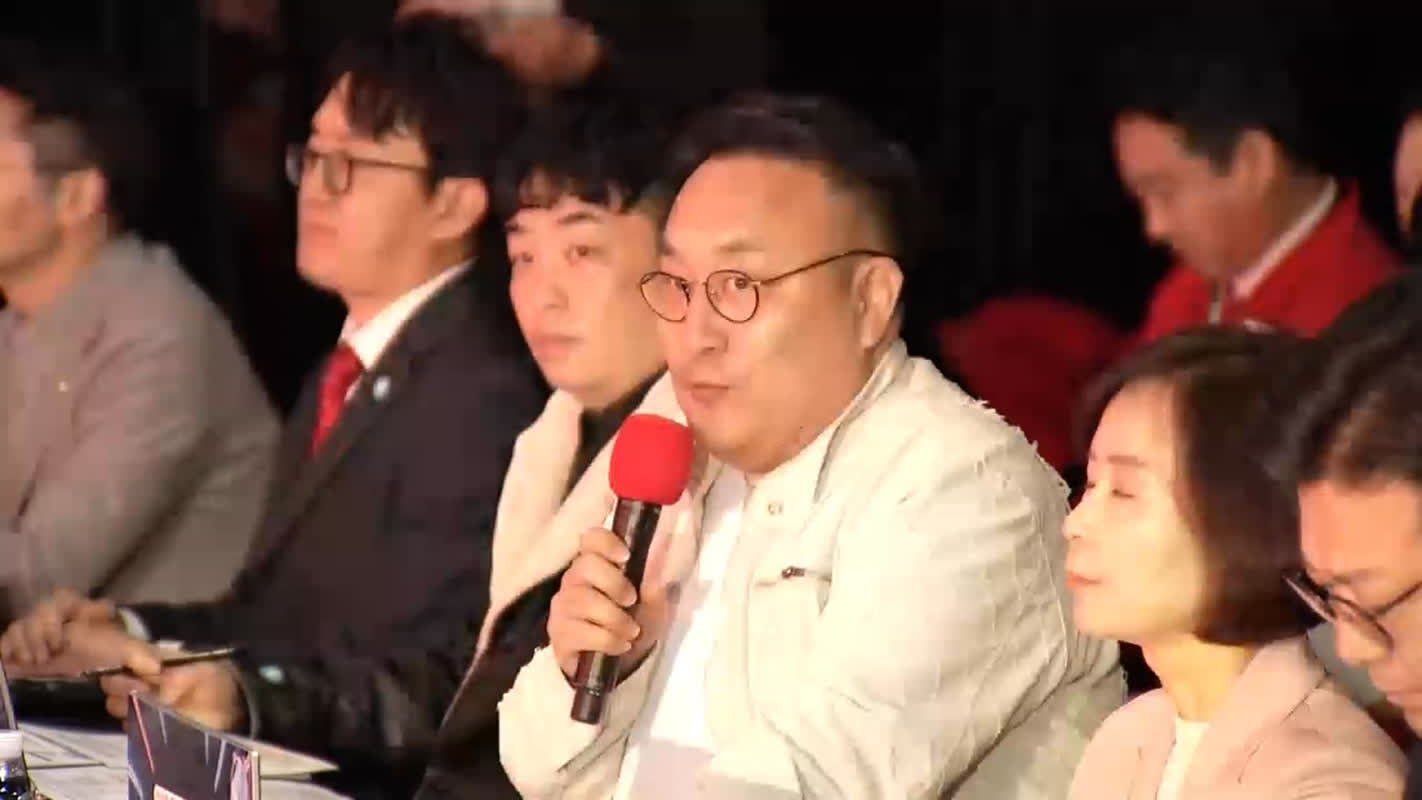
On the 19th, Kim Boo-kyum, the Democratic Party’s candidate for mayor of Daegu, released detailed implementation plans for his top campaign pledge, “Daegu Industrial Transformation.”
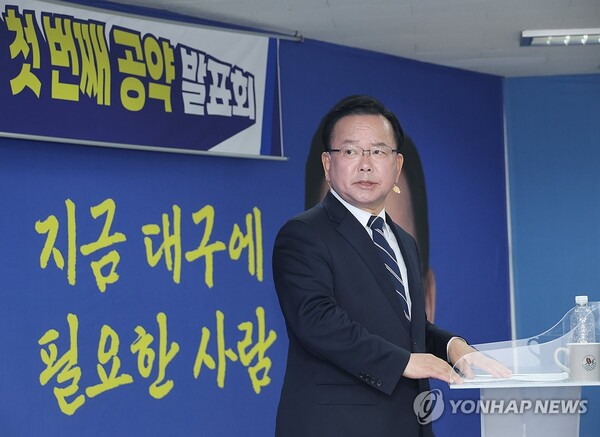
Kim held his first pledge announcement at his campaign office in Daegu’s Dalseo District, where he unveiled “three visions and five core pledges” for the city’s future.
He outlined three overarching visions: economic resurgence, revitalizing the local economy and everyday livelihoods, and balanced regional development. His five core pledges are transforming Daegu’s industry and creating jobs; building the integrated Daegu–Gyeongbuk new airport; revitalizing the livelihood economy; making Daegu a city of opportunity for young people; and administratively integrating Daegu and Gyeongbuk.
On his top pledge, “Daegu Industrial Transformation,” Kim said he aims to double the region’s gross regional domestic product (GRDP) to roughly 150 trillion KRW by 2035 and create 100,000 quality jobs. He said he would make Daegu the Pangyo of the South—South Korea’s tech hub—and turn it into a center for quantum industries and AI robotics. (150 trillion KRW ≈ $112.5 billion)
As part of that plan, he proposed creating an AX (AI Transformation) city that integrates AI across manufacturing and services, and said he will secure national funding of 550 billion KRW to invest in the Suseong Alpha City area, where ICT infrastructure is concentrated. (550 billion KRW ≈ $412.5 million)
He also pledged to bring a DGIST global campus to Suseong Alpha City and, by 2030, to train 5,000 AX specialists through partnerships with regional universities and research institutes. Using the government’s deregulation-focused “mega special zone” designation as a springboard, he plans to diversify Daegu’s industrial base toward future-growth sectors such as robotics, future mobility, medical healthcare, and semiconductors.
Kim said he will position Daegu as a symbol of youth opportunity and restore it as a center of industrial development. To build that foundation for young people, he proposed measures including a mega sandbox (a regulation-free zone), ultra-low-cost AI resource provision, and a best-in-class local talent pipeline.
He also pledged to create sector-specific youth startup sub-funds backed by a Daegu–Gyeongbuk integration mother fund of 125 billion KRW and to attract anchor companies in advanced industries. (125 billion KRW ≈ $93.75 million)