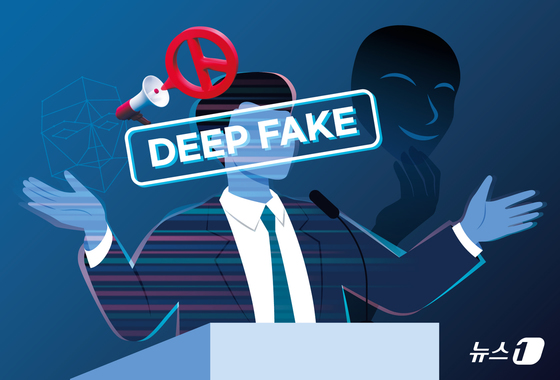
The government is deploying artificial intelligence (AI) to counter deepfake disinformation circulating during elections. The Ministry of the Interior and Safety and the National Forensic Service have jointly developed an AI deepfake detection and analysis model, which will be applied to the 9th simultaneous local elections on June 3 to identify and respond to false or manipulated information.
On the 10th, the Ministry demonstrated the AI Deepfake Detection and Analysis Model at the Government Complex Seoul, announcing plans to provide the technology to the National Election Commission for use throughout the electoral process.
With rapid advances in generative AI, deepfakes that convincingly synthesize a person’s face or voice have proliferated, heightening concerns that such content could be weaponized as false information during campaigns.
The National Election Commission reported a sharp rise in removal requests for deepfake videos: 388 cases during the 2024 general election versus 10,510 cases in the 2025 presidential election.
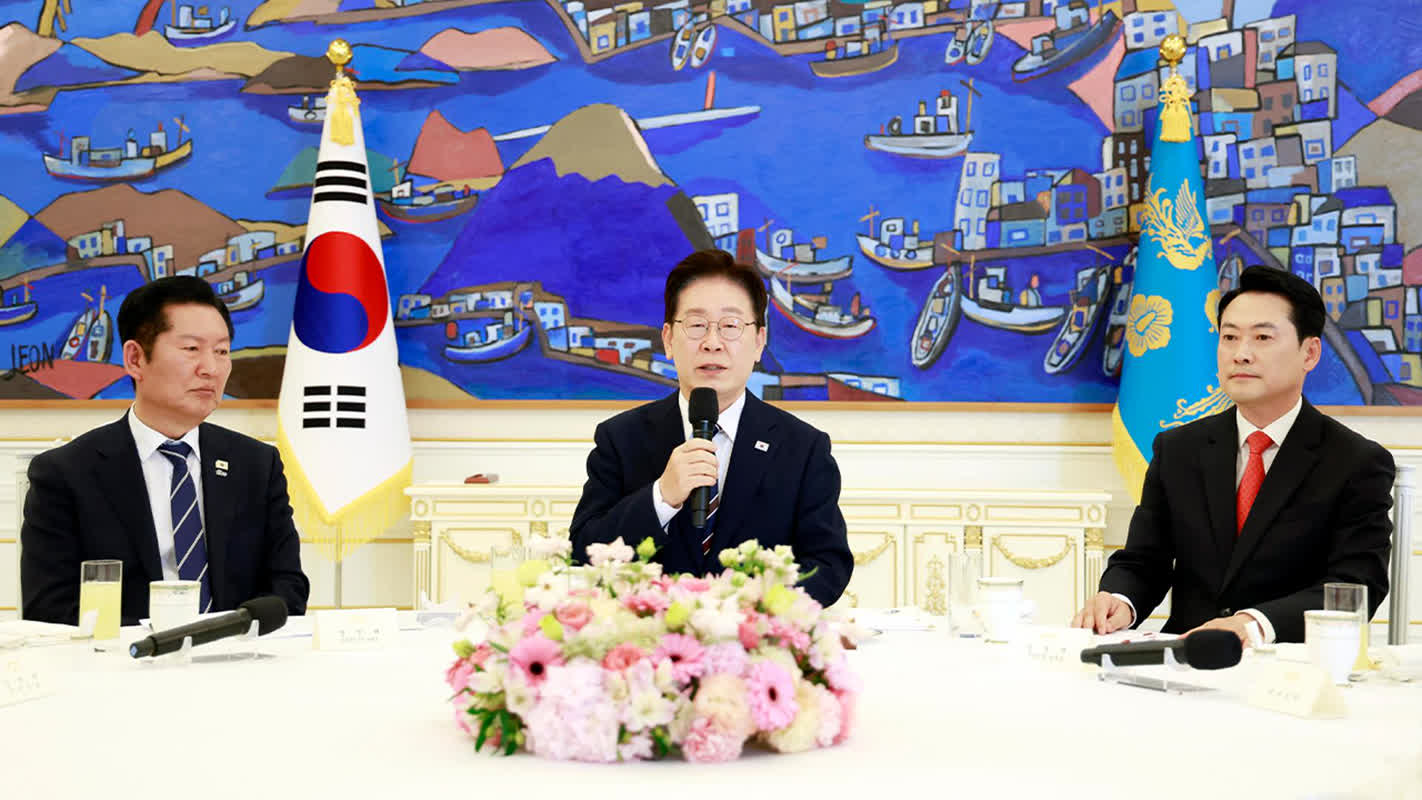
At the demonstration, Minister Yoon Ho-jung said AI technology is evolving daily and opening new possibilities across society. He warned, however, that threats such as deepfakes are emerging alongside those advances.
He emphasized that, particularly in the run-up to elections, fake news produced using misused deepfake technology poses a heightened risk of distorting public judgment.
Yoon described deepfakes not merely as a technical challenge but as a novel form of information crime capable of undermining democratic processes. Protecting voters’ ability to make informed choices and safeguarding their rights against distorted information, he said, is a central government responsibility.
The Ministry and the National Forensic Service began co-developing the AI-based deepfake detection and analysis model in 2024. While earlier detection tools have been used in past elections, officials say this version is an enhanced model with improved accuracy.
The system assesses manipulation by combining global analysis, which evaluates the entire video sequence, with local analysis that inspects specific areas—such as faces—at high resolution.
Designed to counter the latest generative-AI content, the model achieved roughly 92% detection accuracy in validation tests, a substantial improvement over the previous model’s 76% detection rate.
The model builds on outcomes from last year’s Deepfake Crime Response AI Detection Model Contest, which drew 268 teams and 1,077 AI specialists. The Ministry and the National Forensic Service selected top-performing models from the competition for integration into the detection system.
With the June local elections approaching, Yoon said a whole-of-government response is necessary to curb the spread of AI-driven misinformation. When images or videos suspected of being deepfakes are identified, he said, the government will rapidly verify manipulation through scientific analysis and coordinate timely responses with relevant agencies.
“AI should be a shield that protects democracy, not a spear that threatens it,” Yoon said, adding that the government will pursue an “AI democratic government” that uses artificial intelligence to protect citizens and promote a fair society.
He also pledged continued close cooperation with the National Election Commission, the National Police Agency, the National Forensic Service and other relevant bodies to actively counter false and manipulated information and to foster an electoral environment the public can trust.