[Photo: Aju Economy]
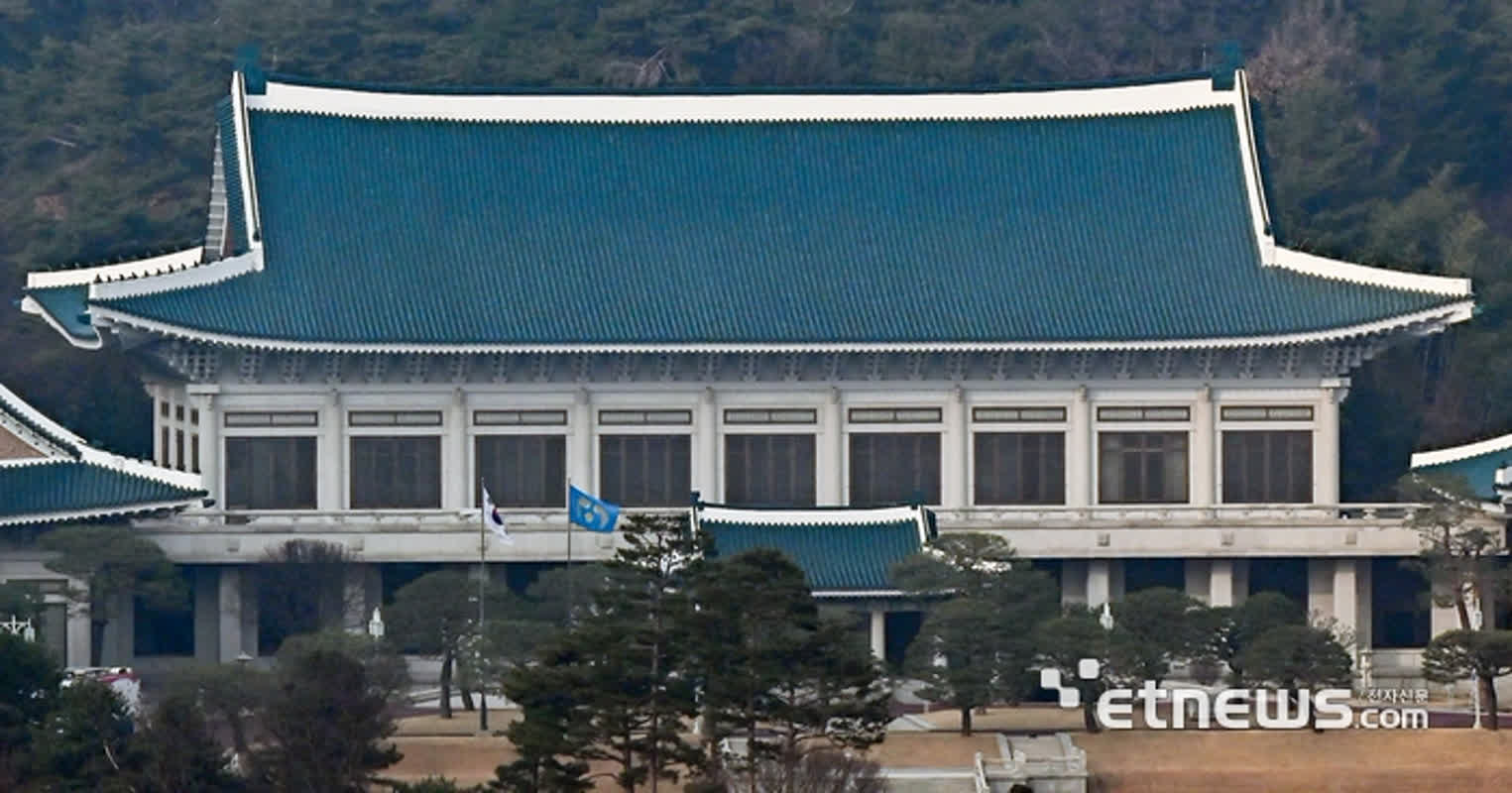
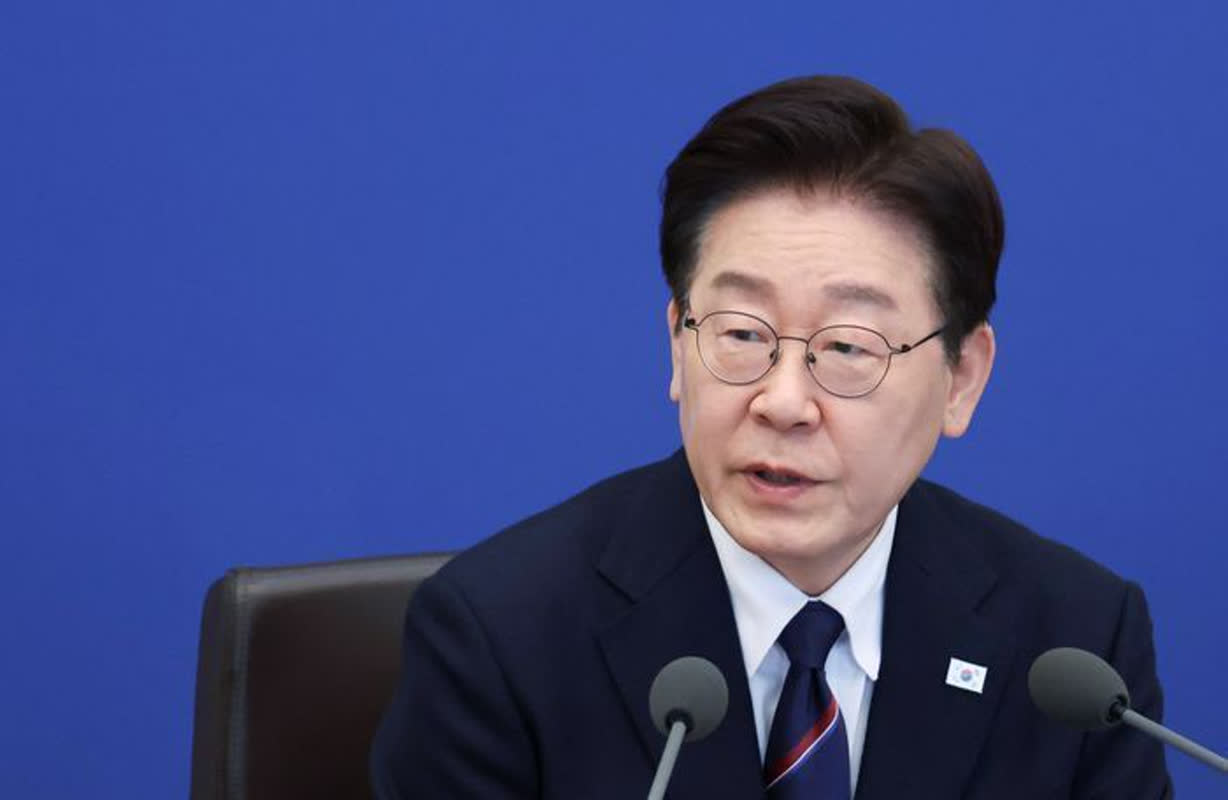
President Lee Jae-myung calls Korean ship’s Red Sea transit “a valuable achievement by one team”
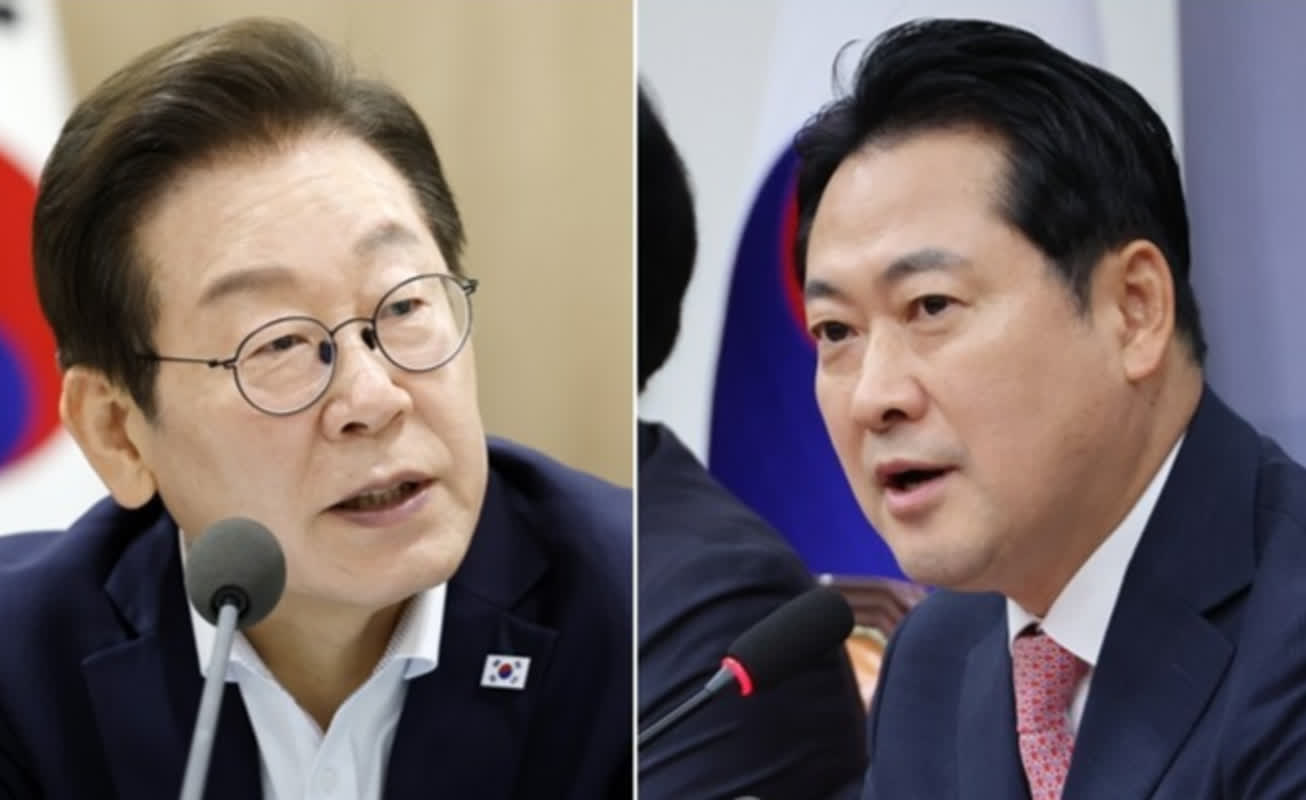
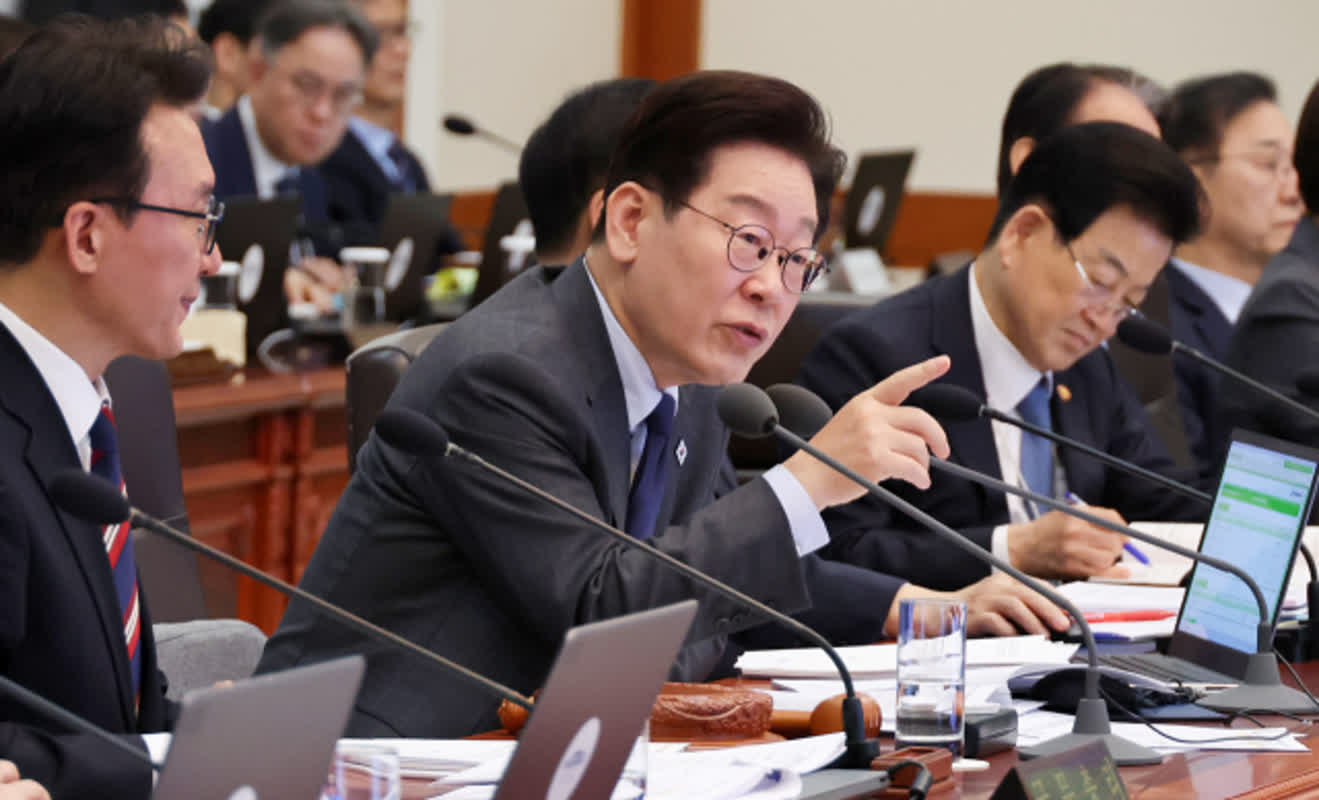
President Lee Jae-myung said on the 17th he was pleased to hear that, after the Strait of Hormuz was blocked, a Korean vessel has begun safely transporting crude oil through the Red Sea. He described it as “a valuable achievement by the relevant ministries working as one team.”
On X (formerly Twitter), the president linked to an announcement from the Ministry of Oceans and Fisheries and added his comments.
He also expressed gratitude to everyone who worked around the clock under difficult conditions, especially the seafarers.
President Lee pledged that the government will concentrate all available resources to overcome the crisis caused by the Middle East conflict and that it will continue to protect citizens’ livelihoods and the national interest through thorough responses and rigorous preparedness.
The same day, the Ministry of Oceans and Fisheries announced that a Korean vessel that loaded crude oil at Yanbu Port in Saudi Arabia had safely exited the Red Sea.
This is the first case of crude oil being transported back to Korea via the Red Sea alternative route since the Strait of Hormuz was blocked.
National gasoline price tops 2,000 KRW per liter (approximately $1.50 per liter) — first time in 3 years, 9 months since Russia-Ukraine war
Amid ongoing discussions between the U.S. and Iran over a cease-fire, the national average retail price for gasoline surpassed 2,000 KRW per liter (approximately $1.50 per liter).
According to the oil price information system Opinet, as of 7 p.m. on the 17th the nationwide average price for gasoline stood at 2,000 KRW per liter (approximately $1.50 per liter), up 0.9 KRW (approximately $0.0007) from the previous day.
The nationwide average ordinary gasoline price entering the 2,000 KRW range is the first time since July 2022, roughly 3 years and 9 months ago, when the Russia–Ukraine war sent international oil prices sharply higher and drove up domestic fuel costs.
At the same time, diesel rose 1.1 KRW to 1,994.2 KRW per liter (approximately $1.50 per liter).
Seoul’s average gasoline price was 2,030.6 KRW per liter (approximately $1.52), up 1.9 KRW (approximately $0.0014) from the previous day; diesel averaged 2,016.7 KRW per liter (approximately $1.51), up 2.1 KRW (approximately $0.0016).
International oil prices rose the previous day amid uncertainty over U.S.–Iran cease-fire talks.
Dubai crude, the benchmark for imported crude, rose $0.70 to $101.80 per barrel.
International gasoline climbed $1.90 to $120.90 per barrel, while international automotive diesel fell $1.10 to $172.20 per barrel.
Earlier, to ease market distortions, the government implemented a “maximum price system for petroleum products” on the 13th of last month, capping refiners’ supply prices every two weeks.
In the first phase, the government set caps at gasoline 1,724 KRW per liter (approximately $1.29 per liter) and diesel 1,713 KRW per liter (approximately $1.28 per liter).
In the second phase on the 27th of the same month, it raised the caps to 1,934 KRW per liter for gasoline (approximately $1.45 per liter) and 1,923 KRW per liter for diesel (approximately $1.44 per liter).
The government froze the third-phase caps at the second-phase level after considering the measure’s impact on consumer prices.
Acting Prosecutor-General Gu Ja-hyeon calls news about investigator’s attempted suicide “devastating,” urges that parliamentary probe not influence trials
Acting Prosecutor-General Gu Ja-hyeon (deputy prosecutor-general of the Supreme Prosecutors’ Office) said he felt “devastated” over reports that a prosecutor involved in the Daejang-dong investigation made an extreme attempt during the parliamentary fact-finding probe.
This is the first time Acting Prosecutor-General Gu has spoken publicly on a prosecutorial matter since his appointment on November 14 last year.
On the 17th, Gu told reporters outside the Supreme Prosecutors’ Office in Seocho, Seoul, “I read distressing reports about a prosecutor who had been named as a witness for the parliamentary probe,” adding, “As acting prosecutor-general, I received that news with a heavy heart.”
He said that during the first agency briefing he had warned that the parliamentary probe targeted cases still in trial and requested that testimony from prosecutors who handled those cases be limited to the minimum necessary under law and principle.
At a March 3 briefing for the parliamentary probe, Gu had pleaded for restraint, asking lawmakers to consider refraining from calling frontline investigators or prosecutors who handle active cases to testify.
He added that, during the subsequent parliamentary probe, one-sided and fragmentary claims by involved parties attacked court rulings made through due process, while frontline prosecutors and investigators who led the probe and maintained the public charge were summoned as witnesses.
He went on to say that some witnesses were denied sufficient opportunities to testify and even suffered personal attacks.
Gu asked lawmakers to withdraw witness summonses for rank-and-file prosecutors or investigators going forward, saying, “We will faithfully participate in the parliamentary probe, but please retract witness selections for ordinary prosecutors and investigators.” He also urged that if calling such witnesses proves absolutely necessary, lawmakers should proceed cautiously and with restraint, taking into account any effects on ongoing trials.
He emphasized, “No parliamentary probe should be judged as aiming to influence a trial,” and once again called for the remaining proceedings to be fair and objective.
Earlier, a prosecutor from the Daejang-dong second investigation team, who had questioned Nam Wook and others involved in designing the Daejang-dong project, received a summons on the 10th to appear as a witness before the parliamentary probe and reportedly made an extreme attempt the same day. He was taken to the emergency room and is currently hospitalized.
Court refers SK’s Chey Tae-won and No So-young’s divorce property dispute remand to mediation
The remand trial over property division in the high-profile divorce between SK Chairman Chey Tae-won and No So-young, director of the Art Center Nabi, has been sent to mediation.
On the 17th, the Seoul High Court’s Family Division 1 (Presiding Judge Sang-joo Lee) set a mediation hearing for the remand on May 13 at 10 a.m.
The mediation date comes four months after the first remand hearing on January 9; the case had been pending until now.
At the mediation hearing, the parties are expected to negotiate which assets will be divided and No’s contribution to the asset formation.
The first hearing was closed to the public for about 45 minutes. No attended in person; Chey did not.
The couple’s divorce litigation began in July 2017 when Chey filed for divorce mediation; it moved to a full trial in February 2018. In December 2019, No filed a countersuit, and the two sides have since engaged in a protracted legal battle.
The biggest dispute centered on SK shares, where the first- and second-instance courts reached sharply different conclusions.
The first instance (December 2022) excluded the shares from division and ordered Chey to pay 100,000,000 KRW (approximately $75,000) in consolation money and 66,500,000,000 KRW (approximately $49,875,000) in cash.
The second instance (May 2024) recognized the shares as part of asset-formation contributions and awarded 2,000,000,000 KRW (approximately $1,500,000) in consolation money and 1,380,800,000,000 KRW (approximately $1,035,600,000) in property division.
The final court reached a different conclusion. In October last year, the Supreme Court ruled that 30,000,000,000 KRW (funds previously attributed to former President Roh Tae-woo and recognized by the lower court as No’s contribution) constituted illegal funds and could not be reflected in the property-division calculation, and it remanded the case to the Seoul High Court.
However, the second-instance award of 2,000,000,000 KRW (approximately $1,500,000) in consolation money was upheld and remains in effect.