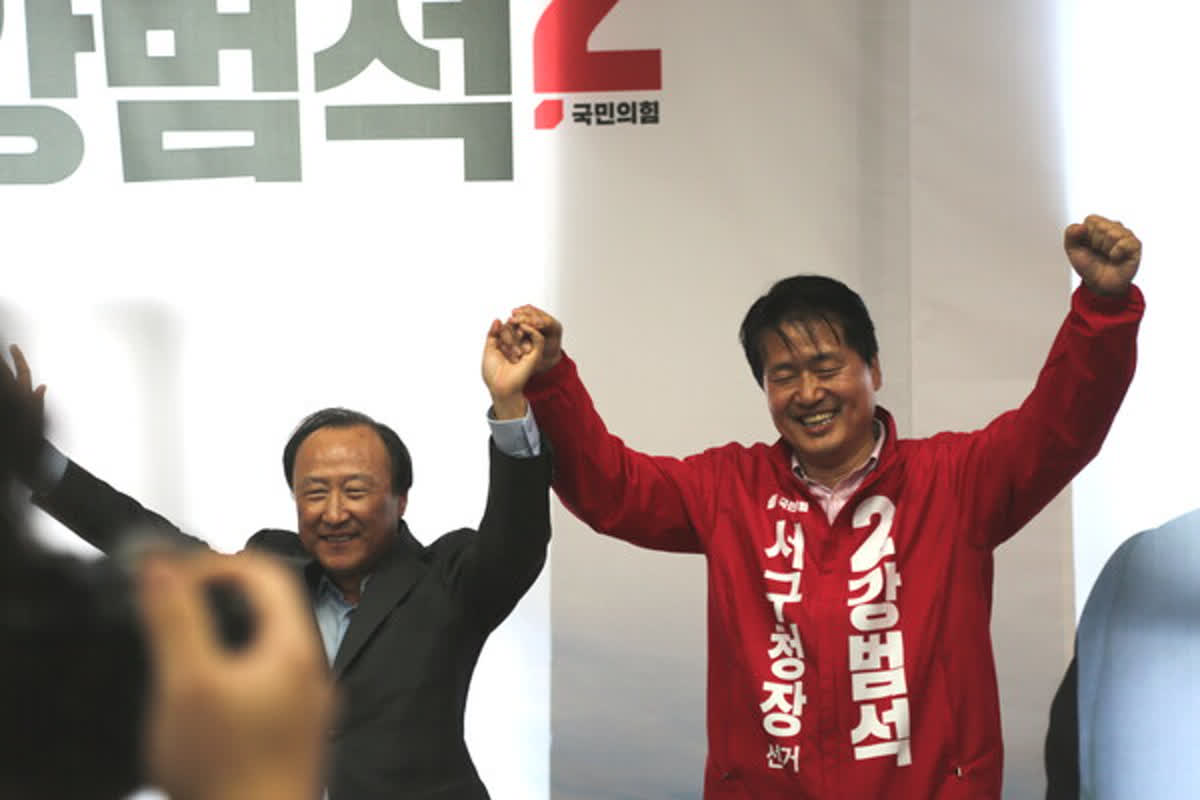
[Asia Times Yeongnam Bureau = Reporter Gu Jin-hong] As the June 3 local elections approach, a first-term candidate seeking a seat on the Pohang City Council is intensifying her campaign. On April 25, People Power Party candidate Kim Jeong-hee (multi-member district) opened a campaign office in Uchang-dong, Buk-gu, Pohang, formally beginning efforts to win local voters.
The opening ceremony was held in a calm atmosphere and drew local political figures, supporters and residents.
Kim said she will use the office launch as a springboard for a hands-on, neighborhood-focused campaign to secure votes in Uchang-dong.
She framed "the safety of our Uchang-dong families" as the core value of her campaign. Rather than offering sweeping promises, she emphasized practical policies that deliver tangible improvements to residents’ daily lives. Her top priorities include creating safe routes for children’s commutes and closing welfare blind spots—issues that respond directly to strong local concerns about education and childcare in this densely populated residential area.
The policy agenda centers on building a robust social safety net for groups that need care—children, women and the elderly. Drawing on hands-on experience in social welfare, Kim said she plans to introduce community-based welfare models into city governance so residents can feel real, measurable benefits beyond basic assistance.
After completing her local education, Kim studied social welfare and has worked in women-led businesses and the private volunteer sector. She is exploring ways to link welfare programs with local economic activity. Specific funding sources and implementation plans will be detailed in future policy announcements.
"It’s important to translate problems we identify in the field into city policy," she said. "I will prioritize policies directly tied to residents’ everyday lives," she added. "My focus will be on delivering changes that people across different groups in the community can actually feel."
The office opening comes as competition among local candidates is heating up ahead of the elections. Candidates are trying to stand out with neighborhood-focused pledges, and voters are increasingly evaluating them on policy effectiveness and feasibility. Concrete proposals and sustainable policy design—rather than slogans—are emerging as decisive factors in the race.
Observers will be watching whether the specificity of Kim’s proposals and her capacity to respond on the ground translate into real voter support before election day.
As local politics shifts toward solving everyday problems, voters appear to be concentrating on whether candidates can deliver practical change. That trend could shape not only this election but also the direction of future local governance.