▲'Next-generation electric Atlas research model' (left) and 'Next-generation electric Atlas development model' unveiled at CES 2026.
Hyundai Motor Group has reorganized its future-vehicle strategy, assigning distinct roles to its affiliates as it shifts toward becoming a comprehensive technology company.
Hyundai Motor will focus on core technologies such as robotics and autonomous driving to accelerate its transformation into a technology leader, while Kia will drive market expansion through an electric-vehicle–centered strategy.
Industry sources said on March 30 that Hyundai and Kia—two of the group's vehicle brands—are pursuing a two-pronged approach to capture leadership in the global future-vehicle market.
At recent shareholder meetings, both companies laid out separate growth paths, underscoring the group's commitment to becoming an integrated technology company.
Hyundai formally signaled its move beyond traditional vehicle manufacturing to position itself as an advanced technology company centered on artificial intelligence (AI) and robotics.
Most notably, Hyundai is pushing to commercialize Boston Dynamics' humanoid robot Atlas and prepare it for deployment on production lines. The company plans to establish a production system capable of building 30,000 robots annually by 2028, positioning itself as a creator of intelligent systems rather than just a manufacturer.
Hyundai is also accelerating development of autonomous driving. The revised G90 scheduled for release this year will feature Level 2+ autonomous driving technology, and the next-generation software-defined vehicle (SDV) due next year will include similar systems to provide highway driving-assist functions at near-NOA (highway autonomy) levels.
By 2028, Hyundai plans to introduce Level 2++ autonomous driving technology starting with a Genesis flagship model, aiming to provide advanced driving support in urban environments as well.
The company is also intensifying efforts to build a physical AI technology ecosystem through partnerships with Google DeepMind and NVIDIA.

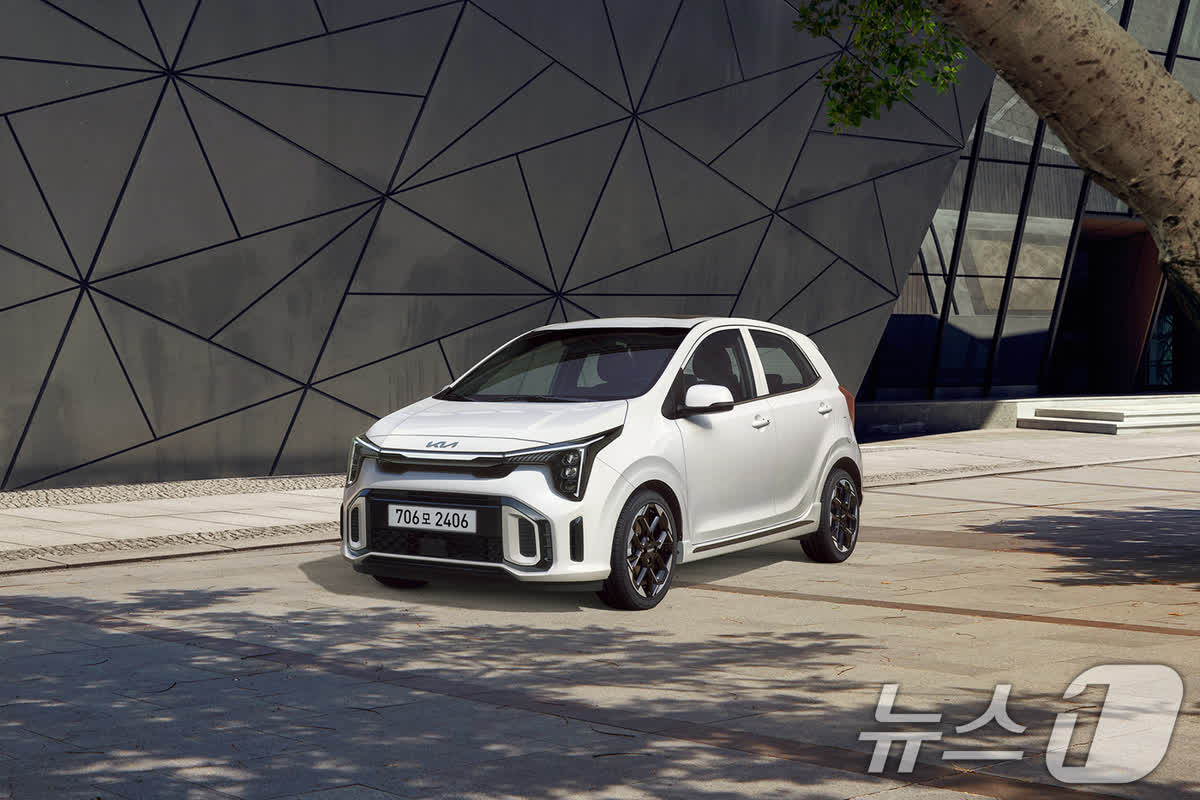
▲Kia's small electric sport utility vehicle (SUV) 'EV2'.
Kia will lead the group's electrification push and take primary responsibility for capturing the future-vehicle market.
Its core strategies are to overcome the adoption gap through mass-market EVs, secure new growth via purpose-built vehicles (PBVs), and evolve into an intelligent mobility solutions provider.
As part of its mass-market strategy, Kia plans to roll out 13 electric models by 2030 to build a lineup that meets diverse customer needs and boost competitiveness through product enhancements.
Alongside expanding the lineup, Kia will improve user convenience by expanding ultra-fast charging infrastructure and launching features like the Kia One app and Plug & Charge 2.0, making EV ownership more accessible and improving the customer experience.
With domestic plants serving as global hubs for EV development and production, Kia will also diversify manufacturing bases across Europe, the U.S., and emerging markets to better match regional demand and optimize the supply chain.
Kia will continue to grow its PBV business, expanding the lineup from the PV5 to include the PV7 in 2027 and the PV9 in 2029 to create new mobility demand.
By differentiating the strategies of its vehicle brands, Hyundai Motor Group aims to secure both technological leadership and market scale to strengthen its position in the global future-vehicle market.
Industry observers say the two-pronged strategy could do more than allocate roles—it could accelerate structural improvements across the group.
If Hyundai builds advantage in high-value areas such as software, robotics and autonomous driving while Kia expands market share through EV mass-marketization, the group would reinforce both its technological capabilities and its sales platform.
With global automakers betting on electrification and software-driven transformations, experts say focused investment and strategic concentration are key to gaining competitive advantage.
However, massive investment requirements and the pace of technology commercialization remain significant challenges, so execution and market response will likely determine success.
Kim Pil-su, a professor in the Department of Automotive Studies at Daelim University, said, \"As the auto industry shifts from machine-centered manufacturing to a software-centered sector, securing advanced technologies like autonomous driving, robotics and electrification is no longer optional. In the SDV era, software independence and platform competitiveness will determine a company's fate.\"
He added, \"As future mobility evolves into a 'smartphone on wheels,' cooperation and competition among global companies are accelerating. Even though the investment burden is large, the greater the uncertainty, the more important it is to proactively secure critical technologies.\"
Reporter Park Ji-sung captain@ekn.kr